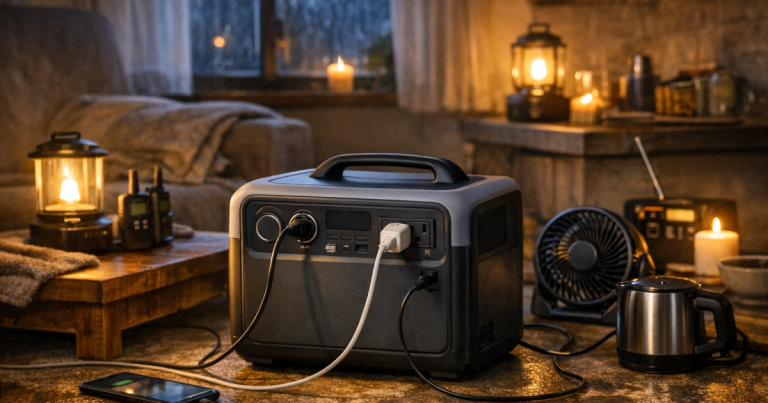
When a blackout stretches past the first evening, knowing how to recharge a portable power station becomes just as important as choosing the battery itself. A full charge can carry phones, lights, routers, small medical devices, or a fridge for a while, but a long outage needs a refill routine.
The goal is simple: use the safest, most reliable charging source available, protect the battery from heat and overload, and spend your stored watt-hours only on loads that matter.
Generator-to-home wiring, transfer switch installation, and any permanent electrical connections should be carried out by a qualified electrician to meet local electrical codes, manufacturer instructions, and safety requirements.
The short version
- Use grid power first whenever it briefly returns. Top off the station before running nonessential devices.
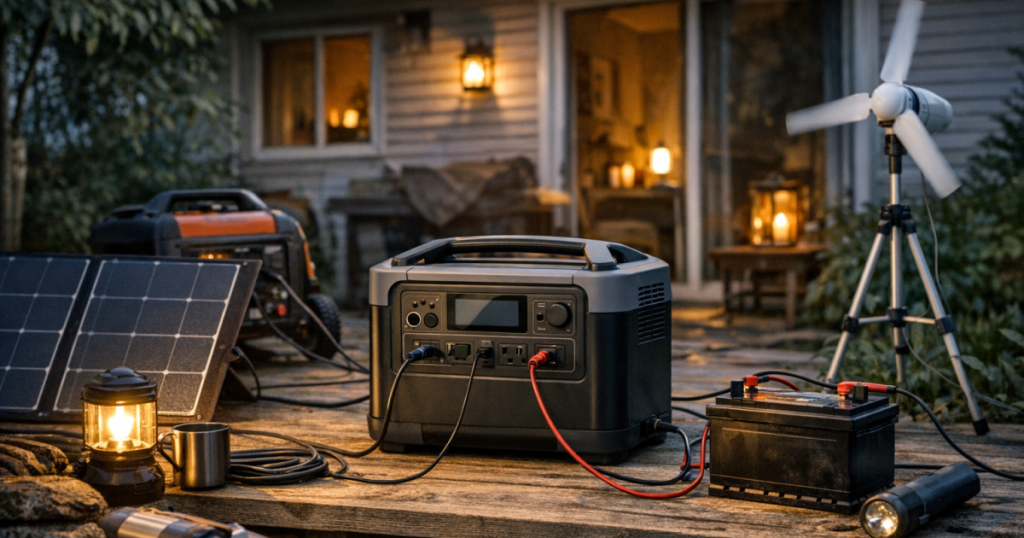
- Use solar during daylight, but plan for slower charging in clouds, shade, rain, short winter days, or poor panel angle.
- Use a portable generator outdoors only, away from doors, windows, vents, and garages, and charge the station in scheduled sessions.
- Use vehicle charging as a backup bridge, not the main plan. It is usually slower and can stress a vehicle battery if handled carelessly.
- Reduce the load while charging. A power station that is powering too much while refilling may charge slowly or not at all.
Start with your daily energy budget
Recharging works better when you know what you are trying to support. A portable power station is not a magic outlet; it is a battery with a limited number of watt-hours. If your station has 1,000 watt-hours of usable energy and your combined loads average 100 watts, the simple estimate is around 10 hours before conversion losses and device behavior reduce that number.
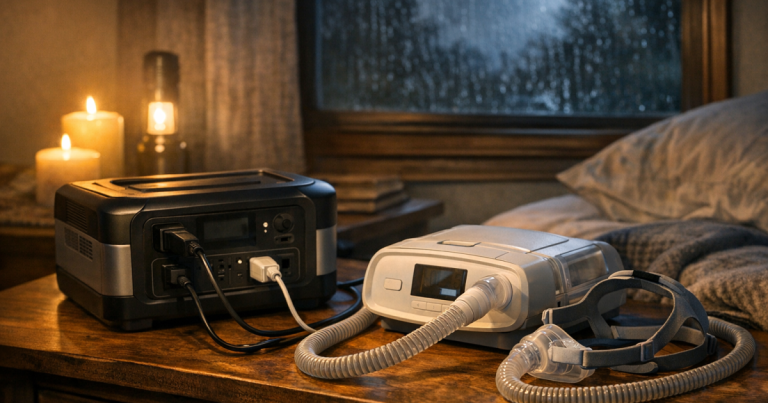
Make a short priority list before the outage or as soon as it begins. For most households, that list usually starts with phones, a few LED lights, internet gear if service is still available, a CPAP machine or other approved medical device, and refrigerator or freezer support if the station is rated for that load. For a deeper sizing exercise, use this guide to how much backup power your outage plan needs.
The refill plan should match that priority list. If your goal is keeping phones charged and one lamp running, solar and occasional vehicle charging may be enough. If your goal is cycling a refrigerator, running networking gear, and supporting work laptops through a multi-day outage, you need a more disciplined charging schedule.
Use wall power the moment it returns
In storm outages, wildfire shutoffs, and overloaded local grids, power may return briefly before it stays on. Treat every stable window of grid power as a chance to refill. Plug in the station, pause nonessential loads, and let the battery recover as much as possible.
Do not assume you will get a second chance. If lights come back on at midnight, it is tempting to run laundry, charge every gadget, and turn on entertainment. For outage resilience, the first job is topping off the backup battery, phones, rechargeable lanterns, and any device that supports communication or health needs.
If your power station supports pass-through operation, verify the manufacturer’s instructions before relying on it. Some units are designed to power devices while charging; others may limit output, generate extra heat, or recommend avoiding heavy loads during charging. Models such as Jackery Explorer 1000 v2 and EcoFlow DELTA 3 Plus have different input limits and operating modes, so the manual matters more than assumptions.
Recharge with solar when daylight is useful
Solar is the quietest long-outage refill method, and it can be especially helpful for apartments with sunny balconies, renters who cannot store fuel, and neighborhoods where generator noise is a concern. Its limits are just as important: solar output changes constantly with weather, panel angle, shade, season, and the power station’s solar input limit.
Set panels where they get direct sun for the longest practical stretch. Even a narrow shadow across one panel can reduce output. Keep connectors dry, avoid pinching cables in doors or windows, and follow the voltage and connector requirements listed by the power station manufacturer. A folding panel such as the Goal Zero Boulder 100 Briefcase is the kind of accessory people often consider for battery recharging, but compatibility still depends on the station’s allowed input range and connector setup.
For a realistic solar routine, check the display in the morning, adjust panel angle at least once during the day, and plan around the worst weather you are likely to see. A sunny day may make a meaningful dent in the battery. A cloudy day may only cover phones, lights, and a router for a while. That is still useful, but it should not be your only plan if you have high-priority overnight loads.
Use a generator as a scheduled charging source
A portable generator can recharge a power station faster than solar in many outage situations, but it adds fuel storage, noise, maintenance, and carbon monoxide risk. Generators must run outdoors, never inside a home, garage, basement, shed, or enclosed porch. Place the generator away from openings, use working carbon monoxide alarms, and follow the manufacturer’s distance, ventilation, and refueling instructions.
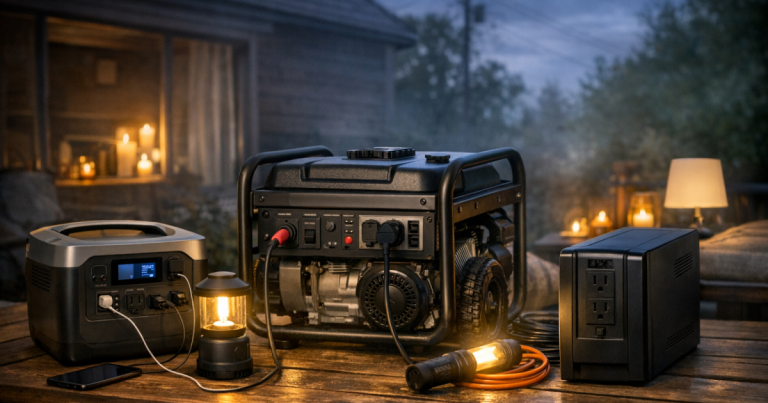
The cleanest way to use a generator with a power station is usually scheduled charging. Instead of running the generator all night for a few small devices, run it during a safe daytime window, refill the station, charge phones and tool batteries, then shut the generator down and use the power station quietly indoors. This approach can reduce noise, save fuel, and make the battery more useful after dark.
Before plugging in, confirm the generator can handle the charger’s input draw plus anything else connected to it. Start the generator first, let it run steadily, then plug in the power station’s AC charger. Do not refuel a hot or running generator. If you are deciding whether a quiet fuel-powered option belongs in your plan, the article on when inverter generators make sense for home blackouts explains the trade-offs clearly.
Use vehicle charging only as a bridge
Most portable power stations include or support some form of 12-volt vehicle charging, but it is usually much slower than wall or generator charging. It can be useful for keeping communications alive, especially if you need to drive anyway, but it is rarely the most efficient way to refill a large station from empty.
Only run a vehicle outdoors, never in a garage or attached enclosed space. Keep the vehicle’s own battery in mind, too. If the engine is off, a long charging session can leave you with a dead car battery. If the engine is on, you are burning fuel to make electricity, so reserve that method for essential top-ups or situations where other charging options are unavailable.
Vehicle charging is most useful for short, targeted goals: adding enough energy for phones, a weather radio, a small light, or an evening of router use. If you need to support a refrigerator, freezer, or medical device overnight, build a stronger plan around solar, generator charging, or a larger stored-energy setup.
Lower the load while the station is refilling
A common long-outage mistake is asking the station to power everything and recharge at the same time. Some stations can do this within limits, but the refill rate may drop, the unit may heat up, or output may shut down if the combined charging and discharging behavior exceeds what the system allows.
During recharge windows, unplug anything that is not urgent. Charge phones directly from the station or generator only when needed. Run a refrigerator in cycles if the station and appliance are compatible, but avoid adding coffee makers, space heaters, hair dryers, microwaves, or other high-wattage devices unless the power station is specifically rated for them and you have confirmed the load. For a safer operating routine, read how to avoid overloading a portable power station during an outage.
A simple long-outage charging routine
A routine keeps the household calm because everyone knows when power is available and what gets priority. Adjust the timing for weather, fuel, medical needs, and quiet hours, but start with a simple pattern.
Morning check
- Read the power station percentage and estimated runtime.
- Decide which loads are essential for the day.
- Set up solar panels as early as practical if weather allows.
- Recharge phones, radios, and battery lanterns before they are critically low.
Midday refill window
- Use the strongest available source: wall power if restored, solar if sunny, generator if safe and planned.
- Pause nonessential loads while charging.
- Check for heat buildup around the charger, cables, and station.
- Keep cords out of wet areas and walking paths.
Evening conservation mode
- Switch to low-watt lighting instead of room lights or high-draw appliances.
- Charge only the devices needed overnight.
- Turn off the inverter output when nothing AC-powered is connected, if your station allows it.
- Save enough battery for overnight medical, communication, or refrigeration needs.
Protect the battery during a multi-day outage
Heat, moisture, dust, and rough handling can all make a hard week harder. Keep the station indoors or in a dry sheltered area as allowed by the manufacturer, with airflow around it. Do not cover the vents with blankets, towels, clothing, or storage bins. Keep it away from direct rain, standing water, and hot car interiors.
Use the charger and cables specified by the manufacturer whenever possible. If you use an extension cord for an AC charger, choose one with the correct rating for the load and length; long, thin cords can heat up and waste power. For solar, stay within the station’s voltage and current limits. More panel wattage is not automatically useful if the power station cannot accept it.
Battery percentage displays are helpful, but they are not perfect. Treat them as estimates, especially with loads that cycle on and off. A refrigerator, for example, may draw more when its compressor starts and less once it is running. Watch real behavior during the first outage day so you can adjust before the battery gets low.
Common questions
Can I leave my portable power station plugged into solar all day?
Usually, yes, if the panels and connectors match the manufacturer’s solar input requirements and the station is kept dry and ventilated. Check the manual for limits, weather restrictions, and whether the unit should be moved out of extreme heat.
Is it safe to charge a power station from a generator?
Yes, when the generator is used outdoors according to its manual and the charger’s wattage stays within the generator’s capacity. Never run a generator indoors or in a garage, and never refuel it while it is running or hot.
Can a portable power station recharge while powering a refrigerator?
Some can, but it depends on the station’s pass-through design, surge rating, charger input, and the refrigerator’s actual draw. Verify the manual and test under normal conditions before relying on it during an outage.
How often should I recharge a portable power station during a long outage?
Recharge a portable power station whenever a safe source is available and before it drops to a level that threatens your overnight essentials. Many households do better with one or two planned refill windows per day than constant heavy use.
What should I do if solar charging is much slower than expected?
Check for shade, poor panel angle, dirty panels, loose connectors, clouds, and the station’s input limit. Then reduce loads and save the stored energy for essential devices until a stronger charging source is available.
Key takeaways
A portable power station is most useful during a long outage when it is part of a routine, not treated like a bottomless outlet. Use grid power first, solar whenever daylight cooperates, generator charging in safe scheduled sessions, and vehicle charging only as a backup bridge.
The households that manage long blackouts best usually do three things well: they know their essential loads, they protect their charging sources, and they conserve energy before the battery becomes critical. That steady approach keeps phones, lights, communication, and priority devices running with less stress.