This Belkin 12-Outlet PivotPlug Surge Protector review treats Belkin’s PivotPlug as a surge-protected outlet hub for blackout-ready electronics, not as backup power. That is the right lens: it can help organize and protect plugged-in devices when utility power is available, but it will not keep anything running after the grid goes down.
Belkin 12-Outlet PivotPlug Surge Protector
Best for organizing and surge-protecting crowded electronics corners, not for keeping devices powered during an outage
Belkin’s PivotPlug 12-Outlet Surge Protector, 8 ft. Cord, SKU BP112230-08, is most interesting for households with crowded electronics corners: modem, router, desktop gear, chargers, TV equipment, or a small work-from-home desk. The quick read is simple: it is a sensible power-strip upgrade for surge protection and plug spacing, while a UPS, portable power station, or generator is still the tool for runtime.
Product Details
- Product: Belkin 12-Outlet PivotPlug Surge Protector
- Type: 12-outlet AC surge protector power strip
- Official US price: $49.99
- Outlets: 12 surge-protected outlets
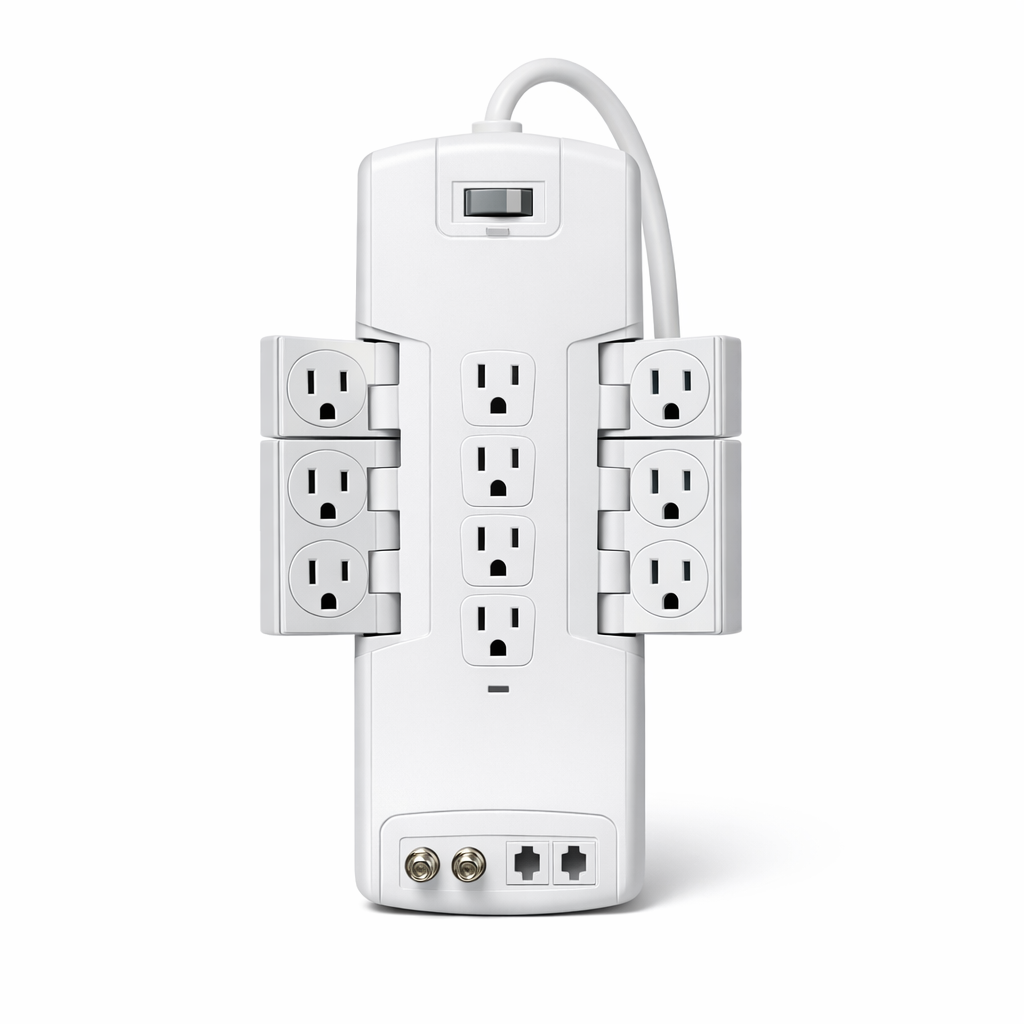
- Outlet layout: 8 rotating outlets and 4 stationary outlets
- Cord length: 8 ft.
- Surge energy rating: 4320 J
- AC rating: 15A/125V/1875W
- Clamping voltage: 400 V
- Maximum spike voltage: 6000 V
The role it should play in a blackout plan
The PivotPlug belongs in the “before and after the outage” part of a preparedness setup. Before the outage, it gives electronics a central, surge-protected place to plug in. After power returns, it can continue protecting equipment from surge events within its rated scope. During a blackout, however, it does not create stored energy, switch to battery, or act as an inverter.
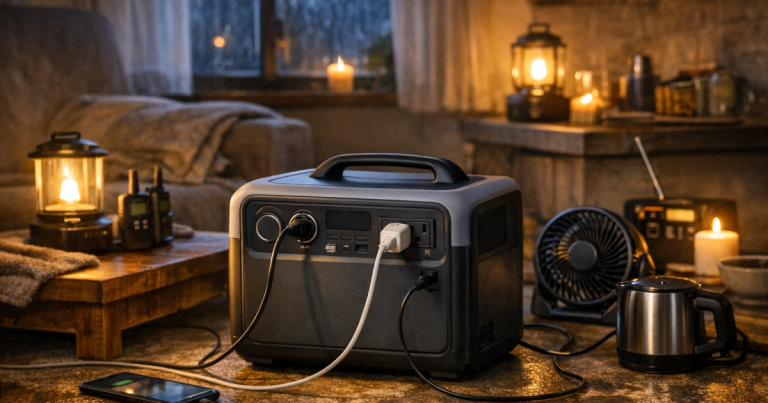
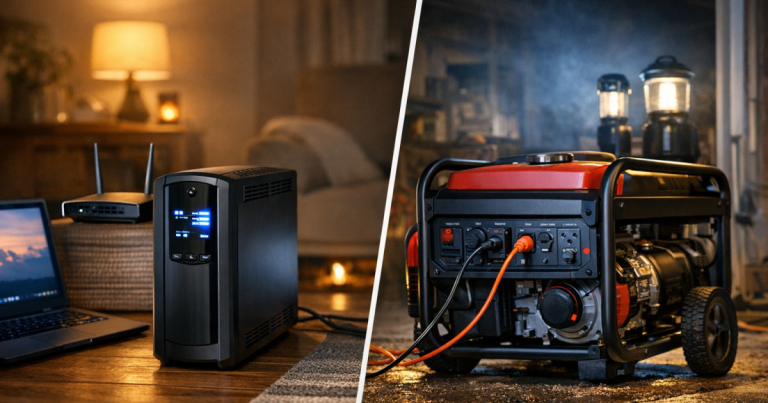
That distinction keeps expectations realistic. A router plugged into the PivotPlug still turns off when the wall outlet loses power. A laptop charger plugged into it still needs live AC power. A CPAP machine, refrigerator, or medical device does not gain runtime from a surge protector. For actual backup power choices, it makes more sense to compare a UPS, generator, and portable power station by role; our guide to blackout backup power options lays out those differences clearly.
Used correctly, though, this type of strip is still useful. Many households build an outage corner: network gear, a weather radio charger, phone chargers, rechargeable lanterns, and a small UPS or power station nearby. A well-arranged surge protector can reduce cable clutter and make it easier to keep essential electronics grouped together instead of scattered across random wall outlets.
Why the rotating outlets are the main attraction
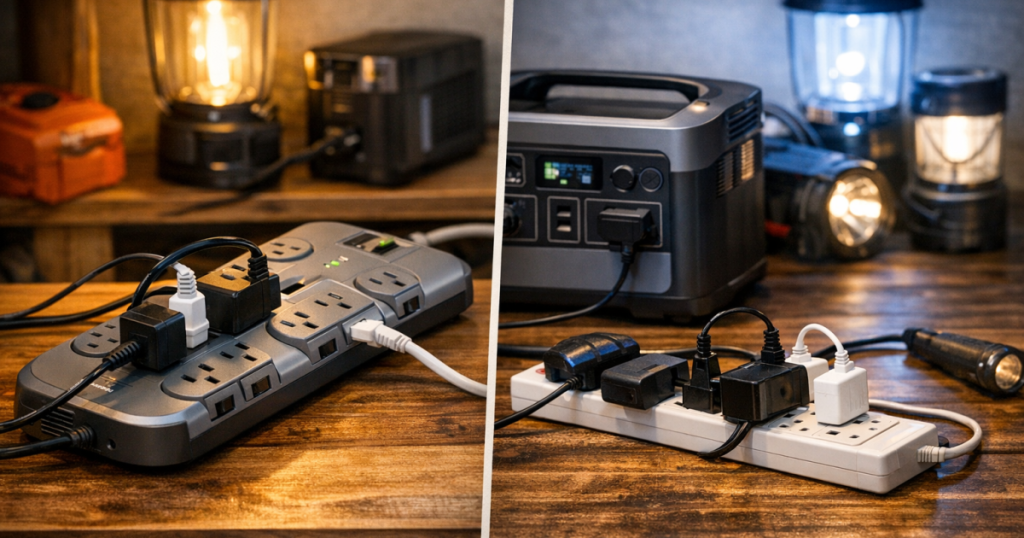
The PivotPlug’s defining feature is its 8 rotating outlets alongside 4 stationary surge-protected outlets. That layout is more than a convenience detail. Large AC adapters often block neighboring outlets on ordinary strips, turning a “12-outlet” product into a much less useful hub in real life. Rotating outlets give you more room to angle bulky plugs away from each other.
For blackout-prepared households, that can be especially handy around mixed electronics. A modem power brick, router adapter, desktop monitor plug, phone charger, battery charger, and lamp plug are not always shaped neatly. The PivotPlug’s layout gives you a better chance of using more of the available outlets without stacking adapters or daisy-chaining power strips, which is the kind of bad habit a good setup should help prevent.
The 8 ft. cord also gives the strip a useful amount of reach. It can sit behind a desk, media cabinet, or utility shelf without forcing everything directly against the wall outlet. The cord does not make it an extension-cord substitute for high-demand appliances, but it does make day-to-day electronics placement less fussy.
Surge protection and ratings in plain English
Belkin lists a 4320 J circuit total surge energy rating, a 400 V clamping voltage, and a maximum spike voltage of 6000 V. For a household buyer, the practical point is that this is built as a surge suppressor for connected electronics, not just a basic outlet multiplier. The clamping voltage is the threshold where the protector begins diverting excess voltage, while the joule rating describes surge absorption capacity.
The AC rating is equally important: 15A/125V/1875W. That makes it appropriate for ordinary plug-in electronics within that rating, not space heaters, large appliances, or anything that pushes the strip beyond its stated capacity. In outage planning, it is tempting to create one “power command center” for everything. This strip is better treated as an electronics hub, not a catch-all for every load in the room.
Belkin also lists an EMI/RFI noise filter rated from 150K Hz to 100M Hz, up to 50dB. That belongs in the electronics-comfort column rather than the emergency-power column. It may be relevant for home office or entertainment equipment, but it is not a substitute for backup runtime, voltage regulation from a UPS, or a professionally installed whole-home surge solution.
Connections beyond standard AC plugs
The PivotPlug includes RJ-11 telephone/modem/fax/DSL protection with 1 in and 2 out, plus coaxial/cable protection. That is a useful detail for households with legacy phone, DSL, or coax-connected equipment routed near the strip. It also reinforces the product’s real purpose: protecting equipment that is physically connected through the strip and its listed data-line connections.
That scope is narrower than whole-home surge protection. It does not protect every outlet in the house, and it does not protect devices that are not connected through it. If your outage plan includes generator inlets, transfer switches, or multiple backup-power paths, the safety picture gets broader than one power strip. For a grounding, cord, fuel, and indoor-use refresher, keep home backup power safety basics close as you build the rest of the system.
What it does not do
The biggest buying mistake would be treating the PivotPlug like a UPS. It has no battery capacity, no transfer time, and no ability to keep electronics alive when the wall outlet goes dead. If your goal is to keep a router online through short outages, this is the wrong product category on its own. You would be looking at a UPS or another backup-power source, with the surge protector serving a different job.
It is also not a generator accessory for connecting home circuits, not an outdoor-rated power solution, and not a USB charging station. For ordinary indoor electronics, that is not a flaw; it simply keeps the product in its lane. The best use is controlled and tidy: plug it into a grounded 125V AC wall outlet, keep the load within the stated rating, and use it for devices that belong on a surge-protected strip.
Warranty and buying note
Belkin lists a Connected Equipment Warranty of up to $300,000 if a device is damaged by an electrical charge while properly connected. That is a meaningful part of the value story, but it should be read as conditional coverage under Belkin’s terms, not as unconditional insurance for anything plugged in under any circumstance.
There is one wrinkle in Belkin’s own materials: the product page lists a 2-Year Warranty, while Belkin’s FAQ states a lifetime product warranty. That does not change the hardware’s role, but it does make the connected-equipment terms and product-warranty wording separate considerations.
At Belkin.com, the product page listed the PivotPlug at $49.99 and showed it out of stock with email notification and a coming-soon date of Sun Oct 11 2026. That Belkin.com status is separate from third-party retailer stock. For a product like this, the decision is less about urgency and more about whether its combination of outlet count, rotating layout, and surge features fits your electronics area.
Where it fits best at home
The PivotPlug is easiest to recommend for a home office, network shelf, media console, or family charging zone where plug shape is the daily annoyance. If your router, modem, monitor, printer, TV gear, or small chargers are crowding a basic strip, the rotating outlets are a genuinely useful design choice. It is also a clean companion to a broader outage kit because it helps keep electronics orderly before you add batteries, lanterns, or other backup gear.
It is less compelling if you only need two or three outlets, if your real problem is runtime, or if you are planning to support heavy household loads. A refrigerator, sump pump, furnace blower, or large generator connection calls for different equipment and a different safety conversation. This is a supporting player, not the star of the backup-power show.
Verdict
Score: 8.2/10. The Belkin PivotPlug earns a strong place as a surge-protected outlet hub for blackout-ready electronics because its 12-outlet capacity, 8 rotating outlets, 8 ft. cord, and 4320 J surge rating solve a real household problem: crowded, adapter-heavy electronics setups. Its score is held back by the simple but important limitation that it provides no backup runtime, plus the warranty wording inconsistency and Belkin.com stock status.
Choose it when your goal is cleaner, surge-protected organization for ordinary AC electronics within the 15A/125V/1875W rating. Choose a UPS, portable power station, or generator when the job is keeping devices running through an outage.
Belkin 12-Outlet PivotPlug Surge Protector
Best for organizing and surge-protecting crowded electronics corners, not for keeping devices powered during an outage
You might also like: How to Run a CPAP on a Portable Power Station During an Outage.