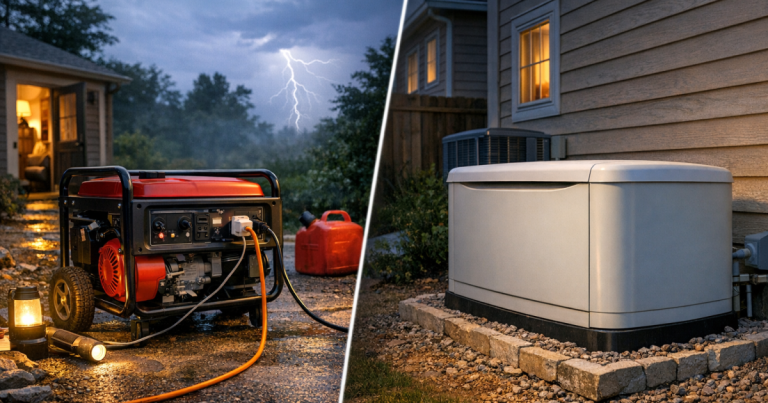
A blackout plan gets easier when you separate “keep life normal” from “keep essentials running.” For many homes, inverter generators fit the middle ground: cleaner power than many conventional portables, less noise, and enough flexibility for refrigerators, lights, internet gear, and some critical devices when sized and used correctly.
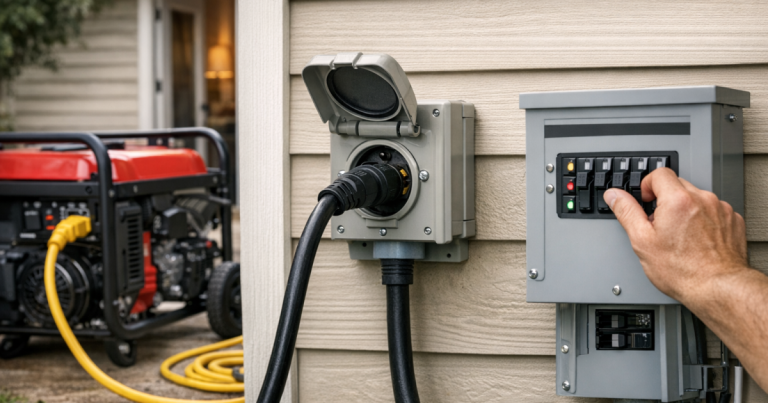
Transfer switch installation, interlock wiring, and any connection to your home’s electrical panel should be carried out by a qualified electrician to comply with local electrical codes, utility requirements, and applicable safety standards.
What to know first
An inverter generator is still a fuel-burning engine. It belongs outdoors, far away from doors, windows, vents, garages, crawl spaces, and occupied areas. Its advantage is not that it makes backup power effortless; its advantage is that it can be a more manageable way to run selected loads during an outage.
The right setup starts with three practical questions: what must stay on, how long the outage could last, and where the generator can run safely. A small model may be enough for a refrigerator, router, phone charging, lamps, and a few small electronics. A mid-size model may add a freezer, sump pump, microwave in short bursts, or a furnace blower if the circuit and starting load are appropriate. A large portable setup can cover more, but it also brings more fuel handling, noise, storage, and connection planning.
The biggest mistake is treating a portable unit like a whole-house standby system. It is usually better to plan around essential circuits, rotate noncritical loads, and keep a fuel schedule than to assume everything can run at once. If you are deciding whether to power the entire panel or only selected loads, the planning trade-offs are covered in more depth in whole-home versus essential-circuit backup basics.
How inverter power behaves during a blackout
Inverter generators produce AC power through electronics that regulate output as the engine speed changes. In plain English, that usually means steadier power for sensitive electronics and lower noise at lighter loads compared with many traditional open-frame generators. It does not mean unlimited capacity, silent operation, or indoor-safe use.
For outage planning, pay attention to two wattage numbers. Running watts describe what the generator can supply continuously. Starting watts describe the short surge some motors need when they kick on. Refrigerators, freezers, sump pumps, well pumps, furnace blowers, and window air conditioners can all have startup demands that are higher than their normal running draw.
A simple way to plan is to list the items you actually want powered, then mark which ones start automatically. A refrigerator and freezer may both cycle on without warning. A sump pump can start during a storm at the same time someone uses a microwave. If those surges overlap, a setup that looked fine on paper can trip, overload, or stall.
Use appliance labels, manuals, or a plug-in watt meter where appropriate, and leave room in the plan. Running a generator near its limit for long periods is harder on the equipment, leaves no margin for startup surges, and can make fuel planning less predictable.
Realistic home loads to plan around
Most households do better with a priority list than a wish list. During a 12-hour outage, comfort matters, but food safety, communications, medical needs, and temperature risk usually matter more. During a multi-day outage, fuel conservation and rotating loads become just as important as wattage.
Common essential loads include:
- Refrigerator and freezer, ideally monitored with appliance thermometers.
- Phone charging, a modem and router, and a laptop for work or alerts.
- LED lamps or rechargeable lighting instead of high-draw lighting loads.
- A sump pump, well pump, or furnace blower only after confirming starting requirements and connection method.
- Medical devices that have been planned separately with backup time, device specifications, and caregiver needs in mind.
Some loads are better used briefly rather than continuously. A microwave, coffee maker, toaster oven, or portable induction cooktop can draw a lot of power while operating, even if only for a few minutes. In an outage, the goal is often to run one high-draw task at a time, then return to lighter background loads.
If you need help deciding what earns power first, use a household priority list before sizing the generator. The guide on choosing which appliances get backup power first is a useful next step for turning “everything feels important” into a practical outage plan.
Fuel choices: gasoline, propane, and dual-fuel models
Fuel is where home backup plans often become real. A generator that looks perfect on wattage can still be a poor fit if you cannot store, rotate, or safely handle enough fuel for the outages you expect.
Gasoline is widely available and often gives strong output for portable models, but it has storage limits. It should be kept in approved containers, away from living areas and ignition sources, and rotated according to the fuel stabilizer and container guidance you follow. During widespread outages, gas stations may be closed, out of fuel, or unable to pump without power.
Propane stores differently. It is common for grills and outdoor appliances, and sealed cylinders can be convenient for standby storage. Propane output can differ from gasoline on some dual-fuel units, so check the manufacturer’s rated watts for each fuel rather than assuming they are identical. Also consider how many cylinders you would realistically keep and transport.
Dual-fuel inverter generators can make a home plan more flexible because they give you another fuel path. For example, a model such as the Champion Power Equipment 201531 4500W Dual Fuel Inverter gives readers a recognizable example of the dual-fuel inverter category, but the important checks are still outlet type, rated output by fuel, noise expectations, weight, maintenance access, and whether the generator fits your actual circuits and loads.
Whatever fuel you choose, do not refuel a hot running generator. Shut it down, let it cool according to the manual, and keep fuel containers away from the running engine. Build that cool-down time into your outage routine instead of treating refueling as a quick interruption.
Safe connection matters as much as size
The safest useful generator is not just the one with enough watts. It is the one connected in a way that prevents backfeeding, protects utility workers, and keeps cords from becoming trip hazards, overload points, or weather-exposed weak links.
For small loads, heavy-duty outdoor-rated extension cords may be appropriate when used according to the generator manual, cord rating, and appliance requirements. Keep cords out of standing water, avoid pinching them through windows or doors, and do not daisy-chain power strips into a makeshift whole-room system.
For circuits inside the home, a transfer switch or approved interlock setup is the normal planning path. This lets selected circuits receive generator power while isolating the house from the grid. It also makes outage operation more orderly because you can label circuits and avoid running cords across living spaces. The step-by-step safety context is explained in how to connect a portable generator with a transfer switch.
Match the generator outlet, cord, inlet, and transfer equipment. A 30-amp outlet, for example, does not automatically mean every appliance on the panel can run. The transfer setup, breaker limits, generator capacity, and load sequence all matter. If a pump, furnace, or hardwired appliance is part of the plan, do not guess; confirm the electrical requirements before the outage.
Carbon monoxide, placement, and neighborhood realities
Carbon monoxide is the most serious generator hazard because it can build up without smell or warning. A CO alert feature on a generator is helpful, but it is not a replacement for correct outdoor placement and working CO alarms inside the home.
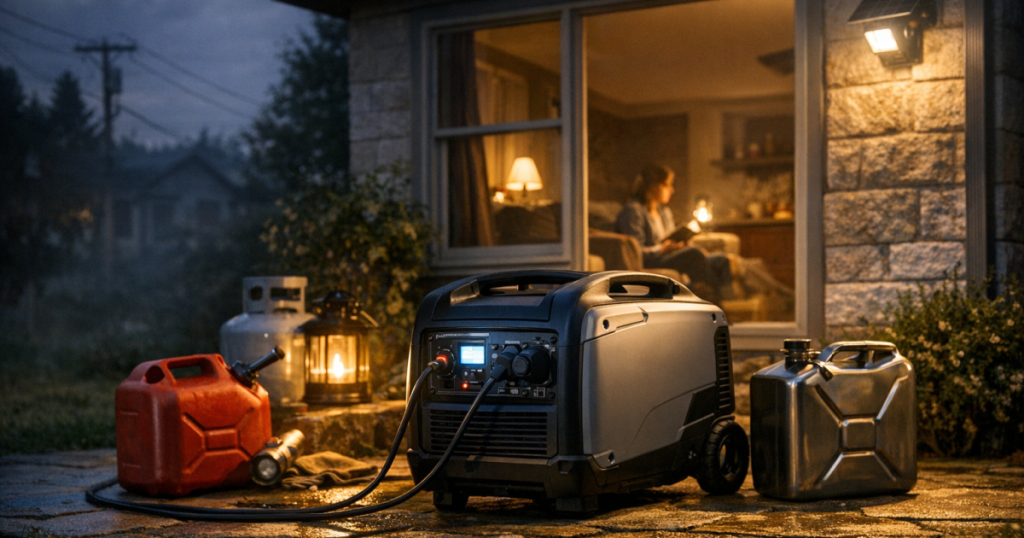
Place the unit outdoors at least 20 feet from doors, windows, and vents when the manual and site conditions allow, with exhaust directed away from the house and neighboring homes. Do not run a generator in a garage, carport, shed, enclosed porch, basement, or near an open window. “Almost outside” is not outside.
Noise also affects real outage use. Inverter models are often quieter at light loads, but nighttime operation can still bother neighbors, violate local rules, or make sleep harder. If you can, plan a rhythm: run the generator during waking hours to cool the fridge, recharge devices, and handle short high-draw tasks, then rely on batteries, UPS units, or stored cold overnight where safe and practical.
Weather protection takes planning too. The generator needs ventilation and cannot be wrapped in a tarp. Use manufacturer-approved covers or canopy-style shelter designed for running generators, and keep exhaust clear. Rain, snow, and wind can all change where the safest location is, so test your placement plan before storm season.
A simple sizing routine for ordinary homes
You do not need to turn your outage plan into an engineering project. Start with a short list and make it honest.
- Write down the must-run loads: refrigeration, medical equipment, communications, heat-related controls, water or sump needs, and basic lighting.
- Separate automatic motor loads from manual loads. Pumps and compressors can start when you are not watching.
- Check running watts and starting requirements from labels, manuals, or reliable measurements.
- Add a margin instead of sizing to the exact total.
- Decide what will never run at the same time, such as a microwave and sump pump if your setup cannot support both.
- Confirm whether each load will be cord-connected, transfer-switch connected, or powered another way.
For many households, a layered setup works well: a generator for refrigeration and heavier essentials, a UPS for the router or desktop equipment, and rechargeable lights or power banks for phones. That approach reduces how often the generator must run and makes the outage less noisy and fuel-hungry.
Maintenance before the storm
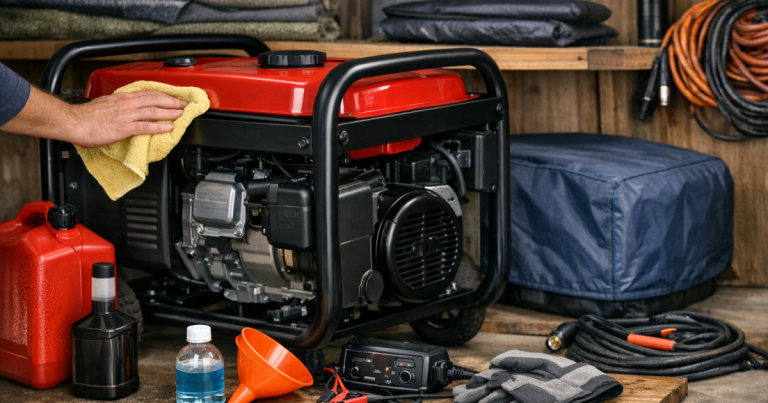
A generator that sits unused for two years is not a plan; it is a maybe. Keep the manual, oil, spark plug information, extension cords, and fuel plan together. Run the unit on a safe schedule recommended by the manufacturer, test the cords and loads you expect to use, and label the transfer switch circuits clearly.
Before storm season, check fuel containers, inspect cords for damage, confirm CO alarms are working, and make sure everyone in the household knows the shutdown and refueling routine. If only one person knows how the setup works, the plan is weaker than it looks.
It also helps to rehearse a short outage drill. Turn off nonessential loads, place the generator where it would actually run, connect the intended loads, and watch what happens when a refrigerator or pump starts. A 30-minute test on a calm afternoon can reveal cord length problems, confusing labels, noise issues, or an overloaded plan before the weather turns bad.
Things readers ask
Can an inverter generator run a whole house?
Usually not in the way people imagine. Some larger portable setups can support selected circuits, but central air conditioning, electric heat, large well pumps, and multiple kitchen appliances can exceed practical portable capacity quickly.
Is it safe to plug a generator into a wall outlet?
No. Backfeeding through a wall outlet is dangerous and can energize utility lines or damage equipment. Use properly rated cords for direct loads or a professionally installed transfer switch or interlock system.
How far from the house should it run?
Follow the manual, but a common safety baseline is at least 20 feet from doors, windows, and vents, with exhaust pointed away from the home. Indoor, garage, and porch operation are unsafe.
Should I choose gasoline or propane?
Both can work. Gasoline is widely available but harder to store long term. Propane stores conveniently in cylinders, but generator output may vary by fuel. Check the rated watts for each fuel and plan storage safely.
Do I still need battery backup?
Often, yes. A UPS or portable power station can keep small electronics and lights running quietly while the generator is off, saving fuel and reducing nighttime noise.
What stands out
Inverter generators are most useful when they are treated as part of a plan, not as a magic box for the whole house. Size for essential loads, respect starting watts, store fuel realistically, and make safe placement and connection non-negotiable.
The calmest blackout setups are usually the simplest: labeled circuits, a written load list, enough safe fuel for the expected outage window, working CO alarms, and a household routine everyone understands. Build that before the next storm, and the generator becomes a dependable tool instead of another stressful decision in the dark.