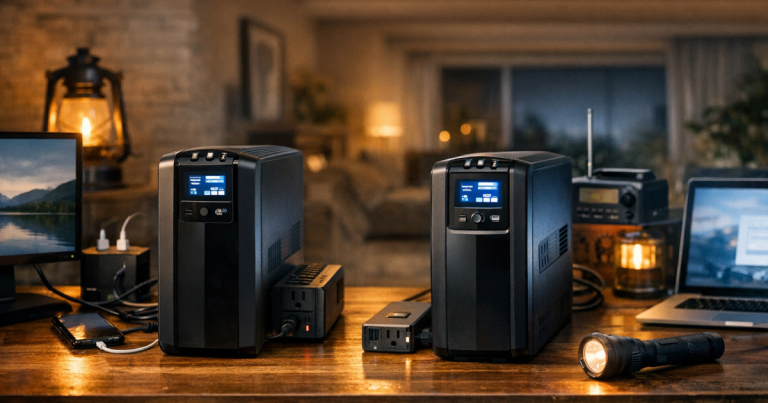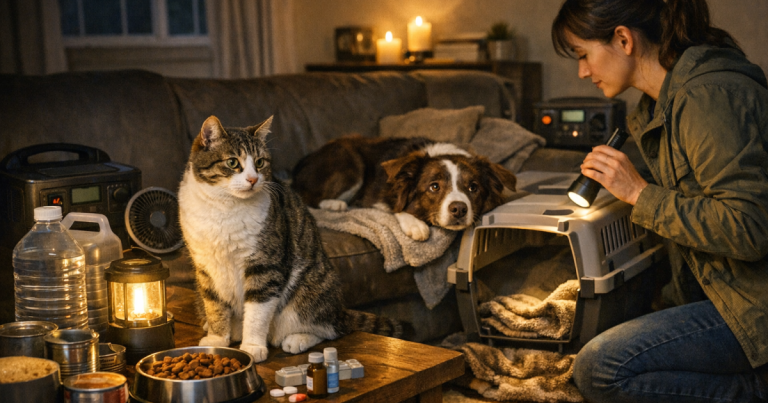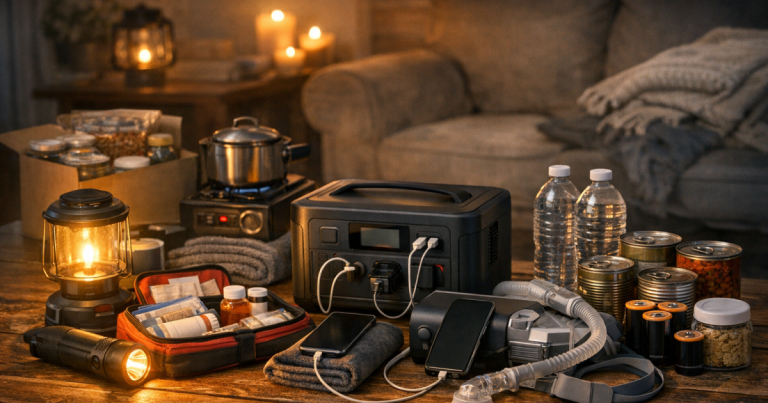
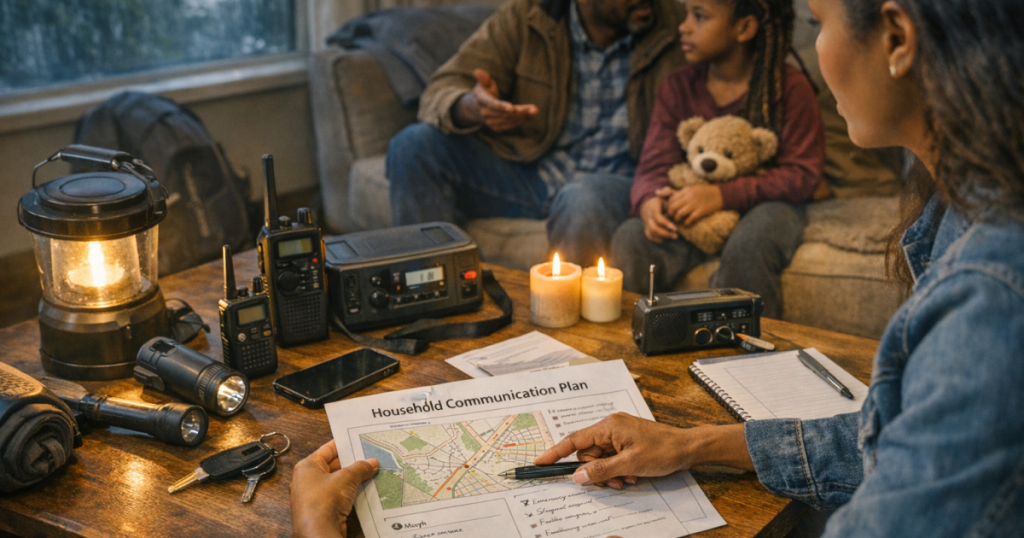
A blackout gets harder when nobody knows who has checked in, which phone still has power, or where to meet if the house is not usable. A household communication plan gives everyone a simple script before the lights go out, so decisions are not being made in the dark.
The goal is not a complicated binder. It is a short, practiced plan that covers contacts, charging, meeting places, updates, and the few situations where your family needs to act fast.
The short version
- Pick one out-of-area contact who can receive updates from everyone if local calls are congested.
- Write down key numbers on paper, not just in phones.
- Decide how your household will check in during a blackout: text first, call only when needed.
- Choose two meeting places: one close to home and one outside the neighborhood.
- Keep phones, small battery banks, flashlights, and a radio in known locations.
- Practice the plan during calm weather so kids, older adults, roommates, and caregivers know what to do.
Step 1: List who needs to be reached
Start with the people who would actually need updates during an outage. For most homes, that means everyone who lives there, close relatives, nearby neighbors, school or child care contacts, caregivers, and anyone who relies on you for transportation or medical support.
Keep the list short enough to use under stress. A three-page contact sheet sounds thorough, but it may not help when a phone is at 8% and the cell network is slow. Prioritize the people who need to know whether you are safe, where you are, and what help you may need.
Include these details
- Full names and phone numbers for household members.
- An out-of-area contact who is unlikely to be affected by the same outage.
- School, day care, workplace, and caregiver numbers.
- Nearby neighbors who can check on pets, older adults, or the home if you are away.
- Important non-emergency numbers for your city, utility, and local emergency management office.
Do not rely on memory or cloud contacts. Print the sheet, keep one copy near your main exit, one in a go bag or glove box, and one with any older adult or teen who may be away from home when the outage starts.
Step 2: Choose your check-in order
During a widespread outage, local cellular networks can become crowded. Text messages often get through more reliably than voice calls because they use less bandwidth and can send when service briefly returns. Your plan should tell everyone what to try first.
A simple order works well: text the household group first, then text the out-of-area contact, then call only if the message is urgent or no text goes through after repeated attempts. Keep messages short. “Home safe. Power out. Phones charged. Will update at 8 PM.” is more useful than a long explanation.
After the first 200 words of planning, it is worth naming the document plainly: your household communication plan should tell each person who to contact first, what to say, and when to send the next update.
Use a short message format
- Location: “At home,” “at school,” “at work,” or a specific safe place.
- Status: “Safe,” “need ride,” “phone low,” “medical device issue,” or “staying put.”
- Next update: “Will text again at 7 PM” or “calling if service returns.”
This format reduces confusion. It also helps your out-of-area contact relay clear information if multiple people are texting them separately.
Step 3: Set meeting places before you need them
Pick two meeting places. The first should be close to home, such as a neighbor’s driveway, a mailbox cluster, or a corner that is safe to reach on foot. Use this if the house must be evacuated because of smoke, a downed tree, a gas smell, or another immediate problem.
The second should be outside your immediate neighborhood. Choose a familiar location that household members can find without GPS, such as a relative’s home, a library, a community center, or a specific parking area. This matters if roads are blocked, cell service is down, or people are coming from different directions.
Write the addresses on your paper plan. For children, use plain descriptions as well as addresses: “Aunt Lisa’s house with the blue door” may be easier to remember than a street number during a stressful evening.
Step 4: Plan around phones losing power
Phones become the center of outage communication, but they are also fragile resources. A good plan sets rules before everyone starts streaming video, checking social media nonstop, or using phones as flashlights until the battery is gone.
- Charge phones whenever severe weather, wildfire shutoffs, or utility alerts are possible.
- Keep one small power bank assigned to communication, not entertainment.
- Lower screen brightness and turn on low-power mode early.
- Use one household phone for updates if several people are together.
- Save battery by checking official updates at set intervals instead of constantly refreshing apps.
If your router and modem can stay on, Wi-Fi calling and messaging may work even when cellular coverage is weak, as long as your internet service is still functioning. For a setup checklist, see the guide on backup power for Wi-Fi during outages.
Step 5: Decide how you will get reliable updates
Do not make your phone the only source of information. Outages can affect cell towers, home internet, and charging routines. Add at least one communication source that does not depend on your usual household Wi-Fi.
A battery-powered or hand-crank NOAA weather radio can be useful during severe weather, especially overnight when you may not be watching your phone. Local radio stations can also provide road closure, shelter, and utility restoration updates. Keep spare batteries with the radio and test it before storm season.
For everyday outage updates, identify the official sources you trust: your electric utility’s outage map or text alerts, local emergency management, county alerts, school notification systems, and local National Weather Service updates. Avoid forwarding unverified screenshots or rumors in group texts. During a blackout, bad information can waste battery, fuel, and time.
Step 6: Build a room-by-room communication routine
Communication is easier when every room has a simple blackout job. The kitchen may hold the paper contact sheet. The entry area may hold flashlights and shoes. Bedrooms may each have a small light and a place to charge phones. This keeps the first 10 minutes from turning into a house-wide search.
For a fuller setup, use a room checklist like preparing each room for a blackout. The communication part is simple: everyone should know where to find light, where to find the contact sheet, and where the household gathers for the first status check.
A simple first-10-minutes routine
- Pause and confirm whether the outage is only your home or the neighborhood.
- Gather household members in one agreed room if it is safe to do so.
- Check phones, power banks, flashlights, and radio.
- Send the first check-in text to your household group or out-of-area contact.
- Set the next update time so nobody worries unnecessarily.
Step 7: Add extra steps for children, older adults, and medical needs
Families with children should keep the plan calm and concrete. Children do not need every detail about grid failures or storm damage. They need to know where to go, which adult to call, what to do if they are at school, and which neighbor or relative is approved to help.
Older adults may need the same plan in larger print, with numbers written clearly and devices charged in the same place every day. If someone uses hearing aids, mobility equipment, refrigerated medications, oxygen equipment, a CPAP machine, or another essential device, communication planning should connect directly to backup power and caregiver check-ins.
For households with essential health equipment, make a separate contact path for caregivers, clinicians, equipment suppliers, and nearby helpers. The planning steps in backup power for home medical devices can help you think through runtime, charging, and emergency contacts without relying on guesswork.
Step 8: Write the plan on one page
The best plan is the one people can actually use. Keep it to one page if possible, with large headings and no clutter. A printed plan also helps babysitters, houseguests, relatives, and neighbors act quickly if the outage starts when you are not home.
What to put on the page
- Household names and phone numbers.
- Out-of-area contact name and number.
- Nearby helper or neighbor contact.
- School, caregiver, workplace, and medical support contacts as needed.
- Primary and secondary meeting places.
- Check-in method: text first, call for urgent needs.
- Update schedule, such as every two hours while awake.
- Where to find flashlights, radio, chargers, and the first-aid kit.
Store the plan where it will be seen, not hidden. A kitchen cabinet door, family command center, entry closet, or inside a utility drawer can work well. If you use a refrigerator door, remember that magnets and papers may be moved during everyday life, so check it regularly.
Step 9: Practice without making it dramatic
A five-minute practice run is enough for most households. Turn off a few lights, ask everyone to find a flashlight, locate the paper plan, and say who they would text first. If you have teens, include the reality that they may be at work, practice, a friend’s house, or driving when the power goes out.
Practice the plan twice a year, and update it whenever phone numbers, schools, caregivers, work schedules, or meeting places change. It is also worth reviewing before hurricane season, wildfire season, winter storms, or any planned public safety power shutoff in your area.
Common mistakes to avoid
- Keeping the only copy of the plan on a phone that may die.
- Assuming everyone remembers phone numbers they never dial manually.
- Choosing a meeting place that may be closed, locked, or hard to reach at night.
- Letting every family member make separate calls when one group text would do.
- Forgetting pets, caregivers, and neighbors who may need a quick status update.
- Using vague messages like “Are you okay?” instead of clear location, status, and next update details.
Things readers ask
Should we call or text during a blackout?
Text first unless it is urgent. Texts often send more reliably on congested networks, use less phone battery, and create a clear written record of who is safe and where they are.
What if cell service is completely down?
Use your preselected meeting places and backup information sources. If home internet still works with backup power, Wi-Fi calling or messaging may help. A radio can provide local updates when phones are not useful.
How often should family members check in?
For a short outage, one initial text and a later update may be enough. For longer outages, set a simple schedule, such as every two hours while awake, so people do not waste battery sending constant messages.
Should renters make a different plan than homeowners?
The communication steps are mostly the same. Renters should add building-specific details, such as the landlord or property manager number, stairwell locations, entry codes, and where to meet if elevators or electronic locks are not working.
Where should we keep the paper copy?
Keep one copy near a main exit and another in a bag or vehicle. If someone in the home has medical needs or limited mobility, keep an extra copy near their usual seat, bedside table, or equipment area.
Main points
A blackout communication plan works because it removes small decisions at the exact moment people are tired, distracted, or worried. Write down the numbers, choose an out-of-area contact, agree on text-first check-ins, set meeting places, and protect phone battery from the start.
Once the plan is on paper, keep it visible and practice it briefly. The payoff is simple: when the lights go out, your household already knows how to check in, where to gather, and what to do next.