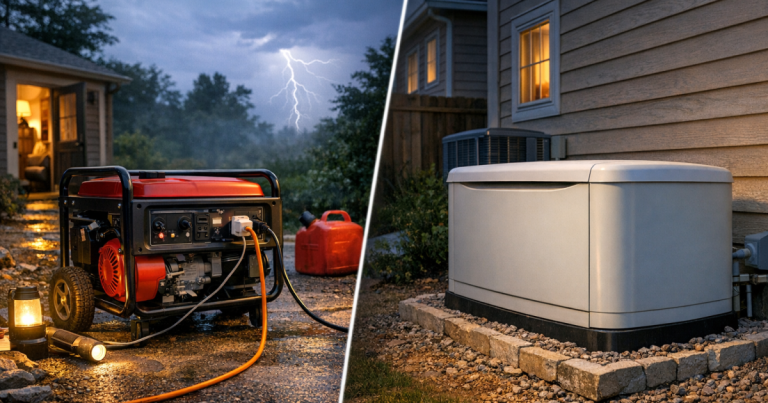
When the power goes out, a manual transfer switch gives you a controlled way to power selected home circuits from a portable generator. Instead of running extension cords through the house, you choose the circuits that matter most and move them over in a deliberate order.
It does not make your generator automatic, and it does not increase the generator’s capacity. Its job is to keep generator power separated from utility power while giving your household a cleaner, safer outage workflow.
Professional guidance: The switch installation, inlet wiring, panel connections, and any generator-to-house electrical integration should be carried out by a qualified electrician in compliance with the National Electrical Code, local code requirements, and manufacturer instructions.
In brief
- Start with the generator off, the house circuits on utility power, and your outage priorities already written down.
- Move the generator outdoors before starting it, well away from doors, windows, vents, garages, and attached spaces.
- Connect the correct generator cord between the generator outlet and the outdoor inlet before adding any loads.
- Start the generator with loads off, then transfer selected circuits one at a time.
- Watch total load, appliance startup surges, fuel level, noise, weather exposure, and carbon monoxide risk throughout the outage.
- When utility power returns, move circuits back to utility power before shutting down and storing the generator.
Know what the switch is controlling
A transfer switch usually connects a small set of preselected circuits to either utility power or generator power. Common examples include a refrigerator circuit, freezer circuit, furnace blower, sump pump, well pump, a few lights, internet equipment, or a kitchen outlet circuit. The exact circuit list depends on what your electrician installed and what your generator can support.
This matters because a switch is not a magic whole-house backup system. If six circuits are connected, only those six circuits can be powered through the switch. If a large load such as central air conditioning, an electric range, an electric dryer, or an electric water heater is not part of the planned setup, do not assume it can be added during an outage.
Before storm season, review the circuit labels on the switch and on your electrical panel. If anything is unclear, get the labeling corrected before you need it. A calm test day is the right time to learn which switch position feeds the refrigerator, which one feeds the furnace blower, and which loads should stay off.
Step 1: Decide your outage priorities before touching the generator
During an outage, keep the first decision simple: what truly needs power right now? Most households are better served by a short list of essentials than by trying to run the house as usual.
A practical first round might include refrigeration, a few lights, phone charging, a router, a furnace blower in cold weather, or a sump pump during heavy rain. A second round might include a microwave for short use, a coffee maker, a laptop, or a small window air conditioner if your system was designed and sized for that load.
Large resistive loads can drain generator capacity quickly. Electric space heaters, toaster ovens, hair dryers, and electric water heating can be surprisingly demanding. Motors also matter because a refrigerator, sump pump, furnace blower, or well pump can need extra starting watts for a short moment. If you need a refresher on why those short surges matter, review starting watts, runtime, and priorities before relying on a setup in bad weather.
Step 2: Place the generator safely outdoors
Move the generator outside before starting it. It should never run in a garage, basement, crawl space, shed, porch, breezeway, or attached building, even with a door open. Carbon monoxide can build up quickly and move into living areas through doors, vents, soffits, and windows.
As a practical rule, place the generator at least 20 feet from the house where possible, with the exhaust pointed away from occupied spaces. Keep it on a firm, level surface and protect it from direct rain with a manufacturer-approved canopy or safe outdoor shelter arrangement that preserves ventilation. Do not improvise with a tarp wrapped around the unit; generators need airflow and heat clearance.
Check fuel before starting. Refuel only when the generator is off and has cooled according to the manufacturer’s instructions. Keep spare fuel stored in approved containers, away from ignition sources and living spaces.
Step 3: Connect the generator cord to the inlet
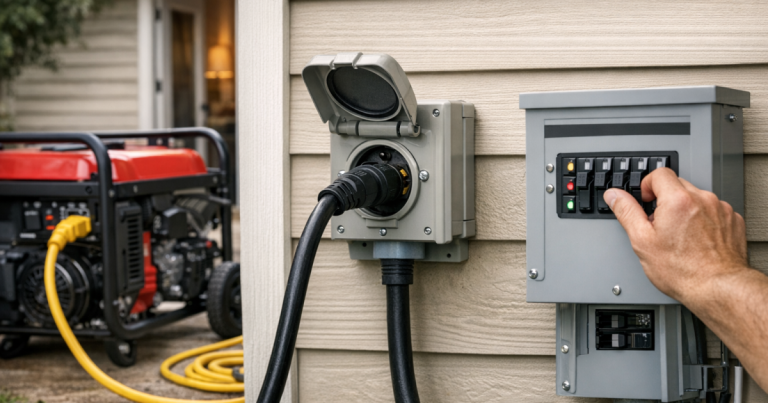
With the generator still off, connect the cord from the generator outlet to the outdoor inlet that feeds the transfer switch. The cord must match the generator outlet, inlet, amperage rating, plug configuration, and length needed for your setup. Do not force mismatched plugs, use damaged cords, or run a generator through a dryer outlet or a homemade backfeed arrangement.
Many home setups use a twist-lock generator cord and an exterior inlet so the generator can stay outside while selected circuits are fed through the installed switch. If you are checking your cord setup, this review of a generator-safe cord and inlet setup is a useful example of the kind of compatibility details to verify.
Before starting, make sure the transfer switch circuit toggles or breakers are not already demanding generator power. The goal is to start the generator without a heavy load, then add circuits gradually.
Step 4: Start the generator with loads off
Follow the generator manufacturer’s startup instructions. Depending on the model, that may involve checking oil, opening the fuel valve, setting the choke, turning on the engine switch, using electric start, or pulling the recoil starter. Let the generator stabilize briefly before applying household loads.
If your generator has an economy or eco mode, understand how it behaves with motor-starting loads. Some households leave economy mode off while starting refrigerators, pumps, or blowers, then turn it on later for lighter steady loads. Follow the manufacturer’s instructions rather than guessing.
Listen for rough running, surging, unusual vibration, or warning lights. If the generator is not running normally, do not use it to power house circuits until the issue is resolved.
Step 5: Move circuits over one at a time
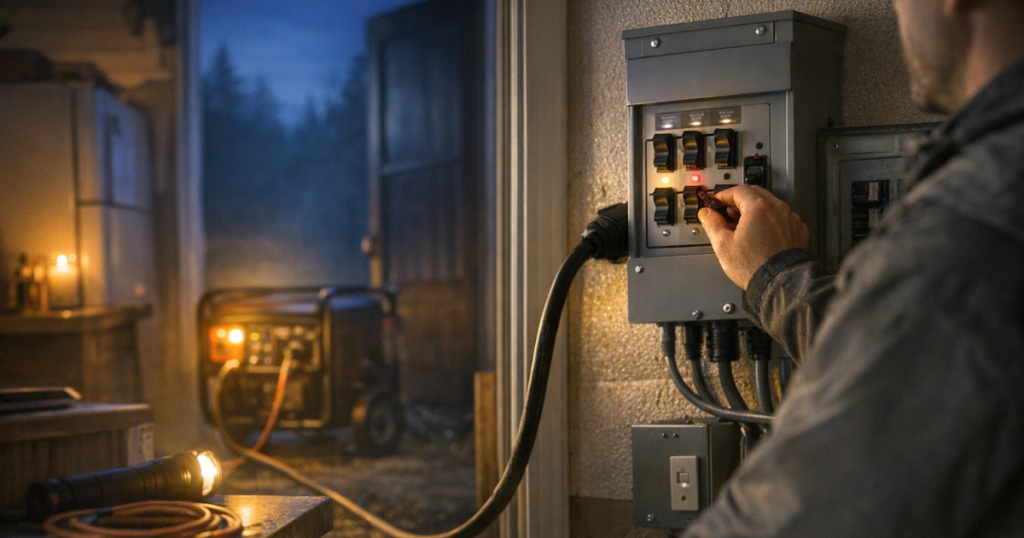
Once the generator is running steadily, use the manual transfer switch to move selected circuits from utility position to generator position. Do this one circuit at a time, pausing between loads so motors can start and the generator can settle.
A sensible sequence often looks like this:
- Refrigerator or freezer: Add one cooling appliance, then listen for the compressor startup. Avoid starting multiple compressor loads at the same instant.
- Sump pump or well pump: Add only if it is part of the switch setup and your generator is sized for the starting surge.
- Furnace blower: Add during cold weather if the heating system is compatible with the installed setup and the furnace controls are wired correctly.
- Lighting: Add a small lighting circuit so the house is usable without relying only on flashlights.
- Internet and device charging: Add a circuit for modem, router, phones, and a laptop if it fits within your load plan.
Avoid flipping every switch to generator power at once. Even if the running watts look manageable, several motors starting together can overload the generator or trip a breaker. The manual transfer switch helps you control the order, but you still have to manage the total demand.
Step 6: Watch load behavior during the outage
After the essential circuits are on generator power, pay attention to how the system behaves. A generator that bogs down when the refrigerator starts, trips a breaker when a pump cycles, or sounds strained when a microwave runs is telling you the load plan needs adjustment.
Reduce demand by turning off lower-priority circuits at the switch or by unplugging high-draw devices on powered circuits. A kitchen outlet circuit, for example, might technically be powered, but that does not mean it is smart to run a microwave, coffee maker, toaster, and refrigerator all at the same time.
Use lights and electronics thoughtfully. LED lamps, rechargeable lanterns, and phone chargers are usually much easier to support than heat-producing appliances. During a long outage, comfort comes from rotating loads intelligently, not from trying to power everything continuously.
Step 7: When utility power returns, transfer back calmly
When the neighborhood lights come back on, do not rush. Confirm that utility power appears stable. Then move each circuit on the transfer switch back from generator position to utility position according to the switch instructions.
After the circuits are back on utility power, let the generator run briefly with no load if the manufacturer recommends a cool-down period. Then shut it off, close the fuel valve if applicable, and allow it to cool before moving, refueling, covering, or storing it.
Coil the generator cord once it is dry and cool, check for damage, and return your switch labels and outage notes to their normal place. If anything behaved unexpectedly, write it down while the outage is fresh in your mind.
Common mistakes that cause trouble
- Starting with too many loads connected: This can overload the generator before you understand what is drawing power.
- Assuming every outlet is backed up: Only the circuits connected to the transfer switch are part of the generator plan.
- Using the wrong cord: Plug shape, amperage, conductor size, and outdoor condition all matter.
- Running the generator too close to the house: Carbon monoxide risk is not solved by opening a garage door or cracking a window.
- Refueling while hot: Gasoline vapors and hot engine parts are a dangerous mix.
- Adding surprise loads: Someone plugging in a space heater or hair dryer on a powered circuit can overload the system quickly.
- Skipping practice: The first real storm outage is a poor time to decode unlabeled switches and unfamiliar startup steps.
Build a simple practice routine
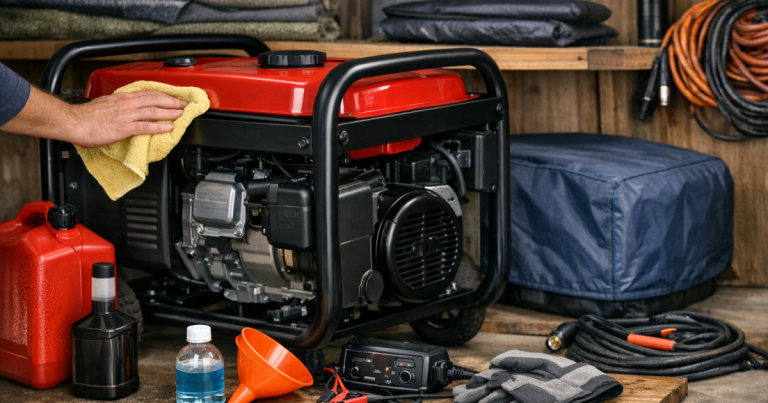
A transfer switch setup is much easier to use when you have practiced it in daylight. Once a month, confirm that the generator starts, the cord is in good condition, the inlet is clear, labels are readable, and each backed-up circuit behaves as expected. Keep the test short, controlled, and consistent with the generator and switch manuals.
During the test, use a checklist rather than memory. Note which circuits you transfer, what was running on each circuit, and whether the generator sounded stable. If you find a weak battery, stale fuel, damaged cord, missing label, or confusing switch position, fix it before storm season. A repeatable monthly generator test routine turns the transfer switch from a mystery box into a familiar household tool.
Common questions
Can I use a transfer switch without turning off the main breaker?
Use the installed transfer switch exactly as designed and labeled. Its purpose is to isolate selected circuits from utility power when they are fed by the generator. Do not improvise panel steps or backfeed through outlets.
Can a transfer switch run my whole house?
Most portable-generator transfer switch setups power selected circuits, not every load in the home. Whole-home coverage depends on the switch type, generator capacity, service equipment, load management, and professional installation design.
What should I transfer first during an outage?
Start with the loads that protect safety and property: refrigeration, sump pump, heat system controls or blower when applicable, basic lights, phones, and communication gear. Add comfort loads only after essentials are stable.
Why does the generator trip when I turn on a circuit?
The circuit may have more connected load than expected, or a motor may be drawing a high startup surge. Turn that circuit off, reduce other loads, and review the appliance list before trying again.
Can I leave the generator running overnight?
Only operate it according to the manufacturer’s instructions, with safe outdoor placement, fuel planning, carbon monoxide alarms, and attention to local noise rules. Many households reduce loads overnight to essentials only.
Main lessons
A manual transfer switch works best when the hard decisions have already been made: which circuits matter, what the generator can realistically support, where the generator sits outside, and how each step happens in order. The switch gives you control, but the safe routine is what makes the system reliable.
Practice before the next outage, keep your labels readable, manage one load at a time, and treat generator power as a limited resource. That calm, prepared approach is what keeps the lights on where they matter most without turning a blackout into a wiring problem.