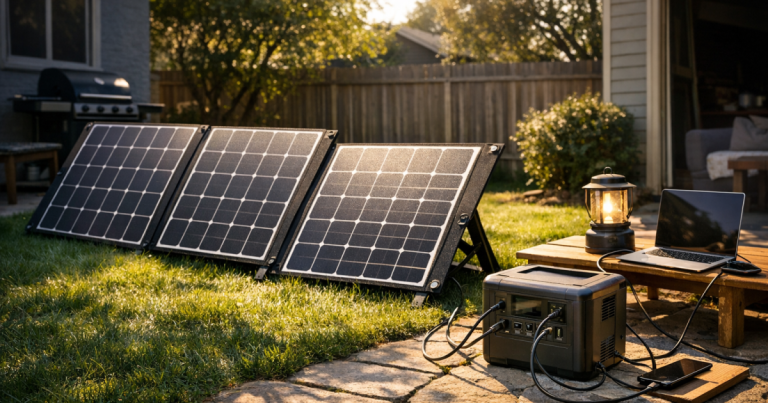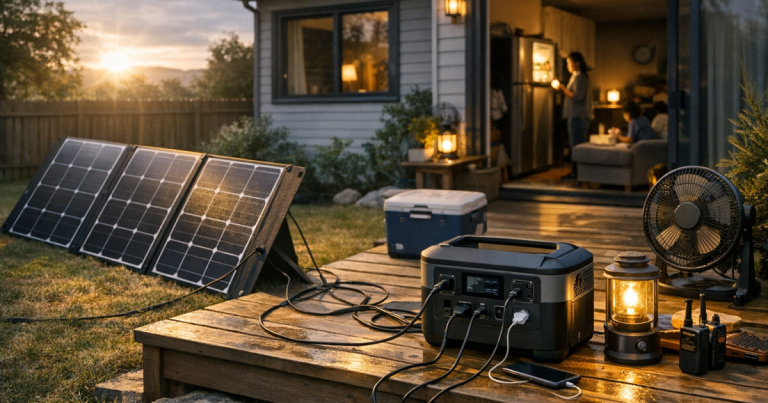
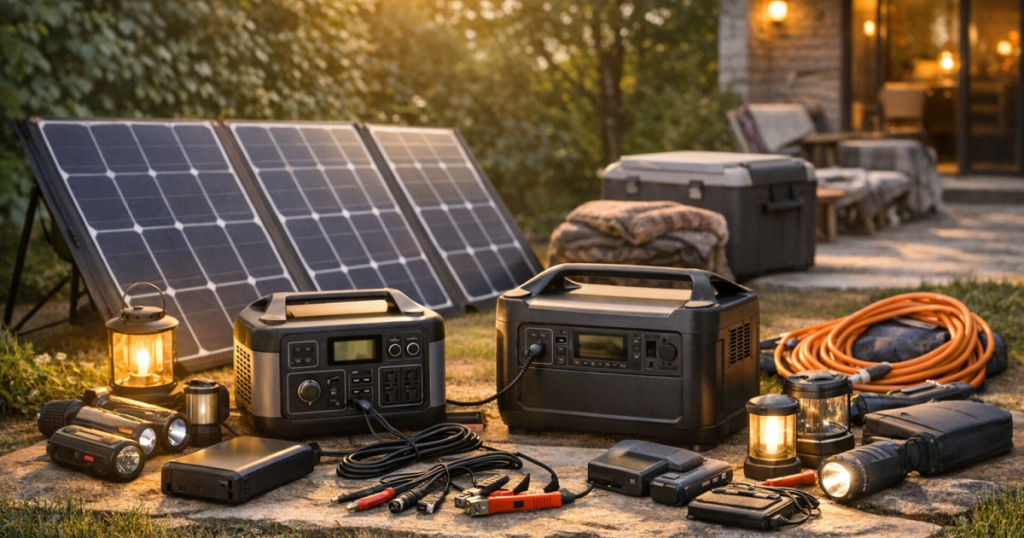
When the grid drops for a night or two, the best solar generators are not magic boxes that run everything. They are portable power stations matched with solar panels, sized for a short list of essentials: refrigerator cycles, phones, router, lights, laptop, and medical devices that cannot wait.
Home transfer switches, inlet boxes, and any wiring that connects backup power to household circuits should be installed by a qualified electrician to meet local electrical codes, permit rules, and safety standards.
Fast answer for blackout planning
A good solar generator for home backup has three jobs: store enough energy for your must-run loads, deliver enough output for appliance startup surges, and accept solar charging fast enough to matter during daylight. For most homes, that means planning around essentials rather than pretending a portable battery is a whole-house system in a handle.
- For lights, phones, router, and laptops: a compact power station can be enough if you keep the load list disciplined.
- For a refrigerator or freezer: prioritize capacity, surge handling, and a realistic plan for solar panel placement. For deeper refrigerator-specific planning, see the guide to portable power stations for refrigerator backup.
- For CPAP or medical essentials: confirm your machine’s power draw, humidifier use, DC adapter options, and backup duration before the outage. The CPAP-specific setup guide explains how to run a CPAP on a portable power station.
- For home circuits: do not improvise backfeeding. Use proper transfer equipment and professional installation.
Step 1: Decide what must run, not what would be nice
The fastest way to overspend is to start with a wish list. Start with a blackout list instead. Write down the loads that protect food, communication, health, and basic comfort.
A practical essentials list might include a refrigerator, one or two LED lamps, phones, a Wi-Fi router and modem, a laptop, and a medical device if your household depends on one. A comfort list might add a fan, coffee maker, TV, or extra appliance. Those are different plans. Treat them that way.
Watts tell you how much power a device needs while running. Watt-hours tell you how long a battery can support that load. A 40-watt combined lighting and router load is very different from a refrigerator that cycles on and off and may need extra startup power. Runtime estimates are useful for planning, but they are not guarantees; appliance behavior, temperature, battery age, inverter losses, and how often you open the fridge all change the result.
Step 2: Understand what solar charging can and cannot do
A solar generator is usually a battery power station plus one or more solar panels. The battery does the overnight work. The panels help refill it during the day. That distinction matters because solar panels do not provide steady full output from sunrise to sunset.
Clouds, smoke, shade, winter sun angle, and panel placement can all reduce charging. In a storm outage, a panel leaning on a shaded porch may produce far less than its rated output. In a wildfire shutoff with clear skies, solar can be far more useful. Plan for imperfect charging, then enjoy the extra energy when the sun cooperates.
Solar is strongest when you use it as a daily top-up system: run essentials from the battery, recharge during the brightest part of the day, and reduce loads before evening. It is weaker as a last-minute rescue plan if the battery was stored empty or the panels are still in the box.
Step 3: Three solar generator setups that make sense
The best solar generators for blackout backup depend on the job. A renter trying to keep internet and lights on has a different need than a homeowner trying to protect refrigerated food through a multi-day outage. These examples are not universal winners; they are useful reference points for matching system style to household priorities.
Compact essentials: BLUETTI Elite 100 V2 Portable Power Station
The BLUETTI Elite 100 V2 Portable Power Station is a sensible example for households that want a compact backup unit with strong solar-recharge potential. It fits the kind of plan where you are powering phones, lights, networking gear, a laptop, and possibly short appliance support rather than trying to run a full kitchen.
The appeal is the balance: small enough to store without rearranging the garage, but still built around the idea that solar charging is part of the outage routine. Before buying, verify the current solar input limits, compatible panel voltage range, outlet ratings, and whether the ports match your actual devices.
Lightweight 1kWh class: Jackery Explorer 1000 v2 Portable Power Station
The Jackery Explorer 1000 v2 Portable Power Station represents the lightweight 1kWh class well. That size range is often a comfortable middle ground for apartment dwellers, renters, and homeowners who want meaningful backup without moving into heavy, multi-battery systems.
Think of it as an essentials manager: communications, lighting, a laptop, small electronics, and selective appliance use. It can be part of a refrigerator plan, but refrigerator runtime depends heavily on the appliance, room temperature, and how much else is plugged in. One battery cannot ignore math, no matter how cheerful the product photos look.
Fast-charging electronics backup: EcoFlow DELTA 3 Plus Portable Power Station
The EcoFlow DELTA 3 Plus Portable Power Station is worth considering when fast charging and UPS-capable behavior are high priorities. That can matter for remote workers, home offices, and households that want smoother backup for networking gear or electronics while still keeping solar charging in the plan.
For outage use, check the current specifications for UPS behavior, transfer timing, supported loads, solar input, and battery expansion options if offered. A UPS-capable power station can be useful, but it is not automatically a replacement for a dedicated UPS in every electronics setup. If your outage plan includes computers, modems, or separate battery backups, this broader breakdown of portable power stations, generators, and UPS units helps sort out the roles.
Step 4: Build the setup before the outage
A solar generator plan should be assembled and tested on a normal day, not during a thunderstorm with a flashlight under your chin. Set the power station where it can stay dry, ventilated, and easy to reach. Keep cords off walkways. Use outdoor-rated extension cords only where the manufacturer allows them, and do not exceed cord or outlet ratings.
- Charge before storm season: store the unit at the charge level recommended by the manufacturer and top it off before forecasted weather.
- Label priority outlets: make it obvious which cords go to the fridge, router, lamp, or medical device.
- Test the solar panel path: confirm where panels will sit, how the cable enters safely, and whether shade ruins your plan.
- Practice load shedding: unplug nonessentials before the battery gets low, not after.
- Keep manuals handy: solar input limits, storage rules, and overload behavior vary by model.
Portable power stations can usually be used indoors because they do not burn fuel, but they still need dry conditions, airflow, and manufacturer-approved charging. Gas generators are a different category: they belong outdoors, away from doors, windows, vents, and attached spaces, with carbon monoxide safety treated seriously every time.
Step 5: Check the limits before you rely on it
Before calling any unit your blackout backup, run a short home drill. Plug in the actual devices you plan to use. Watch the displayed watt draw if the unit provides one. Run the router, lights, laptop, and other small loads for an evening. If you plan to support a refrigerator, test it separately and keep food-safety rules in mind.
The key checks are simple: does the power station handle the startup load, does the estimated runtime match your expectation, can you physically place the panels in sun, and can everyone in the house follow the plan? If the answer is no, fix the plan while the grid is on.
For a longer outage, a solar generator works best as part of a layered setup. A dedicated UPS can keep internet gear from blinking off. A larger portable power station can cover appliances. A properly connected inverter generator can be a fuel-based backup when sunlight is poor. The safest homes do not rely on one heroic device; they use the right tool for each job.
What to remember
Solar backup is quiet, fuel-free at the point of use, and very useful for keeping essentials powered during short-term grid failures. Its limits are just as important: solar harvest depends on weather and placement, battery capacity is finite, and whole-home claims deserve careful scrutiny.
Choose around your actual outage routine. If your priority is communication and lighting, keep the system compact and easy to store. If food protection matters, plan around refrigerator cycling and solar recharge windows. If medical equipment is involved, calculate that load first and keep a backup path. The right solar generator is not the biggest one you can find; it is the one your household can set up correctly, maintain, and use calmly when the lights go out.