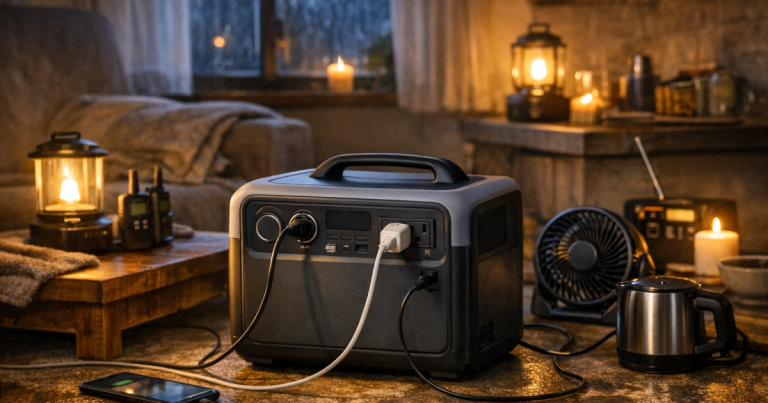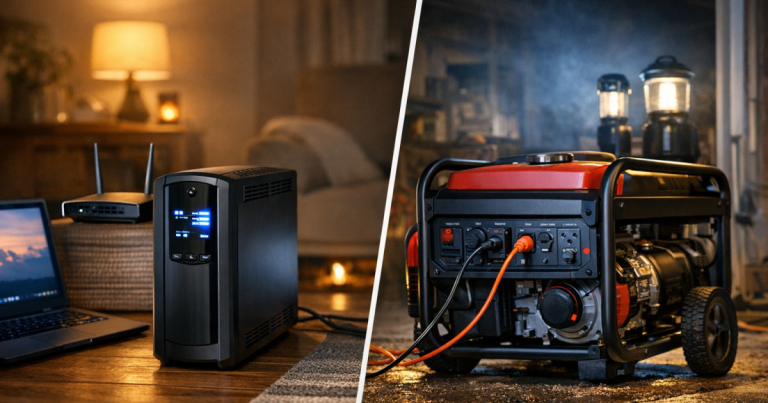
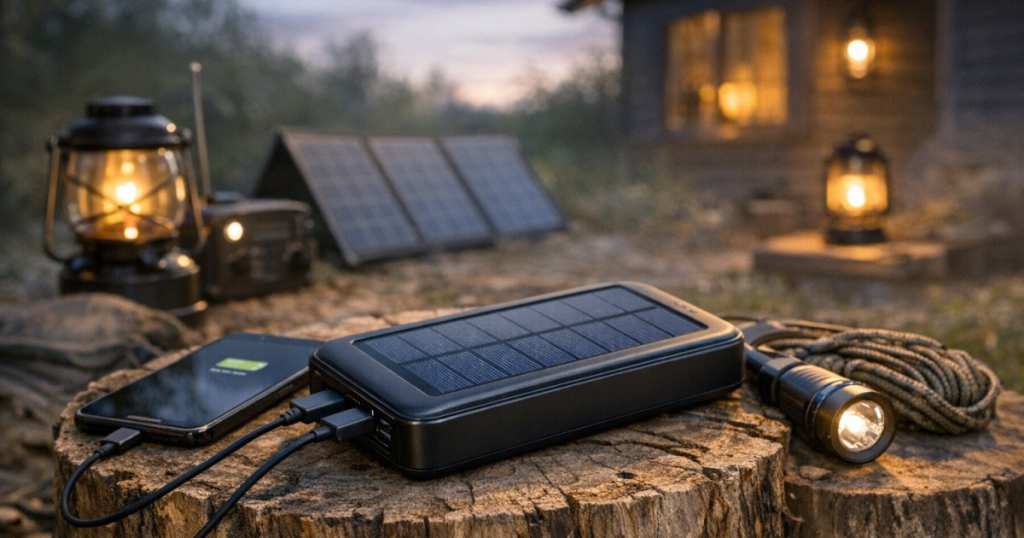
A small USB battery can feel surprisingly important when the lights go out. Phones, weather alerts, headlamps, and a family text thread all depend on a little stored power. This RAVPower 26800mAh Solar Power Bank review looks at the product in that realistic role: a compact emergency charger for small devices, not a serious substitute for a portable power station or generator.
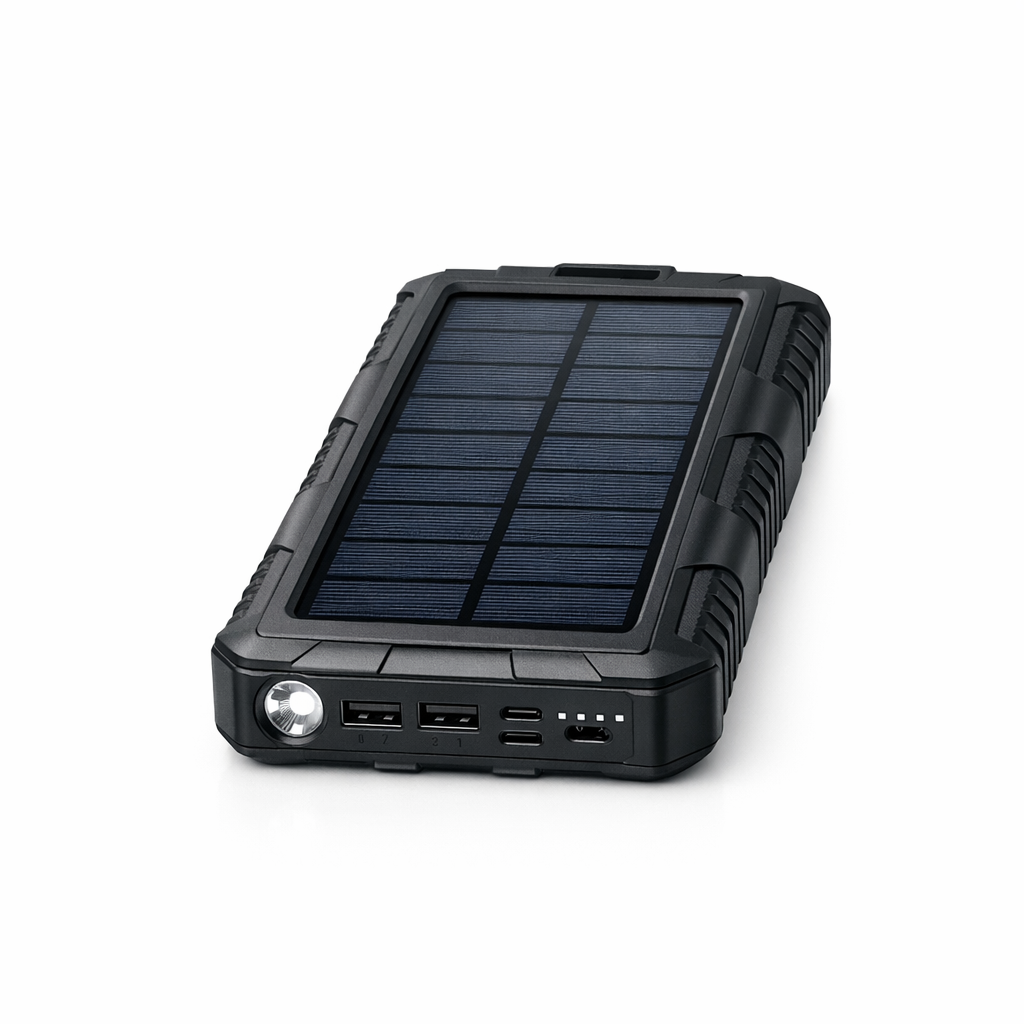
RAVPower 26800mAh Solar Power Bank
A sensible small-device backup for phones and USB gear, as long as you do not rely on solar alone
The short version: the RAVPower 26800mAh Solar Power Bank makes sense as a backup layer for phones and USB gear, especially in a grab-and-go outage kit. Its biggest limitation is right in the name, too: a built-in solar panel on a power bank is usually a slow recovery method, not a fast way to refill the battery during a long blackout.
Product overview
The RAVPower 26800mAh Solar Power Bank is a solar power bank from RAVPower, built around a stated 26,800mAh battery capacity and intended for charging small USB-powered devices. For outage planning, that puts it in the same practical category as phone banks, camping chargers, and emergency kit batteries rather than the larger home-backup category.
That distinction matters. A solar power bank can be useful when you need to keep a smartphone alive overnight, top up a rechargeable lantern, or keep a small USB radio running. It is not the product to buy if your goal is to power a refrigerator, microwave, space heater, sump pump, internet setup for several days, or medical equipment without careful compatibility checks.
Before buying any small battery for emergencies, it helps to decide which devices are truly essential. If you have not already done that, start with deciding what to power during an outage so you are not expecting a pocket-sized charger to solve whole-home problems.
Key specs
- Product type: Solar power bank for small USB devices.
- Brand: RAVPower.
- Stated battery capacity: 26,800mAh. Buyers should verify the watt-hour rating in the manual or current listing, because mAh alone does not translate cleanly into real runtime.
- Solar charging: The product name indicates built-in solar charging. Treat this as an emergency trickle-recharge feature and verify expected recharge guidance from the seller or manufacturer materials.
- Outputs: Verify the current port types, number of ports, and output ratings before purchase, especially if you need USB-C or faster charging support.
- Best outage role: Phones, small USB lights, compact radios, rechargeable headlamps, and similar low-draw gear.
- Not a match for: AC appliances, refrigerators, full-size medical devices, or home circuits unless a product specifically includes the required output and safety features, which this type of power bank generally does not.
- Availability note: RAVPower product listings and versions can vary, so confirm that the exact model, condition, and included cables match what you expect.
Pros and cons
Pros
- Useful capacity for small-device backup: A 26,800mAh bank is meaningfully larger than many pocket phone chargers, though real usable energy will be lower after conversion losses.
- Good fit for outage kits: It is easier to store, move, and hand to a family member than a heavy power station.
- Solar panel adds a fallback option: The panel is not the main reason to buy it, but it can provide limited recovery when wall charging is unavailable.
- Quiet and indoor-friendly: Unlike a fuel generator, a battery power bank does not create exhaust fumes during normal use.
- Simple role: For USB devices, the use case is straightforward: charge it before storm season and keep compatible cables nearby.
Cons
- The solar panel is inherently limited: A small built-in panel is slow, weather-dependent, and sensitive to shade, angle, and season.
- mAh can be misleading: Shoppers often overestimate runtime because phone and power bank capacities are measured under different conditions.
- Not enough for household loads: It will not run the equipment most people associate with home backup power.
- Port details matter: If you need USB-C, higher output, or support for a specific device, you must verify the exact listing rather than relying on the general product name.
- Brand and model availability may vary: Older or third-party listings can differ in accessories, condition, and version details.
Performance in real use
In a blackout, the RAVPower 26800mAh Solar Power Bank is best judged by whether it keeps communication and small lighting options alive. That is a narrow but valuable job. For a household that already has flashlights, a weather radio, and a larger battery or generator plan, this power bank can serve as a personal backup charger that lives in a go-bag, kitchen drawer, or storm bin.
For phone charging, expect useful but not magical results. A power bank’s stated capacity is not the same as the amount of energy your phone receives. Some energy is lost during voltage conversion, heat, cable resistance, and device charging behavior. A modern smartphone battery size also varies widely. The safest way to plan is to charge the power bank fully, test it with your own phone, and note how many realistic top-offs you get before an actual outage.
The solar side is where expectations need the most discipline. A built-in solar panel on a compact power bank is physically small, so it cannot collect energy like a folding portable panel. It may help in bright sun over long periods, but it should not be treated as your primary recharge plan for a multi-day outage. If the forecast includes heavy rain, wildfire smoke, winter clouds, or shaded apartment windows, solar recovery will be even less dependable.
Portability is the product’s strongest practical advantage. A small power bank can move with the person who needs it. That matters when one family member is sleeping downstairs during a heat outage, another is checking neighborhood updates, and someone else needs a charged phone in the car. It is also easier to lend than a larger battery station.
Compatibility is the part to slow down on. Confirm the charging cable your phone or device needs, the output rating required, and whether the power bank supports the port type you expect. If you rely on a USB-powered medical accessory, manufacturer compatibility matters; do not assume any emergency battery will run it properly without checking the device’s power requirements and testing the setup ahead of time.
Safety is simpler than with fuel-powered equipment, but still worth respecting. Do not use a swollen, cracked, water-damaged, or overheating battery. Keep it away from extreme heat, do not leave it baking behind a windshield, and follow the manufacturer’s charging instructions. For larger outage loads, indoor-safe battery stations and properly installed generator systems belong in a different planning lane.
Who it’s best for / who should skip it
It is best for: renters, commuters, students, apartment dwellers, and homeowners who want a compact emergency charger for phones and small USB gear. It also fits households that already have a broader blackout plan and want redundancy for personal devices.
It is also sensible for: storm bags, evacuation kits, camping-style backup bins, and car emergency kits where a quiet, no-fuel charger is easier to manage than larger equipment.
Skip it if: your main concern is a refrigerator, freezer, furnace blower, CPAP setup, router, well pump, or several days of laptop work. Those needs usually point toward a larger portable power station, UPS, transfer-switch generator setup, or a carefully sized combination of systems.
Be cautious if: you are buying mainly for the solar claim. The built-in panel can be helpful as a last-resort feature, but it should not be the reason you depend on this as your only emergency charging plan.
Alternatives
The most realistic alternative is not another small solar power bank; it is a different backup tier. If you only need phones and small lights, a non-solar high-capacity USB power bank from a current, well-supported brand may be easier to evaluate because the port specs and charging standards are clearer.
If you want to run a router, laptop, small fan, or multiple devices at once, step up to a portable power station and compare watt-hours, AC output, recharge options, and safety behavior. The guide to choosing a portable power station for blackouts is the better next stop for that decision.
If you need whole-home circuits, a refrigerator plan, or fuel-based backup, this RAVPower unit is not in the right category. It can still be useful in the same household, but as a small-device backup layer, not the main outage system.
Things readers ask
Can the RAVPower 26800mAh Solar Power Bank run a refrigerator?
No. This type of solar power bank is intended for small USB devices, not household appliances. Refrigerators need a properly sized power station, generator, or home backup system.
Will the solar panel fully recharge it in one day?
Do not count on that. A built-in panel on a compact power bank is generally best treated as a slow emergency top-off method, not a dependable daily recharge source.
Is 26,800mAh enough for a blackout?
It can be enough for phones and small USB gear during a short outage, depending on device size and use. It is not enough for broad household backup.
Can I take it on a plane?
Airline and TSA rules are based on watt-hours, not just mAh. Verify the watt-hour rating and current airline limits before packing it for travel.
Should I store it fully charged?
For outage readiness, keep it charged and check it periodically. Follow RAVPower’s storage guidance, and recharge it before storm season or planned shutoff periods.
Verdict + score
The RAVPower 26800mAh Solar Power Bank is a useful emergency charger when judged honestly: good for phones, small USB lights, and personal backup, but too limited to carry a real home blackout plan. Its built-in solar panel is a nice fallback, yet shoppers should treat wall charging before an outage as the real preparation step. Because of the solar limitations, port-verification concerns, and narrow use case, it earns 6.9 out of 10.
Final thoughts
Overall, RAVPower 26800mAh Solar Power Bank earns a score of 6.9/10. It is a strong option for readers who want the benefits discussed above, while still being worth comparing against the alternatives before buying.
RAVPower 26800mAh Solar Power Bank
A sensible small-device backup for phones and USB gear, as long as you do not rely on solar alone
You might also like: How to Safely Use a Portable Power Station Indoors During an Outage.