A blackout is much easier to handle when the decisions are already made. A home blackout plan turns “what now?” into a calm sequence: check on people, protect food, power essentials, and stay informed.
The goal is not to run everything as normal. It is to keep the household safe, warm or cool enough, connected, and able to sleep while the grid is down.
Generator transfer switches, interlock kits and any connection to household wiring should be installed by a qualified electrician to comply with local electrical codes, utility requirements and safety standards.
Main points
- Plan around people first: medical needs, temperature comfort, mobility, pets and communication.
- Choose a few essential loads instead of trying to power the whole house.
- Write down the first 15 minutes of action so no one has to improvise in the dark.
- Separate safe indoor power from outdoor generator use. Batteries and UPS units can be used indoors; fuel-burning generators cannot.
- Test the plan on a normal evening before storm season, wildfire shutoffs or severe weather arrive.
Start with the blackout you are actually planning for
A plan that works for a two-hour neighbourhood outage may not work for a three-day storm outage. Before buying gear or reorganising a closet, decide which situations matter most for your household.
For many United States homes, the realistic scenarios are a short grid failure, an overnight outage, a severe-weather outage lasting a day or two, or a planned public safety shutoff in wildfire-prone areas. Rural homes may also need to think about well pumps, longer restoration times and harder road access. Apartment renters often have a different problem: limited storage, no outdoor generator space and a stronger need for quiet indoor power.
Use the planning pages on the Outage Essentials home base as a place to think in household scenarios rather than just gear lists. A good plan starts with the outage you expect, not the biggest backup system you can imagine.
Decide what must keep working
List the things that genuinely matter if the power goes out tonight. Keep the list short at first. The more items you call essential, the harder the plan becomes to run, test and afford.
Tier 1: life, health and safety
- Medical devices and charged phones for emergency calls.
- Basic lighting for stairs, bathrooms, kitchens and exits.
- Carbon monoxide alarms and smoke alarms with working batteries.
- Heating or cooling decisions for vulnerable people, not just comfort.
- Access to medicines, mobility aids, glasses and important documents.
Tier 2: food, information and sleep
- Fridge and freezer temperature management.
- A radio or phone alerts for weather and local instructions.
- Simple meals that do not depend on an electric hob or oven.
- Fans, blankets or a safe room plan depending on the season.
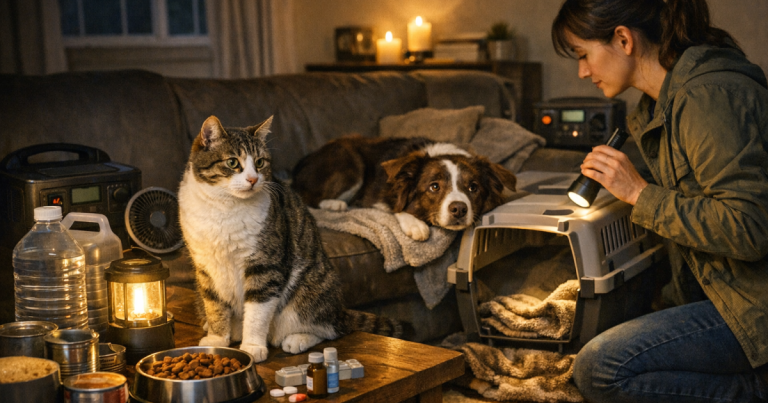
- A way to keep children, older adults and pets settled overnight.
Tier 3: convenience
- Television, gaming, laundry and most kitchen appliances.
- Large heating and cooling loads that quickly overwhelm small backup systems.
- Non-essential outlets in rooms no one is using.
This ranking matters because backup power is always a trade-off. A small battery may keep phones, lights and a router going, but it will not make a home behave as if the grid is normal. A generator may support more loads, but it needs outdoor placement, fuel planning, extension cords or a properly installed transfer setup, and careful carbon monoxide precautions.
Write the first 15 minutes
The first few minutes of a blackout can feel noisy and confusing: alarms beep, children ask questions, the fridge is silent, and someone starts looking for a torch. A short written sequence prevents rushed decisions.
- Check on every person in the home, including anyone asleep, unwell or using medical equipment.
- Look outside safely to confirm whether the outage is local to your home or wider in the area.
- Turn off or unplug heat-producing appliances that were running when the power failed.
- Switch to battery lighting instead of candles where possible.
- Keep fridge and freezer doors closed while you decide the next step.
- Check utility outage maps, weather alerts or local emergency messages if mobile service is working.
- Start your backup power only after you know what needs power and where it can be run safely.
Print this sequence and tape it inside a kitchen cabinet, utility-room door or emergency bin lid. The best outage plan is not the one with the most detail; it is the one someone can follow when tired, stressed or holding a flashlight.
Build a simple power budget
You do not need to become an electrician to plan backup power, but you do need to understand that every device has a power draw. Watts describe how much power something uses while running. Watt-hours describe how much energy a battery can deliver over time. Actual runtime varies with the appliance, battery condition, temperature, age, inverter losses and how often devices cycle on and off.
Start by writing down the devices you want to support. For each one, check the label, manual or manufacturer information for running watts and any start-up surge. Fridges, freezers, pumps and some motor-driven appliances can need a higher burst of power when they start. Sensitive electronics may also need cleaner power than a rough, overloaded setup can provide.
For a small household, a realistic indoor backup target might be phones, LED lights, a Wi-Fi router, a laptop and perhaps a medical device that has been reviewed with the equipment provider. For a suburban home with safe outdoor generator placement, the target may include a fridge, freezer, selected lights and charging stations. For a rural property, the question may include a well pump or sump pump, which changes the planning conversation and often points towards professionally installed switching equipment.
If you use a manual transfer switch, a kit such as the Reliance Controls 306CRK Pro/Tran 2 30A 6-Circuit Transfer Switch Kit is an example of the kind of equipment homeowners research for selected circuits, but compatibility, generator output, circuit choice and installation requirements must be verified by a qualified electrician.
Separate indoor power from outdoor power
This is one of the most important safety lines in any home blackout plan. Battery packs, lanterns, UPS units and power stations are generally intended for indoor use when operated as directed. Fuel-burning generators are outdoor equipment only.
Never run a generator in a house, garage, basement, shed, enclosed porch or near open windows and doors. Carbon monoxide is not something you can smell or see, and it can build up quickly. Place generators outside in accordance with the manufacturer’s instructions, away from openings, and use working carbon monoxide alarms on every level of the home.
Do not refuel a hot generator. Shut it down and let it cool according to the manual before adding fuel. Store fuel in approved containers, away from living areas and ignition sources, and rotate it according to the product guidance. If that sounds like more management than you want, plan around indoor batteries and a smaller load list instead.
Protect food without guessing
Food safety is a planning issue, not a mood check. A fridge should generally stay at or below 4°C, and a freezer should be around -18°C. During an outage, keep doors closed as much as possible and use appliance thermometers so you are not relying on touch or smell.
A closed fridge may keep food cold for several hours, while a full freezer can hold temperature longer than a half-empty one. Actual results depend on room temperature, appliance condition, how often the door is opened and how full the compartment is. If the outage is likely to run long, decide early whether you will move high-value food to a cooler, run a fridge intermittently from backup power, or accept some loss rather than risk illness.
- Keep fridge and freezer thermometers visible.
- Freeze water containers ahead of storm season to help fill empty freezer space.
- Group frequently used items in one area so doors are open for less time.
- Have shelf-stable meals that do not depend on saving the fridge.
- Write down the time the outage began and when you first opened each appliance.
Plan communications before the network is crowded
Phones are useful during outages, but they are not a complete communications plan. Mobile networks can slow down, home internet may fail, and batteries drain quickly when people keep refreshing maps and messages.
Agree on a contact outside your immediate area who can receive updates. Save utility outage pages, local emergency management contacts and school or workplace alert channels before bad weather. A NOAA weather radio, such as the Midland WR400 Deluxe NOAA Weather Alert Radio, can be a useful backup information source in areas where weather alerts matter; verify alert coverage and power options for your location.
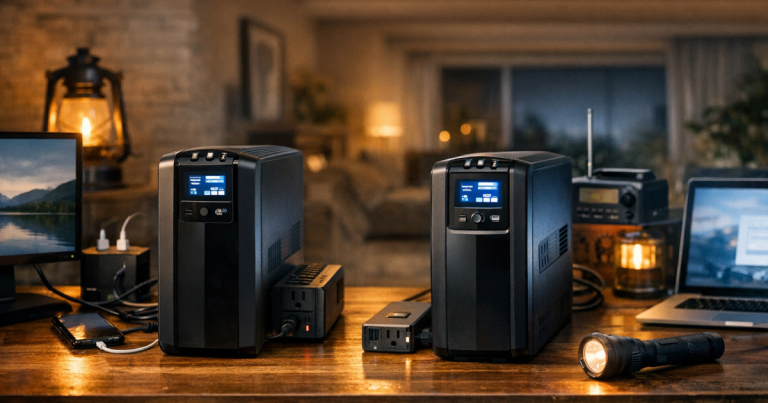
For home internet, decide whether it is truly essential. If you work remotely, have security equipment, or rely on Wi-Fi calling, a UPS for the modem and router can bridge short interruptions. For longer outages, internet may still fail outside your home even if your router has power, so keep expectations realistic.
Make lighting boring, safe and easy to find
Lighting is where many plans become either unsafe or overcomplicated. You do not need bright worksite lighting in every room. You need safe movement, calm children, visible exits and enough light for food, medicine and basic tasks.
Put rechargeable lanterns in predictable places: one near the main living area, one near the bedrooms, one near the bathroom route and one near the emergency bin. A lantern such as the LuminAID PackLite Max 2-in-1 Power Lantern is an example of compact emergency lighting people may compare for outage kits, but the key is whether everyone can find and operate the light without searching through drawers.
Avoid relying on candles as your primary light source. They add fire risk at the exact moment people are distracted, moving around in the dark and dealing with pets or children.
Match the plan to your household type
Renters and apartments
Focus on indoor-safe gear, lighting, phone charging, food choices and communication. Do not assume you can run a generator on a balcony, walkway or shared outdoor space. Check lease rules and building policies before storing fuel or using any equipment that affects neighbours.
Families with young children
Practise the plan during a normal evening so children know where to sit, which lights come on, and what sounds are expected. Keep snacks, comfort items and a basic activity kit in the outage bin. The more ordinary the routine feels, the less stressful the real event becomes.
Older adults and medical needs
Write down medication storage requirements, emergency contacts, device power needs and transport options. For medical equipment, confirm backup power guidance with the device provider or healthcare team. Do not rely on guesswork for oxygen equipment, CPAP machines, refrigerated medicines or mobility devices.
Remote workers
Decide in advance what counts as “online enough”. A phone hotspot, charged laptop and router backup may handle a short outage, but a long regional outage can affect towers and service providers. Have a work message template ready so you are not composing updates while troubleshooting power.
Store the plan where people will use it
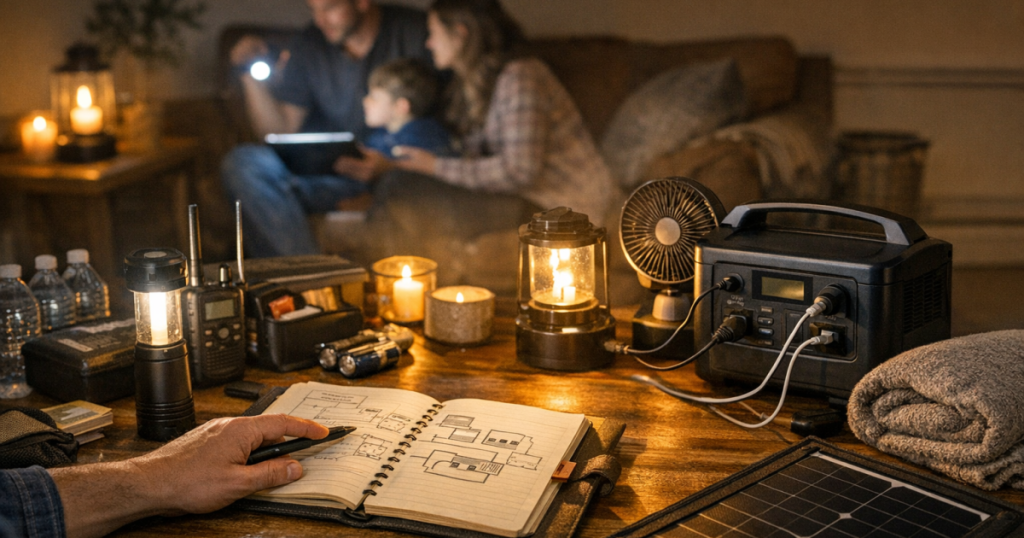
An outage plan should not live only on a phone. Print one page with the household sequence, emergency contacts, utility account details, medical notes, backup power instructions and shutoff locations. Keep a second copy in the emergency bin.
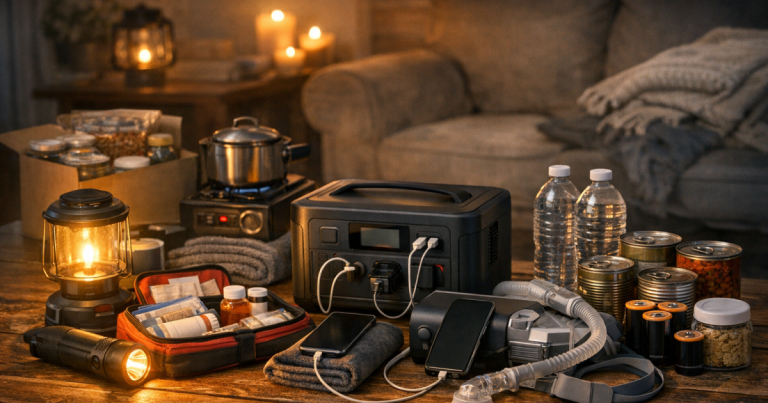
Your bin does not need to be dramatic. Useful basics include battery lighting, spare charging cables, a first-aid kit, shelf-stable food, water, a manual can opener, hygiene supplies, pet items, work gloves, thermometer, tape, marker and printed instructions. Review the bin twice a year, especially before local storm seasons or wildfire shutoff periods.
When we mention gear that may earn the site a commission, the affiliate disclosure explains how those links are handled. The planning advice should still stand on its own: buy less, use it better, and test it before you need it.
Test the plan on a calm day
The most useful test is a short household drill. Pick an evening, turn off non-essential lights, and run the first 30 minutes as if the grid failed. Do not shut off anything dangerous or interfere with appliances that need stable power; the point is to practise decisions, not create problems.
- Can everyone find a light within one minute?
- Does the written sequence make sense without explanation?
- Are the power cables, extension cords and chargers in one place?
- Can the person responsible for backup power explain the setup safely?
- Do you know which fridge or freezer items matter most?
- Does anyone feel too hot, too cold, anxious or left out of the plan?
After the drill, fix the annoying parts first. Move the lantern. Label the cable. Print the phone list. Replace the missing can opener. Small fixes are what make the plan work during a real outage.
When to change course
A blackout plan should include decision points. If the house is becoming too hot or cold, medical equipment cannot be supported, water is limited, roads are closing, or official guidance tells people to leave, staying home may stop being the safest option.
Write down where you could go: a friend outside the outage area, a cooling or warming centre, a hotel, a relative, or a community shelter. Keep the car fuel level from running too low before severe weather, and pack a small go-bag for people, pets, medicines and chargers.
FAQ
How much backup power does an average home need?
There is no single average that works. Start with essential devices, check their wattage, and size the backup around those loads rather than the whole house. Fridges, pumps and medical equipment need extra care because start-up draw and runtime can vary.
Can I plug a generator into a wall outlet?
No. Backfeeding a home through a wall outlet is dangerous and can harm utility workers, neighbours and your own equipment. Use outdoor-rated extension cords for suitable appliances or a professionally installed transfer switch or interlock system.
What should renters do if they cannot use a generator?
Prioritise indoor-safe options: charged phones, battery lanterns, power banks, a small UPS for internet equipment, shelf-stable food, coolers and a written communication plan. Confirm building rules before storing fuel or using any shared-space equipment.
How often should I review my blackout plan?
Review it at least twice a year and before high-risk seasons in your area. Also update it after moving, changing medical equipment, adding a pet, buying new backup gear or changing household routines.
What is the biggest mistake people make?
They buy equipment before deciding what problem it must solve. A clear load list, safe setup location and written household sequence usually prevent more trouble than a larger, untested system.
Key takeaways
A working blackout plan is practical, written down and tested. It does not promise whole-home normality. It protects people, keeps food decisions sensible, uses power deliberately, and gives everyone a clear role.
If you want to keep refining your setup by scenario, the planning articles on the blog can help you think through food safety, backup power, internet, apartment limits and longer outage routines without turning preparedness into guesswork.