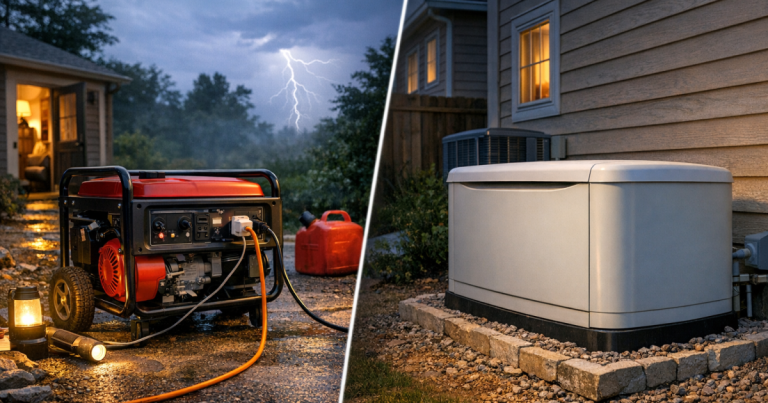
A portable generator can keep a refrigerator cold, phones charged, medical gear supported, and a few lights on when the grid is down. The basics of portable generator safety are simple: keep exhaust outside, keep power paths clean and rated for the load, and connect to home wiring only through approved equipment. The details matter, because the same machine that feels reassuring in a storm can become dangerous when it is placed, fueled, or connected the wrong way.
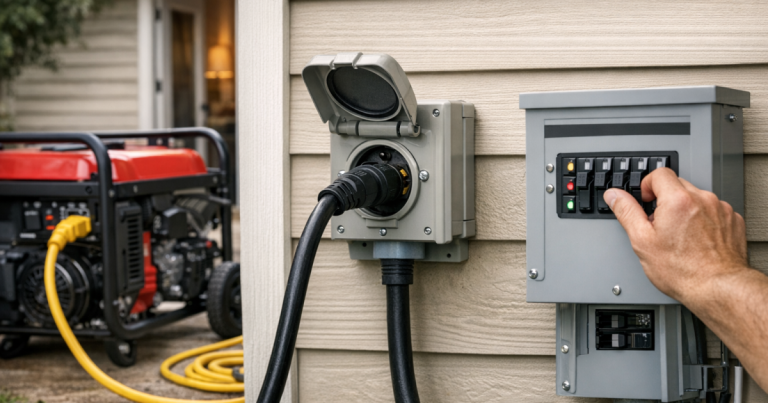
Transfer switch installation, interlock installation, and any connection between a generator and home wiring should be carried out by a licensed electrician to comply with the National Electrical Code, manufacturer instructions, and local electrical requirements.
The short version
- Run a portable generator outdoors only, far from doors, windows, vents, crawlspace openings, and attached garages.
- Point exhaust away from the home and away from neighboring homes when possible.
- Use working carbon monoxide alarms on every level of the home and near sleeping areas.
- Use outdoor-rated extension cords with the correct gauge, plug type, and amp rating for the load.
- Do not backfeed a home through a dryer outlet, wall outlet, or homemade cord.
- Follow the generator manual for grounding, neutral bonding, GFCI behavior, oil checks, fuel type, and maintenance intervals.
- Let the generator cool before refueling, and store fuel in approved containers away from living spaces and ignition sources.
Carbon monoxide is the first hazard to solve
Carbon monoxide, often shortened to CO, is an invisible, odorless gas produced by gasoline, propane, and natural gas engines. You cannot judge CO safety by smell, engine size, weather, or whether a door is cracked open. A small inverter generator can create a serious CO hazard if it is used in a garage, breezeway, shed, porch, basement, or near an open window.
For blackout use, the safe habit is to treat the generator like an outdoor engine, not like an appliance. Place it outside in open air, with the exhaust aimed away from the house. Avoid semi-enclosed spots that feel convenient during rain, such as an attached garage with the door open, a covered porch, or a carport pressed against the house. Those areas can trap exhaust and allow it to move indoors.
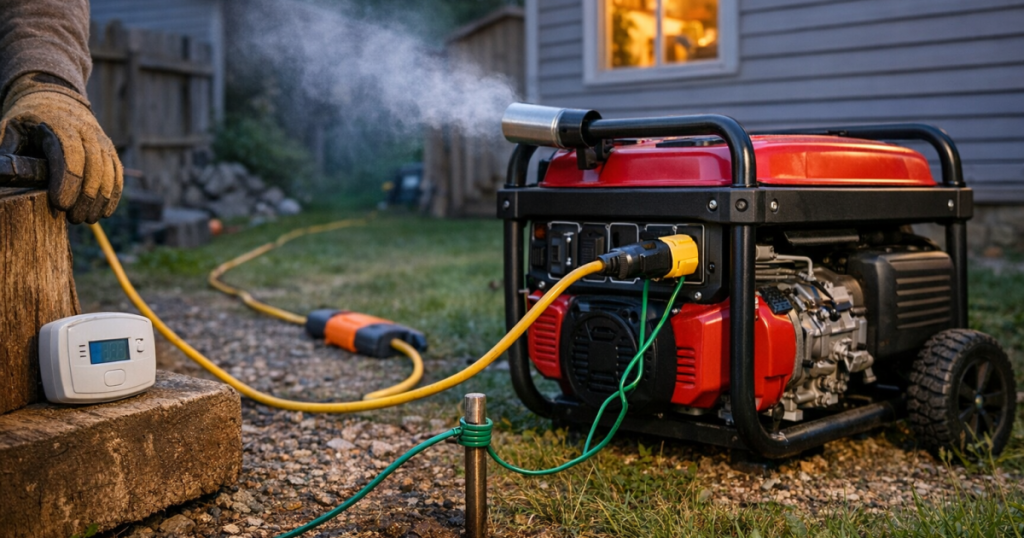
Install and test CO alarms before storm season. A plug-in or battery-powered unit such as the Kidde Nighthawk Carbon Monoxide Detector is one recognizable example, but the important checks are simple: the alarm should be listed for residential CO detection, have a working power source, and be placed according to its instructions. If an alarm sounds during generator use, get everyone to fresh air and call emergency services. Do not go searching for the source while people remain inside.
Where to place the generator during an outage
Most generator manuals and safety agencies recommend keeping portable generators at least 20 feet from the home, with exhaust directed away from openings. That distance is a starting point, not a magic shield. Wind, house shape, fences, basement windows, and neighboring structures can all affect where exhaust travels.
Before an outage, walk your property and choose a few possible generator spots. Look for a firm, level surface that is outdoors, drains well, and is not in a traffic path. The spot should allow the engine to breathe, leave room around hot surfaces, and keep cords from crossing puddles, driveways, or areas where someone will trip in the dark.
Rain adds a practical problem: generators should not be operated in wet conditions without suitable protection, but they also should not be enclosed in a way that traps exhaust or heat. A purpose-made generator tent or open-sided canopy designed for generator use can help, provided it maintains airflow and keeps exhaust clear. A tarp wrapped around the unit, a plastic storage box, or a shed with the door open is not a safe substitute.
Cords: the quiet weak link in many setups
Extension cords are not just convenience items during a blackout. They become part of the power system. An undersized, damaged, or indoor-only cord can overheat, drop voltage, create nuisance shutdowns, or expose people to shock hazards.
Use cords marked for outdoor use, with a rating that matches the appliance load and the generator outlet. For household items plugged directly into the generator, keep cord runs as short as practical and uncoil the cord fully so heat can dissipate. A cord that feels hot under load is a sign to stop and reassess.
For 30-amp generator inlets and transfer-switch setups, use a proper generator cord with the matching twist-lock connector, not a modified appliance cord. The Southwire 65172840 20-Foot 30A Generator Cord is an example of the kind of named cord readers may see in this category, but fit depends on your generator outlet, inlet box, amperage, and plug configuration. Verify those details before use.
Never use a cord with cut insulation, bent blades, loose ends, scorch marks, or a missing ground pin. Do not run cords under rugs, through standing water, under garage doors where they can be crushed, or across sharp metal edges. If a cord must pass through a doorway or window to reach a small device, keep the opening managed so it does not pinch the cord and so exhaust cannot drift inside.
Backfeeding is not a shortcut
Backfeeding means sending generator power into a home through an outlet, often with a homemade male-to-male cord. It is dangerous because it can energize wiring in ways the system was not designed to handle. It can also put utility workers, neighbors, and your own household at risk.
If you want a generator to power selected home circuits, use a properly installed transfer switch or listed interlock system that prevents the generator and utility from feeding the panel at the same time. A transfer setup also makes daily outage life easier because you can power chosen circuits without running cords through living areas. For the operating sequence and household workflow, see our guide on using a transfer switch during a blackout.
If you are not using a transfer switch, keep the setup simple: plug appliances directly into the generator or into a properly rated outdoor cord connected to the generator. Prioritize essentials rather than trying to recreate normal household power.
Grounding is not one-size-fits-all
Grounding is one of the most misunderstood parts of generator use because the right answer depends on the generator design and how it is connected. Some portable generators used only with cord-and-plug appliances are designed so the frame provides the required grounding reference for that use. Other setups, especially those tied into building wiring through transfer equipment, can involve different grounding and neutral-bonding requirements.
Do not guess by copying a neighbor’s setup. Read the generator manual and the transfer equipment instructions. Look specifically for terms such as bonded neutral, floating neutral, GFCI, grounding electrode, and separately derived system. If those terms affect your setup, that is exactly where a licensed electrician and local code requirements matter.
One practical check for homeowners: do not remove a ground pin to make a plug fit, and do not use adapters that defeat grounding. If a generator trips a GFCI repeatedly when connected to certain equipment, stop and identify the cause instead of bypassing the protection. The trip may be telling you that the generator, cord, transfer switch, or connected load is not configured correctly.
Load limits: safety also means not overworking the generator
A generator does not have to power everything to be useful. In a real outage, most households do better by choosing a short essentials list: refrigerator or freezer, a few lights, phone charging, internet gear if service is still live, a sump pump if needed, and medical equipment where applicable.
Every generator has running-watt and starting-watt limits. Starting watts matter because motors and compressors can surge when they start. A refrigerator, freezer, well pump, furnace blower, or window air conditioner may need more power for a moment than it uses while running. If the generator bogs down, trips a breaker, or connected equipment struggles to start, reduce the load.
For planning, list each essential item and check its label or manual. Then leave margin instead of running at the edge of the generator’s rating. Our plain-English guide to what size generator you need for a blackout walks through this without turning it into an electrical engineering project.
Fueling, cooling, and daily checks
Refueling is another moment when rushed decisions create risk. Turn the generator off and let it cool before adding gasoline or changing fuel connections. Keep fuel away from hot engine parts, cigarettes, grills, pilot lights, space heaters, and other ignition sources. Store gasoline only in approved containers, outside living areas, and according to local rules and the fuel container’s instructions.
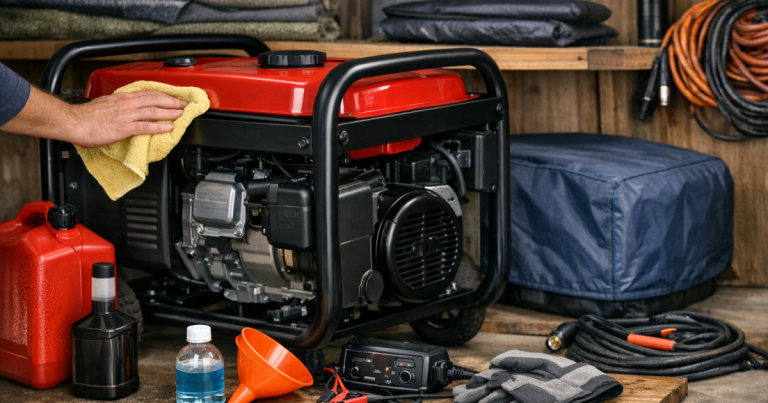
Check oil before extended use, especially with a new generator or one that has been sitting for months. Many portable generators include low-oil shutdown protection, but that is not a substitute for routine checks. Also inspect the air intake, cord connections, wheels, handles, and general condition before running.
A generator that is unboxed for the first time during a storm is more likely to be misused. Before outage season, add oil if required, understand the start procedure, and run it under a small load outdoors. If the unit is new, follow the manufacturer’s break-in instructions; our step-by-step article on breaking in a portable generator before an outage explains what to handle before the pressure is on.
A simple blackout setup routine
When the lights go out, the safest routine is boring and repeatable. First, decide whether the outage is long enough to justify generator use. For a short outage, a power bank, lantern, or UPS may cover phones, lights, and internet without engine noise or fuel.
If you do start the generator, move it to the planned outdoor location before fueling or connecting loads. Check that windows and doors near the generator side of the house are closed. Confirm CO alarms are powered. Start the generator with no major loads attached, then add loads one at a time. If you are using a transfer switch, follow the labeled sequence for that system.
During operation, do periodic walkarounds from a safe position. Listen for unusual engine changes, look for cords under strain, and make sure rain protection has not shifted into an unsafe enclosure. At night, use a headlamp or lantern instead of trying to adjust cords by feel.
Questions people ask
Can I run a portable generator in the garage with the door open?
No. An attached or detached garage can trap exhaust and allow carbon monoxide to move into living areas. Run the generator outdoors in open air, away from openings, with exhaust pointed away from the home.
How far should a generator be from the house?
Use the manufacturer’s instructions first, but many safety references use at least 20 feet as a minimum starting distance. Also consider wind direction, exhaust path, windows, vents, and nearby homes.
Do I need to ground my portable generator with a rod?
It depends on the generator and connection method. Cord-and-plug appliance use may have different requirements than a transfer-switch setup. Follow the manual and have home-wiring connections handled by a licensed electrician.
Can I use regular indoor extension cords for a refrigerator?
Use an outdoor-rated cord with the correct gauge and rating for the refrigerator’s load and cord length. Avoid damaged cords, long light-duty cords, and any cord that becomes warm during use.
Is a transfer switch required for every generator?
No. You can plug selected appliances directly into a generator with proper cords. A transfer switch or listed interlock is needed when you want to safely connect the generator to home circuits.
Key takeaways
A portable generator is a useful blackout tool when the setup is planned before the storm. The safest approach is not complicated: keep the engine outdoors, manage carbon monoxide, use the right cords, respect grounding rules, avoid backfeeding, and power only the loads that matter most. A little preparation turns the generator from a stressful emergency machine into a controlled part of your household outage plan.