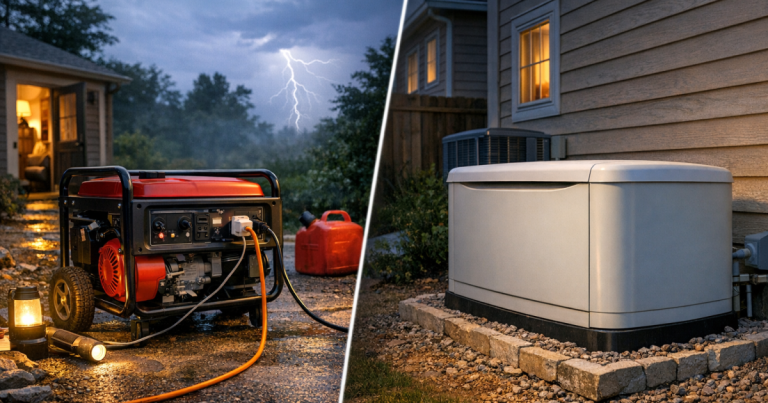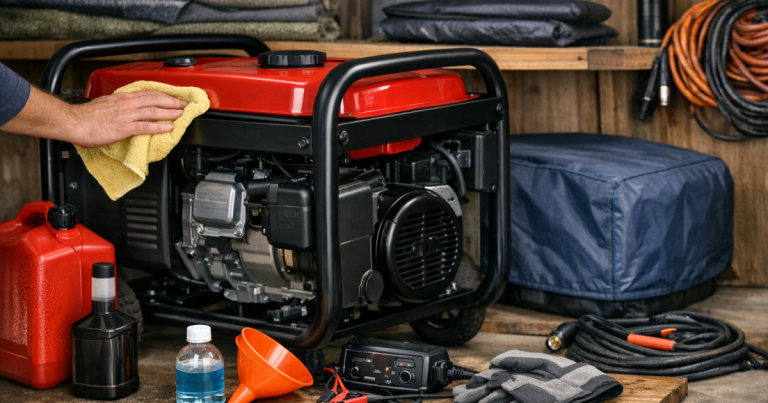
A generator that starts easily on a calm Saturday is much less stressful than one that coughs during a storm outage. A monthly generator test routine keeps fuel, starting parts, cords, transfer equipment, and household expectations honest before the lights go out.
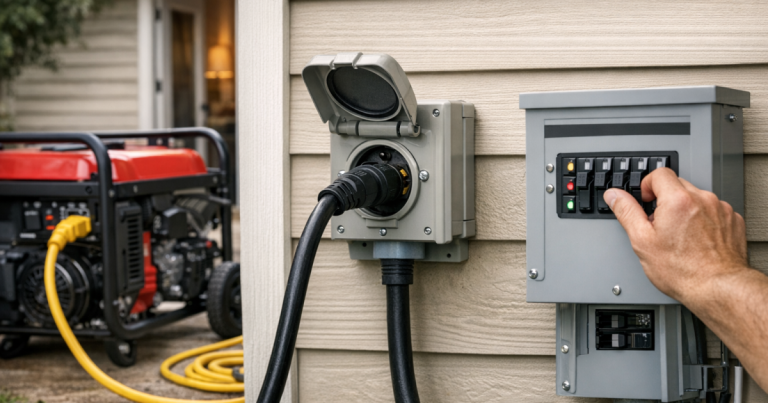
Transfer switch installation, generator inlet wiring, and any panel connections should be carried out by a qualified electrician to meet the National Electrical Code, manufacturer instructions, and local code requirements.
What to know first
The goal is not to run every appliance in the house for hours. The goal is to prove that your backup setup can start, connect safely, carry the loads you actually plan to use, and shut down cleanly.
- Pick the same day each month so testing becomes automatic.
- Run the generator outdoors only, far from doors, windows, vents, garages, and enclosed spaces.
- Test the same essentials you expect to use during an outage, not random appliances.
- Keep a short written log so small changes are easy to spot.
- Stop the test if you notice fuel leaks, damaged cords, unusual noise, smoke, or carbon monoxide alarm activity.
If your setup is still being planned, review the basics of generator placement, cord use, and transfer equipment in this guide to home backup generator safety basics before building a repeatable test day.
Step 1: Put the test on the calendar
Choose a predictable window, such as the first Saturday morning of the month. Daylight is helpful because you can inspect cords, fuel cans, the generator frame, and the surrounding area without rushing. Avoid testing during high winds, heavy rain, or extreme heat unless you are already dealing with a real outage and must use the generator.
Set aside about 30 to 45 minutes. That gives you enough time to inspect the unit, start it, warm it up, connect a small load, add your planned essentials, and shut everything down properly. If your generator manual calls for a different exercise schedule or procedure, follow the manual first and use this routine as a household checklist around it.
Step 2: Do a five-minute pre-start inspection
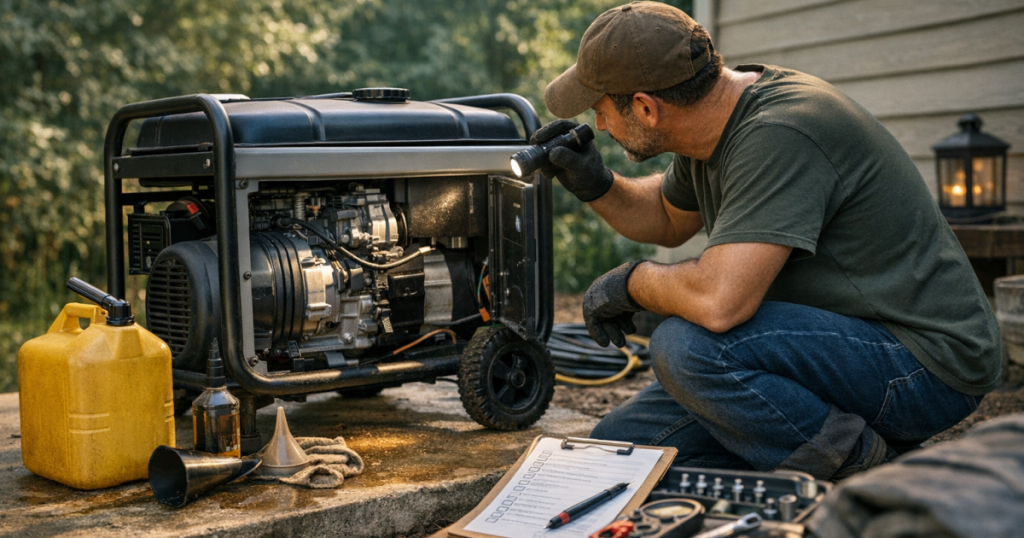
Before pulling a recoil cord or pressing a start button, walk around the setup. A generator test is most useful when it catches boring problems early: stale fuel, a loose cap, a cracked cord jacket, a tripped breaker, or a missing flashlight.
- Placement: Move the generator outdoors on a stable surface. Keep exhaust pointed away from the home and maintain safe clearance from openings. Many safety agencies recommend at least 20 feet from the house when practical.
- Carbon monoxide protection: Confirm that battery-powered or battery-backed carbon monoxide alarms are installed and working inside the home.
- Oil and fuel: Check oil level and fuel condition according to the owner’s manual. Do not guess on oil type, fuel treatment, or service intervals.
- Airflow: Look for leaves, plastic bags, snow, grass clippings, or stored items that could block cooling or exhaust areas.
- Cords and plugs: Inspect extension cords, generator cords, and inlet connections for cuts, loose ends, heat damage, corrosion, or bent blades.
- Loads: Make sure everything you plan to connect is switched off before the generator starts.
Do not refuel a hot or running generator. If fuel is low before the test, add fuel before startup and wipe up any spills before starting.
Step 3: Start unloaded and listen for changes
Start the generator with no appliances connected. Let it settle for a few minutes. You are listening for a steady sound, watching for vibration that seems new, and checking that the generator is not walking across the ground or sitting in exhaust-trapping conditions.
If the generator has an electric start, this is also the time to learn whether the starting battery is healthy. A slow crank, clicking sound, or repeated failed start is worth addressing before storm season. If your model has a manual recoil backup, make sure the person most likely to use it during an outage can operate it safely.
A monthly generator test routine should feel almost boring once it is established. If the start process changes from month to month, write down what changed. Cold weather, old fuel, a weak battery, and skipped maintenance can all show up as harder starting before they become a full outage problem.
Step 4: Add the loads you actually care about
Once the generator is running smoothly, connect loads in a planned order. Start with small, predictable items such as a lamp or battery charger, then move to the essentials that matter in your home: refrigerator, freezer, modem and router, sump pump, furnace blower, select lights, or medical support equipment that has been approved for your backup setup.
Do not assume the generator can start everything at once. Motors and compressors often need extra starting watts for a short period. A refrigerator may run comfortably once started but still cause a brief surge when the compressor kicks on. That is why your test should include the real devices and circuits you expect to use, not just a light-duty placeholder.
If you use a manual transfer switch or interlock, test only the circuits that were installed for generator use and follow the labeled sequence. If you use cords, connect only cord-and-plug appliances with properly rated outdoor cords. Never backfeed a home through a dryer outlet, range outlet, or improvised cord.
For homes that cannot power everything at once, practice the order in which loads rotate. A refrigerator may need a cooling window, a sump pump may need priority during heavy rain, and internet gear may matter most during work hours. The method in rotating generator loads without overloading backup power can help you turn that into a calm household plan.
Step 5: Check the connection points, not just the engine
A generator can run perfectly and still fail your household if the connection path is weak. During the test, put your eyes and hands on the safe-to-touch parts of the setup after loads have been running for a short time.
- Confirm cords are fully seated and not stretched across driveways, wet grass, sharp edges, or trip paths.
- Feel the cord jacket and plug body for unusual warmth. Warm under heavy load can happen, but hot, softened, or discolored parts mean stop using that cord.
- Make sure outdoor connections are protected from rain and pooling water without enclosing the generator itself.
- Verify transfer switch labels are still readable and match your current priority list.
- Check that household members know which outlets or circuits are backed up and which are not.
If a cord, plug, inlet, breaker, or transfer switch behaves differently than expected, do not work around it with adapters or improvised connections. Remove the load, shut down safely, and have the affected equipment evaluated or replaced before relying on it.
Step 6: Make fuel part of the test
Fuel planning is where many otherwise solid generator plans get fuzzy. Your monthly test should include a fuel check, even if the run itself is short. Look at how much fuel is on hand, how old it is, where it is stored, and whether your household knows the safe refueling process.
Gasoline, propane, natural gas, and diesel each create different planning habits. Portable gasoline generators need careful storage and rotation. Propane cylinders need enough reserve capacity for the loads and weather you expect. Natural gas setups still need awareness of installation limits and utility disruptions. Diesel units have their own storage and maintenance considerations.
Instead of guessing, keep a fuel note beside your log: date purchased, container size, treatment if used, and intended rotation date. For longer outages, use the planning approach in generator fuel planning for a multi-day outage so your test day connects to a realistic runtime plan.
Step 7: Shut down the same way every time
A clean shutdown matters because it protects both the generator and the connected equipment. Turn off or disconnect loads first, then let the generator run briefly with no load if your manual recommends it. Switch the generator off according to the manufacturer’s instructions, close the fuel valve if your model has one and the manual calls for it, and let the unit cool before storage or refueling.
Coil cords loosely once they are dry and cool. Store them with the generator or in a clearly labeled outage bin so no one borrows them for yard work and forgets to return them. Refill fuel only after the generator has cooled and only in a safe outdoor location away from ignition sources.
A simple monthly checklist
Print this or rewrite it in your own words and keep it with the generator. The best checklist is the one your household will actually use.
- Confirm weather is safe for a planned test.
- Move generator outdoors to the normal operating location.
- Check carbon monoxide alarms inside the home.
- Inspect oil, fuel, air intake, exhaust area, cords, plugs, and inlet.
- Start generator with no connected loads.
- Let it stabilize and listen for unusual sound or vibration.
- Connect a small test load.
- Add planned essential loads one at a time.
- Watch for overload warnings, breaker trips, struggling engine sound, or hot cord ends.
- Practice any load rotation your household expects to use.
- Disconnect or turn off loads before shutdown.
- Shut down, cool, store cords, and update the log.
What to write in the log
A useful log does not need to be fancy. A notebook, printed sheet, or household binder is enough. Record the date, outdoor temperature, fuel type, fuel age, starting method, loads tested, total run time, and anything unusual.
Short notes are valuable later. “Started on second pull,” “router and refrigerator tested,” “freezer added after 10 minutes,” or “left cord plug felt warm” gives you a trail to follow. If the same issue appears twice, deal with it before the next outage season.
Common questions
How long should I run the generator during a monthly test?
Follow the owner’s manual first. For many households, a short run that includes warm-up, load testing, and shutdown is enough to confirm readiness without wasting fuel.
Should I test the generator under load every month?
Yes, at least with a modest planned load. Starting the engine alone does not prove that cords, circuits, transfer equipment, and priority appliances will behave as expected.
Can I test during rain?
Avoid planned testing in rain. During a real outage, the generator still must stay outdoors and ventilated, with electrical connections protected from water according to the equipment instructions.
What if the generator trips a breaker during the test?
Disconnect loads, shut down safely, and review the load order and wattage demands. Repeated breaker trips need troubleshooting before the generator is relied on.
Do renters need a generator test plan?
Renters should only use generators where outdoor placement, storage rules, lease terms, and local requirements allow it. Many renters are better served by battery backup for small essentials.
What to remember
A good generator test is steady, repeatable, and calm. You are not trying to prove the generator can run the whole house. You are confirming that it can start, sit safely outdoors, connect through the right equipment, carry your chosen essentials, and shut down without drama.
Do that once a month, write down what happens, and fix small problems while the grid is still working. That habit is what turns a generator from a garage purchase into a dependable part of your blackout plan.