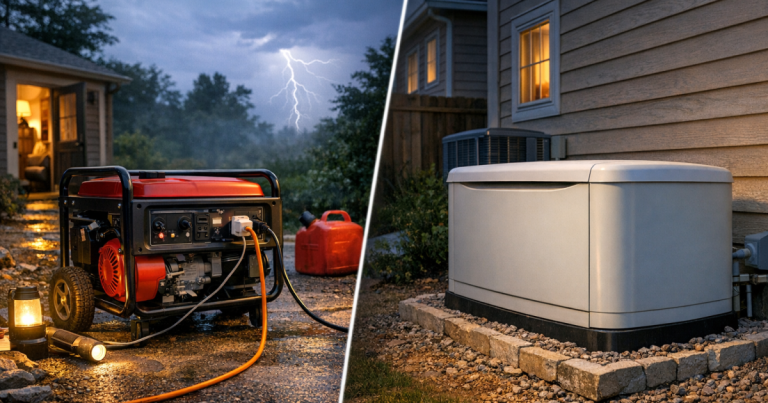
Fuel choice shapes how useful a generator feels when the power is out. The right generator fuel types for your home depend on what you need to run, how long outages usually last, where you can store fuel, and whether your setup is portable, standby, or connected through a transfer switch.
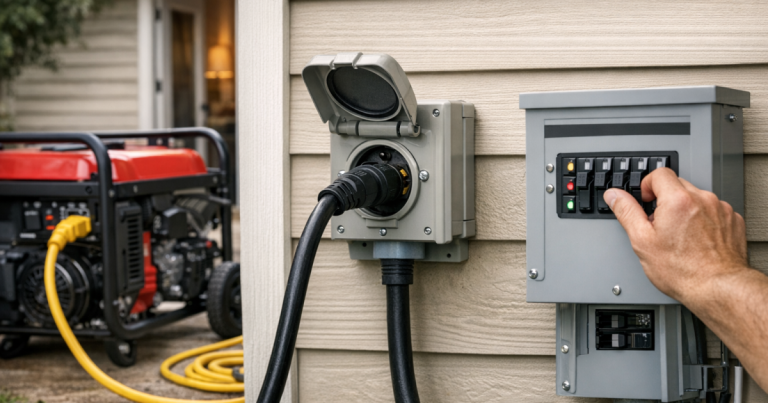
Generator transfer wiring, inlet connections, and natural-gas or propane line work should be handled by qualified electricians or licensed gas professionals to meet local code, utility requirements, and applicable safety standards.
What to know first
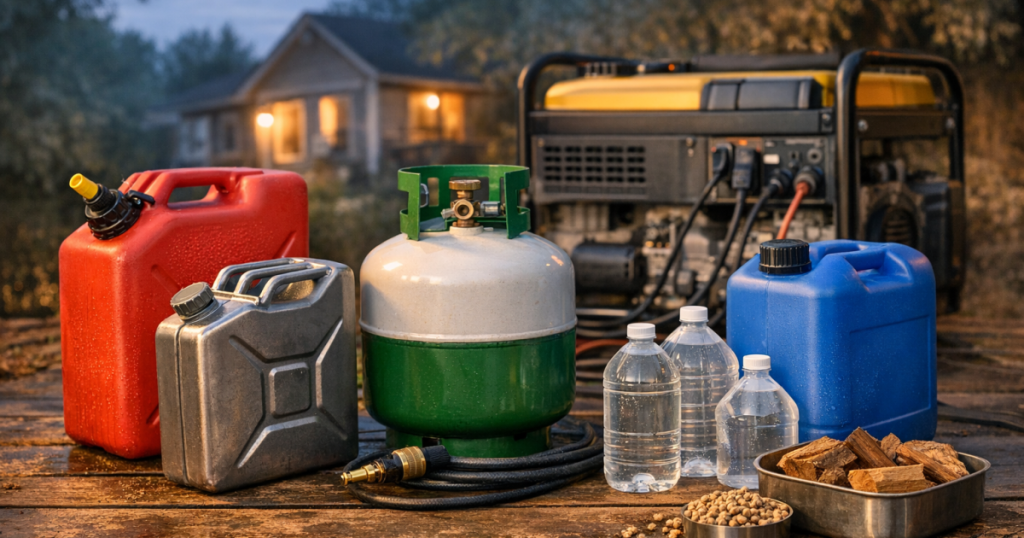
Most home blackout plans come down to four practical fuel choices: gasoline, propane, diesel, and natural gas. None is perfect. Gasoline is familiar and widely available, but it is harder to store for long periods. Propane stores well and is common in cylinders or larger tanks, but runtime depends heavily on load and tank size. Diesel is efficient for some larger units, but it is less common for typical suburban portable-generator setups. Natural gas can be convenient for standby systems, but it depends on a utility connection and professional installation.
The safest plan is not simply choosing the fuel with the longest possible runtime. It is choosing a fuel you can store legally, handle safely, refill realistically, and use with the generator capacity your household actually needs. If you are still sorting out portable, inverter, standby, and transfer-switch choices, start with the site’s broader guide to generator safety basics before committing to a fuel strategy.
Gasoline: familiar, flexible, and storage-sensitive
Gasoline is the fuel many households think of first because it is used in cars, lawn equipment, and many portable generators. For short storm outages, that familiarity matters. You can fill approved cans before severe weather, run a portable generator outdoors, and refuel as needed after shutdown and cooling.
The trade-off is storage. Gasoline does not sit indefinitely without quality changes, and old fuel can cause hard starting or rough running. Many households that rely on gasoline use approved fuel containers, add stabilizer according to label directions, rotate fuel into vehicles or equipment, and avoid storing more than they can safely manage. Local fire codes, rental rules, insurance expectations, and HOA rules can also affect how much fuel you should keep on hand.
Gasoline also creates a refueling reality check. During a regional outage, gas stations may be closed if they lack backup power, card systems may be down, and roads may be blocked. A gasoline plan works best when it includes fuel on hand before the storm, conservative power priorities, and a habit of running only the loads that matter most.
Propane: easier long-term storage, with load-dependent runtime
Propane is popular for home backup because it stores well in sealed cylinders or tanks and does not degrade the same way gasoline does. For many households, that makes propane calmer to manage: a couple of grill-style cylinders may be easier to keep ready than multiple gasoline cans. Homes with larger propane tanks for heating, cooking, or rural service may have an even stronger reason to consider propane-compatible equipment.
The important detail is that propane runtime is not fixed. It depends on generator size, electrical load, outdoor temperature, tank size, and how the generator is designed. A lightly loaded generator running a fridge and a few lights will use fuel differently than one trying to start well pumps, sump pumps, freezers, and multiple appliances. Cold weather can also affect how propane vaporizes from smaller cylinders, so winter outage planning deserves extra care.
Propane is often a good fit for people who value shelf life and cleaner storage habits, but it still needs safe handling. Cylinders should be stored upright, protected from heat, and used according to manufacturer instructions. Never bring propane cylinders indoors for generator use, and never run a generator in a garage, basement, shed, enclosed porch, or near open windows.
Diesel: practical in some setups, less common for everyday portable backup
Diesel generators are common in commercial, farm, industrial, and some whole-home applications. Diesel fuel has a reputation for efficiency under heavier loads, and diesel engines are often associated with durability in demanding use. For a rural property, workshop, or home that already stores diesel for equipment, this can be a practical fit.
For many ordinary households, though, diesel is not the simplest blackout fuel. Smaller residential portable diesel models are less common than gasoline or dual-fuel models, and diesel storage still requires attention to container quality, age, water contamination, and temperature. In cold climates, gelling and winter fuel considerations can matter. Diesel also has odor, spill, and storage issues that may be awkward in dense neighborhoods or rental situations.
The main lesson is not that diesel is bad. It is that diesel makes the most sense when the rest of the household already supports it: proper storage space, fuel-handling habits, appropriate generator size, and a realistic need for longer or heavier-duty operation.
Natural gas: convenient when available, not truly independent
Natural gas is common for permanently installed standby generators. The appeal is obvious: no portable cans, no cylinder swaps, and no rushing to refill fuel during a storm. If the gas utility remains active, the generator can run without the same kind of manual fuel planning required by gasoline or propane.
That convenience comes with limits. Natural gas generators require the right gas service, professional connection, proper permitting, and a safe electrical transfer method. They are also not independent in the same way stored fuel is. In most outages the gas system may continue working, but utility interruptions, earthquake risk, wildfire-related shutoffs, damaged service lines, or local emergency actions can change that picture.
Natural gas fits households that want a more automatic backup arrangement and are willing to handle the installation and maintenance responsibilities that come with it. It is usually less suitable for renters, apartments, temporary setups, or anyone who needs a portable backup plan they can move or store.
Dual-fuel and tri-fuel generators: flexibility with extra planning
Dual-fuel generators commonly let a household use gasoline or propane. Tri-fuel models add natural gas capability when properly connected. This flexibility can be valuable during a multi-day outage because it gives you more than one path: use propane for storage convenience, keep gasoline as a backup, or connect to natural gas where the setup is professionally designed for it.
Flexibility does not remove the need to plan. Output can vary by fuel, connection requirements differ, and the safest setup may change depending on whether you are using extension cords, a generator inlet, or a transfer switch. Before relying on any multi-fuel generator, read the manual carefully and confirm what the unit can support on each fuel. Do not assume that an appliance, furnace blower, well pump, or central system will run just because the generator has a large number printed on the frame.
Multi-fuel systems work best when you choose your “normal” outage fuel and treat the others as backups, not as vague possibilities. That means knowing which hose, regulator, cylinder, inlet, or cord belongs with which fuel mode and keeping those parts together where you can find them in the dark.
Match fuel to the outage you are actually planning for
A 6-hour thunderstorm outage is different from a 3-day ice storm. For a short outage, you may only need to keep the fridge cold, charge phones, run a router through a UPS, and use a few lights. For a longer outage, fuel becomes a household rhythm: run the generator in blocks, let the fridge and freezer recover, charge battery packs, shut down, and conserve.
Start with your power priorities before counting gallons or cylinders. A fridge, freezer, sump pump, medical device, well pump, or heating-system component may matter more than entertainment loads or multiple kitchen appliances. The more you ask the generator to do, the faster fuel disappears and the more complicated your setup becomes.
For deeper fuel math, use the site’s guide to planning generator fuel for a multi-day outage. Treat any runtime number as an estimate, not a promise. Real fuel use changes with load, weather, generator condition, elevation, fuel quality, and how often large motors start.
Storage and safety shape the real-world answer
Fuel choice is not only an equipment decision. It is a storage decision. Gasoline needs approved containers and rotation. Propane needs upright outdoor storage and cylinder inspection. Diesel needs clean containers and attention to fuel condition. Natural gas needs fixed infrastructure and professional connection.
Carbon monoxide is the non-negotiable risk across all combustion fuels. A generator belongs outdoors, away from doors, windows, vents, crawlspace openings, and neighboring occupied areas. Follow the generator manual and local safety guidance for placement; many safety agencies advise keeping portable generators at least 20 feet from the home when possible, with exhaust directed away from openings. Install working carbon monoxide alarms on each level of the home and near sleeping areas.
Refueling also deserves patience. Shut the generator down and let it cool before adding gasoline or diesel. Keep fuel away from ignition sources, use the correct containers, and do not improvise with funnels, hoses, or adapters that are not intended for fuel. During a stressful outage, simple routines prevent most mistakes.
Maintenance matters more than the label on the fuel can
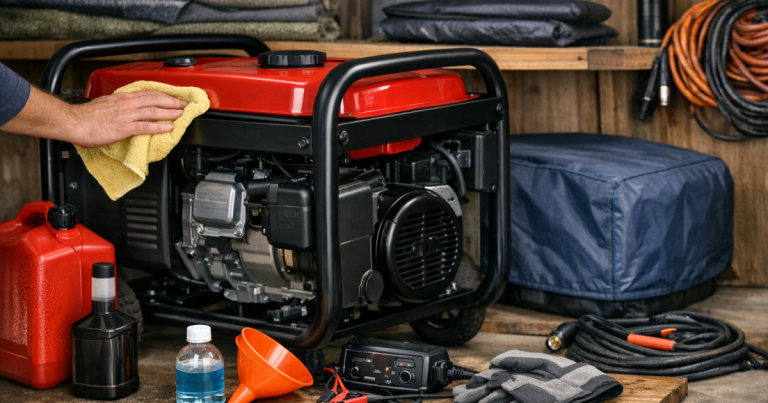
A generator that has not been run in a year is not a dependable plan, no matter which fuel it uses. Monthly or seasonal testing helps you catch stale fuel, weak batteries, clogged filters, low oil, missing cords, and starting problems before the weather turns bad.
Run tests should be boring on purpose. Place the generator correctly outdoors, connect only the loads or test setup you intend to use, listen for rough running, and confirm that cords, inlets, transfer equipment, and carbon monoxide alarms are ready. If your generator uses multiple fuels, test the fuel mode you expect to rely on most. The site’s monthly generator test routine can help turn this into a simple habit instead of a last-minute scramble.
Common questions
Which generator fuel is easiest to store for emergencies?
Propane is often easier for long-term household storage because sealed cylinders do not degrade like gasoline. You still need safe outdoor storage, upright cylinders, and enough capacity for your expected loads.
Is gasoline a bad choice for blackout backup?
No. Gasoline can work well for short outages and portable setups. The weak points are fuel aging, safe storage limits, and the possibility that local stations may be closed during a widespread outage.
Can a natural gas generator run forever during an outage?
No generator should be treated as unlimited. A natural gas unit may avoid manual refueling, but it still depends on utility service, maintenance, oil service intervals, safe installation, and the generator’s rated load limits.
Should I choose dual-fuel just in case?
Dual-fuel can add useful flexibility, but it is not a substitute for planning. Know which fuel you will use first, how much you can store, and whether the generator output changes by fuel type.
How much fuel should I keep at home?
Base it on your essential loads, likely outage length, local storage rules, and safe handling ability. It is usually better to plan conservative run periods than to oversize fuel storage without a clear routine.
What to remember
The best fuel plan is the one your household can actually use safely at 10 p.m. in bad weather. Gasoline is familiar but needs rotation. Propane stores well but depends on tank size and load. Diesel fits some heavier-duty or rural setups but adds storage complexity. Natural gas is convenient for installed systems but depends on utility service and professional work.
Choose the fuel around your real outage priorities: cold food, heat-related essentials, medical needs, communications, lighting, and water. Then test the setup, label the parts, and keep the plan modest enough that you can follow it calmly when the grid goes quiet.