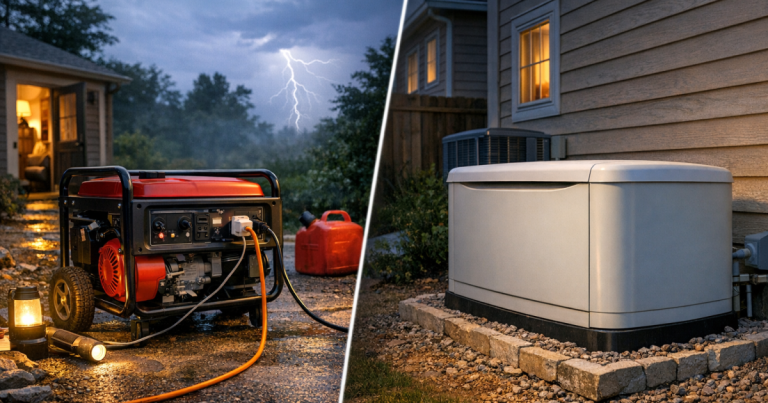
A home outage does not always call for the biggest generator you can fit in the garage. For many households, inverter generators sit in a useful middle ground: quieter than many conventional portable models, easier to live with during a short blackout, and capable of powering a careful list of essentials instead of trying to run the whole house.
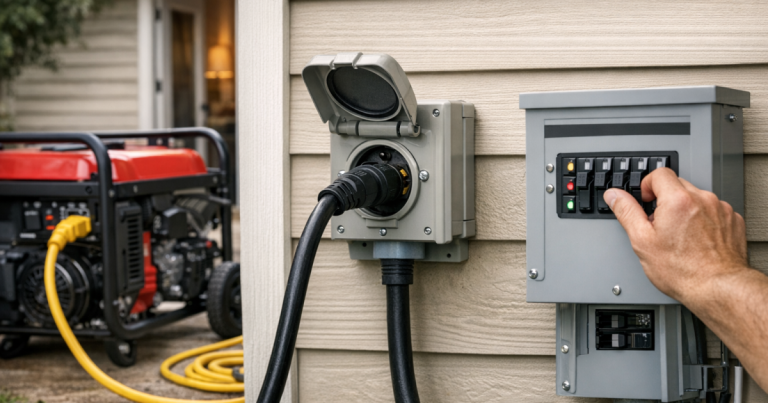
Transfer switch installation, generator inlet wiring, and any connection to household circuits should be carried out by a qualified electrician to meet local electrical codes, manufacturer instructions, and safety requirements.
The short version
An inverter generator makes the most sense when your goal is essential backup: refrigerator, freezer, modem and router, phone charging, a few lights, a fan, small kitchen appliances used one at a time, or certain medical devices after verifying their power requirements. It is usually less suited to large electric heating, central air conditioning, electric water heaters, whole-home backup expectations, or 240-volt loads unless the specific generator and connection setup are designed for that job.
The practical question is not whether an inverter model is “better.” It is whether its output, outlets, runtime, noise level, fuel use, and safe setup match the blackout you are planning for.
How an inverter generator differs from a conventional portable generator
A conventional portable generator typically runs its engine at a steady speed to produce household AC power. An inverter model takes a different route: it generates power, converts it electronically, and then outputs stable AC power for your devices. That design often allows the engine to throttle up and down with demand instead of running hard all the time.
In real outage use, that can mean three practical differences:
- Quieter operation at lighter loads, which matters in close neighborhoods, at night, and during long-duration outages.
- Better fuel behavior when you are only running modest essentials rather than heavy loads all day.
- Power that is generally considered well suited to sensitive electronics, though you should still use quality cords, avoid overloads, and follow the device and generator manuals.
The trade-off is output. Many inverter models are designed around manageable, portable power rather than high-demand household systems. Before assuming any generator can handle your home, list your actual appliances and understand starting watts, running watts, and priority loads. If those terms feel fuzzy, start with this plain-English guide to backup power loads before sizing any generator plan.
When this type of generator makes the most sense
You want essentials, not whole-home comfort
An inverter generator is often a good fit when you are comfortable choosing priorities. For example, you might run the refrigerator for part of the day, keep phones and laptops charged, power a router, use LED lights, and run a box fan or small appliance one at a time. That can make a 12-hour or overnight outage much more manageable without building a full standby-generator system.
This approach works best when the household agrees ahead of time that not everything runs at once. A microwave, coffee maker, sump pump, refrigerator compressor, and space heater can quickly exceed a small generator’s available capacity if they overlap. The calmer plan is to rotate loads and give the generator one job at a time.
You live close to neighbors
Noise is not just a comfort issue during an outage. It affects when you feel comfortable running backup power, how your neighbors experience the same storm, and whether you can sleep. Inverter models are not silent, and noise varies by load, model, placement, and surroundings. Still, many are designed with enclosed cases and lower-noise operation compared with open-frame jobsite-style generators.
If your home is in a dense subdivision, townhouse row, or small-lot neighborhood, this can be a meaningful advantage. You still need to place the generator outdoors, away from windows, doors, vents, and attached structures, but a quieter machine can make essential backup feel less disruptive.
You expect short to moderate outages
For outages lasting a few hours to a day or two, a modest generator can be easier to manage than a larger fuel-hungry setup. You can preserve cold food, maintain communications, recharge battery banks, and keep basic lighting available. For longer outages, the question becomes fuel storage, maintenance, oil checks, and whether you can safely operate the generator in bad weather without bringing it anywhere near the living space.
That is where planning beats guesswork. A generator that looks perfect on a calm Saturday may be awkward in wind-driven rain, snow, wildfire smoke, or a multi-day fuel shortage.
Where an inverter generator may not be enough
Some blackout needs are simply too large or too specialized for a small inverter setup. That does not make the generator a bad choice; it means the household need is different.
- Central air conditioning usually has a high starting load and may require 240-volt power, depending on the system.
- Electric heat, electric ranges, and electric dryers are typically poor matches for portable essential-backup plans.
- Well pumps, sump pumps, and furnace blowers need careful wattage checks because motor loads can surge when starting.
- Medical devices should be planned from the device label and manufacturer guidance, not rough guesses.
- Whole-panel backup requires the right generator output, the right connection equipment, and proper circuit selection.
If you want to power hardwired circuits instead of running extension cords to individual appliances, a manual transfer switch or interlock arrangement changes the plan. It can make operation cleaner and safer, but it must match the generator’s output and the circuits you intend to use. For the operating side of that setup, read how to use a manual transfer switch during an outage.
Realistic blackout examples
A suburban fridge-and-internet outage
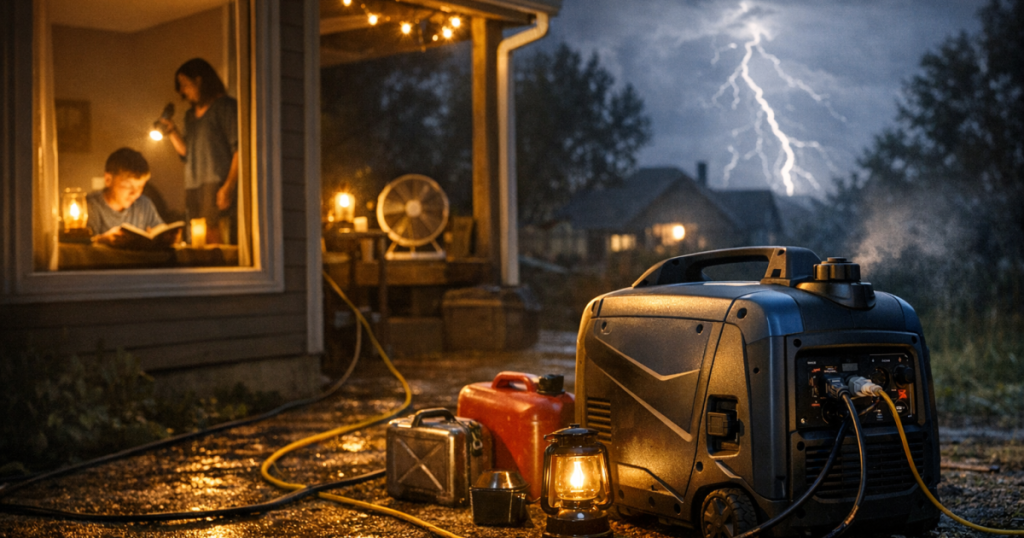
Picture a summer thunderstorm outage that starts at 7 p.m. The priorities are the refrigerator, freezer, cable modem, Wi-Fi router, phones, two LED lamps, and a fan. This is the kind of scenario where a right-sized inverter generator can be very useful. The household can run the refrigerator and freezer in cycles, keep communication devices charged, and avoid opening cold storage unless needed.
The main risk is stacking too many loads. A coffee maker in the morning, a microwave, and a compressor starting at the same time can push a small generator beyond its limits. The fix is simple: unplug or switch off lower-priority loads before using a higher-demand appliance.
A renter with no outdoor generator location
For an apartment renter, an inverter generator may not make sense at all. Generators must never run indoors, in hallways, on balconies, in garages, or near open windows. If there is no safe outdoor location allowed by the property and local rules, a portable power station, UPS for networking gear, rechargeable lights, and stored power banks are usually the safer planning path.
A rural home with a well pump
A rural household may need water as much as refrigeration. If the well pump requires 240 volts or has a high surge load, many smaller inverter models are not the right tool. A larger generator, transfer equipment, and electrician-planned circuit strategy may be needed. This is where the load list should be built from actual labels, manuals, and system details rather than assumptions.
Checks before relying on one
- Confirm running watts and starting watts for each essential load, then leave headroom instead of planning at the generator’s absolute limit.
- Check whether the generator provides only 120-volt output or also supports the voltage your planned loads require.
- Use outdoor-rated extension cords with the proper gauge and rating for the load and distance.
- Keep the generator outdoors and far from windows, doors, vents, crawlspace openings, and attached garages to reduce carbon monoxide risk.
- Install working carbon monoxide alarms on each level of the home and near sleeping areas.
- Store fuel safely, rotate it as appropriate, and follow local rules for quantity and container type.
- Let the generator cool before refueling, and never refuel a running unit.
- Run a practice test before storm season so you know which cords, appliances, and routines actually work.
Fuel choice also matters. Gasoline is common, but storage life, availability, and safe handling can become limiting factors during regional outages. Propane and dual-fuel setups can simplify some storage questions, but they come with their own trade-offs. For a deeper planning view, see this overview of generator fuel types for home blackout backup.
What stands out
An inverter generator is at its best when it is part of a disciplined outage plan rather than a vague hope that “the generator will handle it.” It can be a comfortable, neighbor-friendlier way to run essentials, especially when paired with LED lighting, charged battery banks, a food-safety plan, and a clear household load list.
It is not a shortcut around electrical safety, carbon monoxide rules, fuel planning, or realistic wattage limits. The households that get the most from this setup are usually the ones that decide ahead of time what matters most: keeping food cold, staying connected, protecting a basement from water, supporting a medical device, or simply making one dark night feel normal enough.
Common questions
Can an inverter generator run a refrigerator?
Often, yes, if the generator has enough capacity for the refrigerator’s running load and compressor starting surge. Check the refrigerator label or manual, allow headroom, and avoid running other high-demand appliances at the same time.
Can I plug a generator into a wall outlet?
No. Backfeeding through a wall outlet is unsafe and can endanger utility workers, damage equipment, and create fire or shock hazards. Use properly rated extension cords for individual appliances or a professionally installed transfer setup.
Is it safe to run one in a garage with the door open?
No. A generator should not run in a garage, attached structure, porch, balcony, basement, or enclosed area. Carbon monoxide can build up quickly and move into living spaces even when a door is open.
Can I use an inverter generator with a portable power station?
In some setups, yes: the generator can recharge the power station outdoors while the battery runs quiet indoor loads later. Verify the power station’s charging limits and use the manufacturer-approved charging method.
Do inverter generators need regular maintenance?
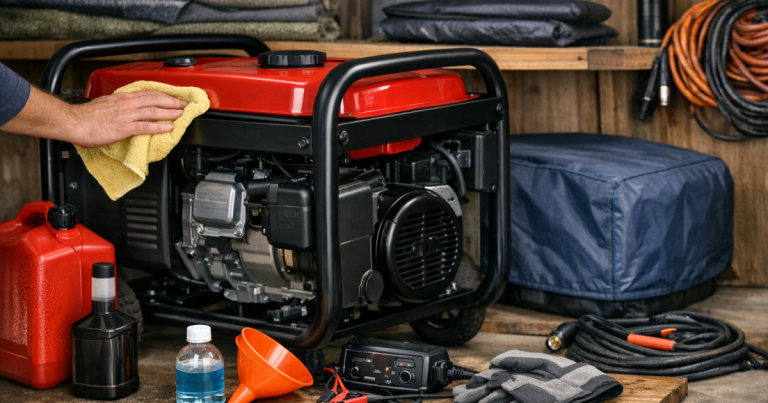
Yes. Follow the owner’s manual for oil, air filter, spark plug, storage, and test-run guidance. A generator that has not been exercised or maintained is less dependable when the outage finally happens.