When the power goes out, the hardest part is often not the dark—it is knowing who is safe, who needs help, and what to do next. A blackout communication plan gives your household a simple way to check in, share updates, and avoid crossed wires when cell service is weak or everyone is in a different place.
Keep the plan simple enough that a tired adult, a teenager, or a babysitter can follow it without guessing. The goal is not a binder full of rules; it is a short, reliable routine for the first minutes and hours of an outage.
The short version
- Pick one primary check-in method, one backup method, and one out-of-area contact.
- Write down phone numbers, addresses, medical notes, school contacts, and utility information on paper.
- Choose two meeting places: one near home and one outside your immediate neighborhood.
- Decide who checks on children, older adults, pets, and neighbors who may need help.
- Keep phones, flashlights, radios, and small power banks in known locations.
- Practice the plan before storm season, wildfire shutoff season, or any period when outages are more likely.
Communication planning works best when it is part of a broader home readiness routine. If you are still building the rest of your setup, pair this with a realistic 72-hour home outage plan so food, water, lighting, power, and check-ins all support each other.
Step 1: Decide what counts as a check-in
Start by defining the first message everyone should send or leave when an outage begins. Keep it short and consistent. For example: “Power out at home, everyone safe, staying put.” If someone is away from home, their message should include where they are, whether they are safe, and whether they plan to come home or stay where they are.
Text messages often get through more reliably than voice calls when networks are congested, but they are not guaranteed. Make texting the default if it works in your area, then add a backup such as a phone call, voicemail, email, or message through a trusted neighbor. Avoid long group threads during an emergency; they drain batteries, create confusion, and bury important updates.
Step 2: Choose an out-of-area contact
Local phone networks can be overloaded after storms, heat waves, wildfires, or widespread grid failures. An out-of-area contact gives everyone one person to update if local calls are unreliable. Choose someone who lives far enough away that they are unlikely to be affected by the same outage.
Give that person a simple role: collect updates, relay messages, and keep a written note of who has checked in. Make sure every household member has the contact’s mobile number, landline if available, and email address. Children old enough to use a phone should know the contact’s name, not just “Aunt Lisa” or “Grandpa,” in case another adult needs to help them place the call.
Step 3: Put the important information on paper
Phones are convenient until batteries run low, towers lose backup power, or a device gets left in a car. Create a one-page communication sheet and keep copies in the kitchen, near the main exit, in a go-bag, and in a vehicle.
Include:
- Household mobile numbers and work numbers.
- Out-of-area contact details.
- School, daycare, caregiver, and workplace contacts.
- Nearby relatives, trusted neighbors, and building management contacts.
- Primary care, pharmacy, and veterinarian numbers, if relevant.
- Utility outage reporting numbers and account details if you need them to report service issues.
- Home address written clearly for children, guests, or caregivers who may need to call 911.
Do not rely on memory for medication names, apartment gate codes, or pickup permissions. If it would be stressful to recall during a noisy, dark evening, write it down now.
Step 4: Set meeting places before anyone needs them
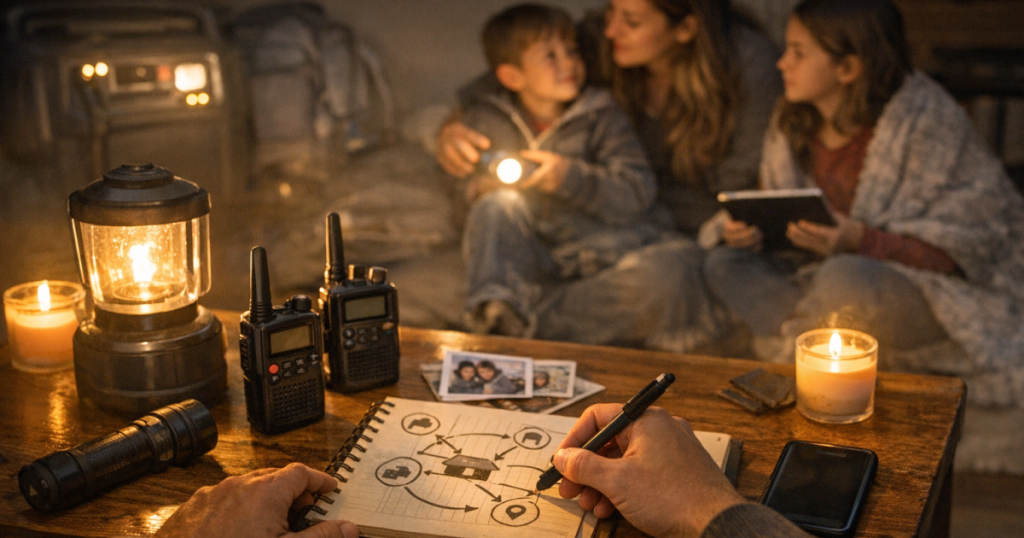
A household plan should include two meeting places. The first is close to home, such as the mailbox, front sidewalk, lobby, or a neighbor’s porch. Use this if smoke alarms sound, the house is unsafe, or family members get separated in the dark.
The second meeting place should be outside the immediate neighborhood. This matters if roads are blocked, a wildfire evacuation zone shifts, flooding affects your street, or authorities restrict access. Pick somewhere familiar: a relative’s home, a community center, a library, or a school parking lot that everyone can identify.
Write down when to use each location. For example, “If home is safe, stay home. If we cannot enter the house, meet at the corner stop sign. If the neighborhood is closed, meet at Grandma’s house.” Clear triggers reduce last-minute decision-making.
Step 5: Plan for different household situations
If children are at school or daycare
Know the school’s power outage, early dismissal, and reunification process before a storm. Confirm who is authorized to pick up each child and keep that list current. Add school phone numbers, pickup locations, and emergency notification channels to your paper sheet.
If someone works away from home
Agree on a “stay or travel” rule. In many outages, it may be safer for a person to stay at work until traffic lights, weather, or evacuation routes are clearer. The plan should not pressure anyone to drive through flooded roads, downed wires, smoke, or debris just to check in face to face.
If someone depends on medical equipment or refrigerated medication
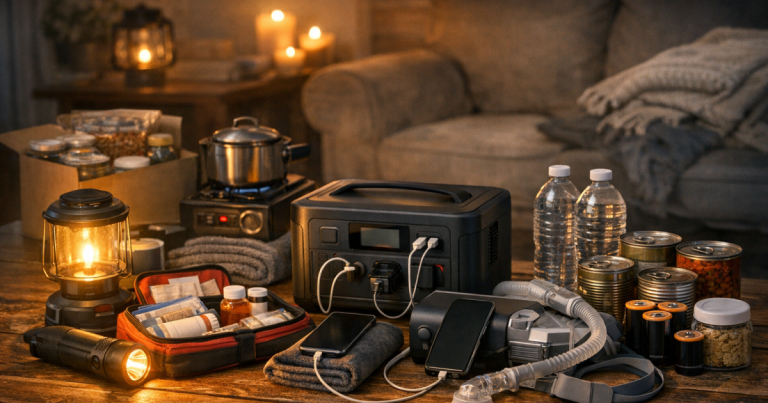
Make the communication plan specific: who checks on the person, how often, and what backup location is available if home power is not enough. Include doctors, pharmacy contacts, device provider numbers, and a note about transportation. For power planning around essential devices, use measured loads and realistic runtimes rather than guesses; this guide to starting watts, runtime, and priorities can help you think through what needs power first.
If you live in an apartment or shared building
Find out how your building communicates during outages. Some buildings use email, printed lobby notices, text alerts, or resident portals. Do not assume elevators, garage doors, access gates, or hallway lighting will work normally. Add a neighbor or building contact to your list, especially if someone in your household uses mobility equipment.
Step 6: Match your devices to the plan
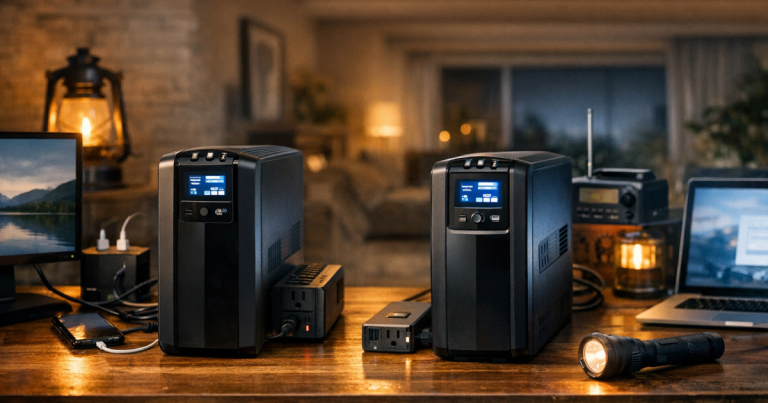
A communication plan depends on more than phone numbers. Decide where communication tools live and how they stay charged. At minimum, keep one flashlight or lantern near the main gathering spot, one battery bank for phones, and one way to receive emergency updates if internet service fails.
A battery-powered or hand-crank NOAA weather radio is useful because it does not depend on your home Wi-Fi. A small power bank can keep a phone available for essential messages. If you use a portable power station, UPS, or generator for routers and devices, decide in advance what gets plugged in first and what can wait. For a broader sizing approach, see how much backup power your outage plan needs.
Write down device rules in plain language. For example: “Phones stay on low power mode,” “One person checks weather updates every 30 minutes,” and “Do not stream video unless there is no other way to get emergency information.” These small habits stretch battery life when charging options are limited.
Step 7: Build a check-in schedule
During a short outage, one check-in may be enough. During a longer blackout, people need a rhythm. Choose scheduled check-in windows, such as 8 a.m., noon, 5 p.m., and 9 p.m. If someone misses one window, they try again at the next. This avoids constant calling and helps preserve battery power.
Use a simple status format:
- Safe or need help.
- Location.
- Battery level.
- Food, water, medication, or transportation concerns.
- Next planned check-in time.
If a household member does not respond, the plan should say who calls next, who contacts the out-of-area person, and when it becomes serious enough to request a welfare check. For immediate danger, medical emergencies, fire, gas smell, downed power lines, or suspected carbon monoxide, call 911 and follow local emergency instructions.
Step 8: Include neighbors without making the plan complicated
Blackouts are easier when neighbors know who may need a knock on the door. You do not need a formal neighborhood group to be useful. Identify one or two nearby households you trust and exchange basic contact information.
Agree on small, realistic actions: checking on an older adult after two hours without power, sharing a printed utility update, or confirming whether a building hallway is safe. Keep boundaries clear. Your household plan should not depend on a neighbor having fuel, spare batteries, transportation, or medical knowledge.
Step 9: Practice it on a normal evening
A plan that has never been tested is mostly a good intention. Choose one evening and run a 20-minute drill. Turn off nonessential lights, ask everyone to find the paper contact sheet, send a test message, locate the radio, and identify the meeting places.
Notice what slows people down. Are the phone numbers outdated? Does the teenager know the out-of-area contact? Can a babysitter find the flashlight? Does the power bank actually have a charge? Fix those small gaps before the next outage, not during it.
After the drill, take five minutes to update the sheet. Keep the latest version in the same places every time so no one has to search for it.
Make the blackout communication plan easy to keep current
Review the plan whenever something changes: a new school, new caregiver, new job commute, new medical need, new neighbor contact, or new phone number. A twice-a-year review is enough for many households, but update it sooner after a move or major schedule change.
Keep the language plain. “Text Mom first” is better than a complicated chain of responsibility. “Meet at the mailbox” is better than “assemble at the designated exterior location.” During a stressful outage, clear beats clever.
Questions people ask
What if cell service is down during a blackout?
Try texts before calls, keep messages short, and use your out-of-area contact if local networks are overloaded. If phones do not work, fall back to the agreed meeting place, neighbors, building staff, local radio, and official emergency instructions.
Should every family member have a printed contact card?
Yes, if they are old enough to be away from home without you. Keep the card simple: names, key phone numbers, home address, meeting places, and the out-of-area contact.
How often should we check in during a long outage?
Use scheduled windows instead of constant messages. Four times a day is usually enough for a stable household, while medical needs, evacuations, or separated family members may require more frequent updates.
What should renters add to the plan?
Renters should include landlord or property management contacts, building access details, elevator concerns, garage or gate instructions, and a neighbor contact if shared systems could affect safety.
How do we avoid draining phone batteries?
Use low power mode, dim the screen, close unnecessary apps, avoid streaming, send short texts, and assign one person to check updates at set times rather than having everyone refresh constantly.
Main lessons
A good household communication plan is short, written down, and practiced before the lights go out. It tells people how to check in, where to meet, who needs extra help, and how to stay informed when phones, Wi-Fi, and routines become less reliable.
Start with one page and one family conversation. Then test it, improve it, and keep it with the rest of your outage supplies. That simple routine can make a blackout feel less chaotic and give everyone a clearer path through the first uncertain hours.