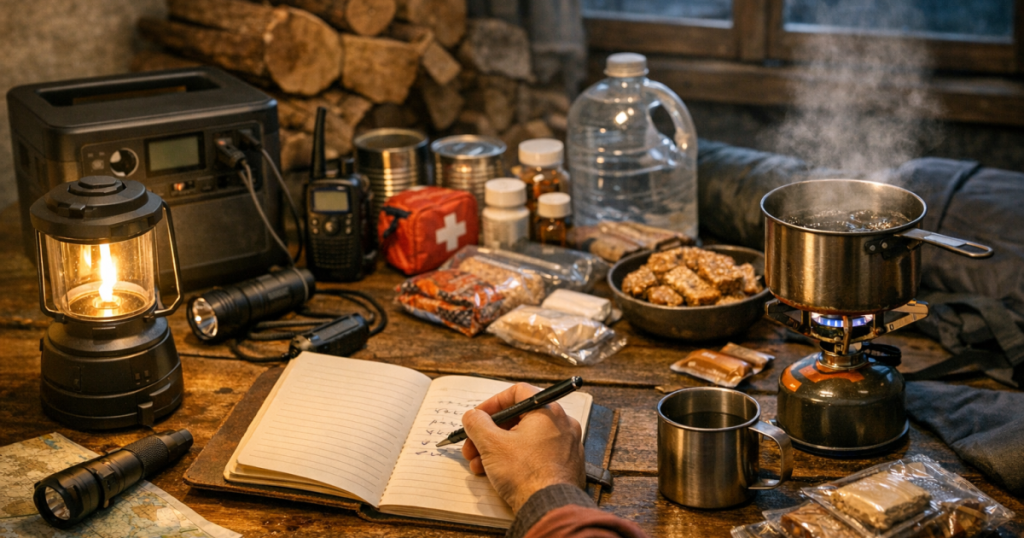
Three days without grid power is not a doomsday scenario; it is a realistic planning window for storms, wildfire shutoffs, ice events, equipment failures, and utility delays. A good 72-hour outage plan keeps your household safe, fed, connected, and reasonably comfortable while you wait for power to return.
The goal is not to run your home exactly as normal. The goal is to know what matters, what you can skip, and what you will do hour by hour when the outage lasts longer than expected.
Transfer switch installation, generator inlet wiring, and any connection to household electrical circuits should be carried out by a qualified electrician to meet local codes, electrical standards, and safety requirements.
The three-day target in plain English
A 72-hour plan covers the first full stretch when convenience turns into logistics. The fridge has been off long enough to matter, phone batteries are no longer an afterthought, fuel choices start to affect comfort, and neighbors may all be looking for supplies at the same time.
For most US households, the plan should cover six areas:
- Water for drinking, basic hygiene, pets, and limited cooking.
- Food that does not depend on a working stove, microwave, or full refrigerator.
- Safe backup power for the essentials, not every appliance.
- Light, communication, and weather updates.
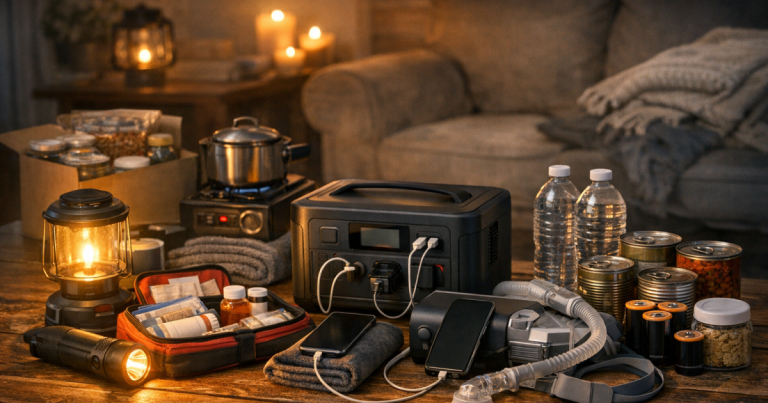
- Medication, medical devices, heat-sensitive items, and personal needs.
- A simple routine for checking food, fuel, batteries, and household safety.
If your home faces different risks throughout the year, build around the most likely event first. A summer thunderstorm outage, a winter ice outage, and a wildfire public safety power shutoff create different pressure points. For a broader planning framework, see our guide to different types of home power outages.
Main points
- Plan for people first: water, temperature, medication, lighting, and communication.
- Decide in advance which loads deserve backup power and which can stay off.
- Do not depend on one tool. Use a mix of stored supplies, battery power, safe generator use, and low-power routines.
- Keep written instructions where everyone can find them, not just on a phone.
- Test the plan before storm season, then adjust it after real outages.
A 72-hour outage plan works best when it is specific to your household. A remote worker with a cable modem, a family with a chest freezer, an older adult using a powered recliner, and a renter in a second-floor apartment all need different choices.
Start with the people in the house
Before thinking about watts, fuel, or extension cords, list who is at home and what they need to get through three days safely. Include children, older adults, pets, and anyone who relies on powered medical equipment, refrigerated medication, mobility devices, or temperature control.
Write down:
- Emergency contacts and local utility outage reporting information.
- Medication names, storage requirements, refill timing, and pharmacy contacts.
- Medical device power needs, backup battery instructions, and manufacturer guidance.
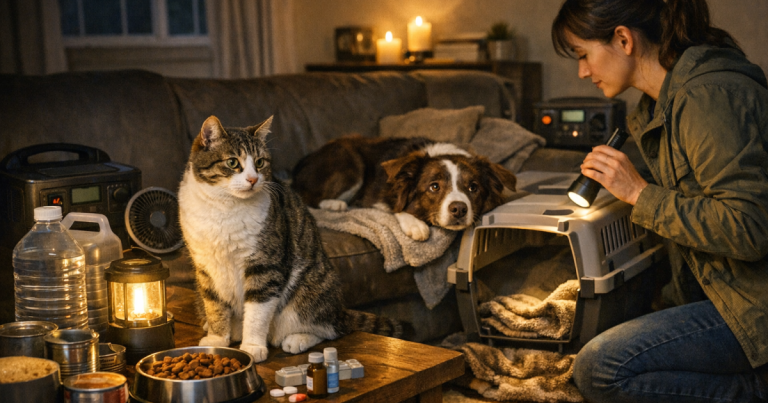
- Pet food, water, carriers, leashes, litter, and any medications.
- Nearby places that may have power, such as relatives, warming centers, cooling centers, or community shelters.
If someone in the home has a critical power need, do not rely on a general household plan alone. Ask the device manufacturer and healthcare provider what backup runtime is appropriate, and keep a relocation option ready if the outage outlasts your equipment.
Water and food for 72 hours
A simple water target is 1 gallon per person per day for drinking and basic needs. That means a family of four should start with at least 12 gallons for three days, before adding extra for pets, formula, medical needs, or hot weather.
Food planning should reduce cooking, dishwashing, and refrigeration pressure. Build a three-day shelf-stable menu with foods your household will actually eat. Include manual-can-opener meals, nut butters, crackers, shelf-stable milk, instant oatmeal, tuna or chicken packets, fruit cups, electrolyte packets, and comfort snacks.
For fridge and freezer safety, keep appliance doors closed as much as possible. Use appliance thermometers so you are not guessing. If you use a cooler, move the most perishable items first and avoid opening it repeatedly. When in doubt about food safety, throw it out rather than trying to save one meal at the expense of getting sick during an outage.
Decide what gets power
Backup power planning gets easier when you stop asking, “How do I power the house?” and start asking, “What needs power first?” Most households should rank loads in tiers.
Tier 1: safety and health
- Medical devices and required chargers.
- Phones, weather radio, and basic communication gear.
- Essential lighting in safe walking areas.
- Refrigeration for medication, if needed.
Tier 2: food and household stability
- Refrigerator or freezer, run in managed cycles if your backup setup allows it.
- Internet modem and router when service is still available.
- Small fans in hot weather or safe heating-system support where applicable.
Tier 3: comfort and work
- Laptops and monitors for short work sessions.
- Entertainment devices for children.
- Small kitchen appliances only if your power source is rated for them.
Large heating appliances, central air conditioning, electric ranges, clothes dryers, and well pumps can require substantial power and proper connection methods. Do not assume a portable battery or small generator can run them. For a more detailed way to rank loads, use our guide to prioritizing what gets power during a blackout.
Choose safe backup power routines, not just equipment
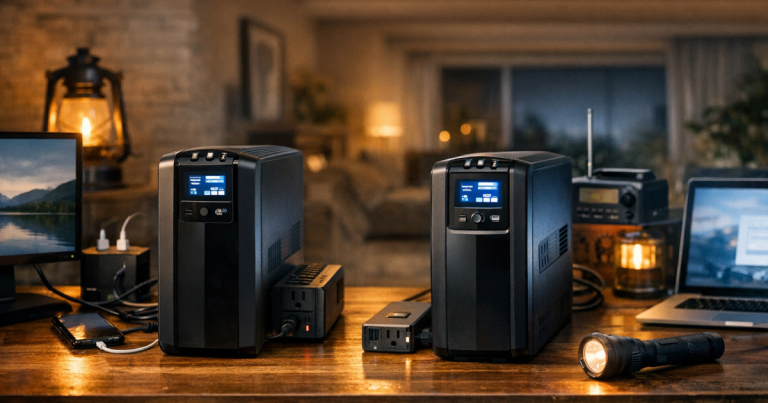
Your plan should explain how backup power will be used, not just what you own. A portable power station might handle phones, lights, a router, and small electronics quietly indoors. A UPS can bridge short interruptions for networking gear or a desktop computer. A generator can support heavier loads, but only when used outdoors, away from doors, windows, vents, garages, and enclosed spaces.
Write down the basics before the outage:
- Where each power source is stored.
- Which cords go with which devices.
- Which loads are allowed on each power source.
- Who is allowed to start, connect, refuel, or shut down equipment.
- Where carbon monoxide alarms are installed and when their batteries were checked.
Never run a generator indoors, in a garage, on a porch, or near open windows. Let the generator cool before refueling, and store fuel only in approved containers. If you use a manual transfer switch or inlet, label circuits clearly so no one tries to power more than the setup is designed to handle.
Fuel, charging, and runtime reality
Three days can expose weak assumptions. A generator with a small fuel supply may help for the first evening and then become dead weight. A portable power station may last much longer when used for phones and lights than when asked to run a high-draw appliance. Runtime depends on load, temperature, battery condition, fuel quality, and how often equipment is cycled.
Instead of chasing perfect numbers, build a simple operating schedule:
- Run high-priority devices first.
- Charge phones and power banks during set windows.
- Keep the refrigerator closed and power it only when needed, if your setup supports that safely.
- Save battery capacity overnight for medical needs, lighting, and communication.
- Track fuel in gallons and decide when to conserve before supplies get low.
If you rely on a generator, plan fuel before the storm, not after gas stations lose power or roads become difficult. Our guide to planning generator fuel for a multi-day outage explains how to think through gallons, runtime windows, storage limits, and refill timing.
Light, communication, and household movement
Lighting is one of the easiest areas to improve. Use rechargeable lanterns, headlamps, and battery-powered lights instead of candles. Put lights near stairs, bathrooms, the kitchen, pet areas, and the main exit route. Headlamps are especially useful because they leave both hands free for moving coolers, checking breakers, or helping children.
Communication planning should include more than a charged phone. Keep a battery-powered or hand-crank weather radio, written phone numbers, a car charger, and at least one power bank. If your home internet is down but cell service works, reduce phone battery drain by dimming the screen, closing unused apps, and sending texts instead of long calls when appropriate.
Set a household check-in rhythm. For example, check weather alerts every few hours, review food temperatures twice a day, charge phones during one or two scheduled windows, and make a fuel or battery status note each evening.
Build a written 72-hour checklist
A plan that lives only in your head will not help much if you are away from home, tired, or dealing with children, pets, and alarms in the dark. Print a one-page checklist and keep it near your outage supplies.
Include these sections:
- First 15 minutes: confirm outage, check neighbors if appropriate, unplug sensitive electronics, switch on safe lighting, check utility status.
- First hour: gather phones, power banks, medications, flashlights, and weather radio; keep fridge and freezer closed.
- Hours 2 to 12: start your power schedule, prepare no-cook meals, monitor indoor temperature, and preserve battery capacity.
- Day 2: reassess food safety, fuel, charging, weather, and whether anyone should relocate.
- Day 3: conserve remaining resources, check on vulnerable neighbors, and prepare for either restoration or another night without power.
Add a small “do not do” section too. Examples: do not run a generator inside, do not backfeed a home through a dryer outlet, do not use outdoor grills indoors, do not open the freezer repeatedly, and do not burn candles while sleeping.
Apartment, suburban, and rural differences
Renters and apartment residents usually have tighter limits on generators, fuel storage, balcony use, and extension cords. Their plans often lean more heavily on portable power stations, UPS units, power banks, rechargeable lights, coolers, and relocation options.
Suburban homes may have space for a generator, but noise, exhaust placement, cord routing, and neighbor proximity matter. A safe setup needs a dry, outdoor operating location and a plan that does not create trip hazards or overload cords.
Rural homes may face longer restoration times and more dependence on wells, septic systems, sump pumps, heat, and freezers. Rural plans should be more conservative about fuel, water storage, communication, and road access because outside help may take longer to arrive.
Practice before the outage
A calm test day reveals problems that paper planning misses. Charge your devices, turn off nonessential loads, use only your planned backup setup for a few hours, and cook from your outage menu. Check whether cords reach, lights are bright enough, everyone understands the schedule, and your fridge or freezer strategy is realistic.
After the test, update the checklist. Remove supplies you did not use, add the items you wished you had, and replace anything expired, leaking, missing, or hard to find. The best plan is not the fanciest one; it is the one your household can actually follow when the power fails at 10 p.m. in bad weather.
Things readers ask
How much water should I store for three days?
Start with at least 1 gallon per person per day. Add more for pets, infants, medical needs, hot weather, and any cooking that requires water.
Can a portable power station replace a generator for 72 hours?
Sometimes, but only for low-power needs such as phones, lights, laptops, routers, and some medical-device charging. Refrigerators, pumps, heaters, and cooking appliances require careful load and runtime checks.
Should I empty my fridge right away?
No. Keep the doors closed at first. Use appliance thermometers and time-temperature guidance to decide what is safe later rather than letting cold air escape early.
What if my outage lasts longer than three days?
Use the third day as a decision point. Reassess water, food, medication, fuel, indoor temperature, road access, and whether staying home is still the safest option.
Why it matters
A three-day blackout is manageable when the decisions are made before the stress begins. Store enough water, simplify meals, rank power needs, write down safe equipment routines, and practice once while the lights are still on. That preparation turns an outage from a scramble into a sequence of calm, familiar steps.