Planning for home power outages works best when you think in scenarios, not just gear. A two-hour neighborhood failure, a storm-related overnight outage, and a three-day regional blackout all ask different things from your home, your backup power, and your habits.
The goal is not to run everything as usual. It is to keep people safe, protect food and medications, stay reachable, and make the house workable until utility power returns.
Generator inlet installation, transfer switch wiring, interlock work, and any connection to a home electrical panel should be carried out by a qualified electrician to meet local code, utility rules, and applicable safety standards.
In brief
- Short interruptions are mostly about lighting, internet continuity, and avoiding data loss.
- Overnight outages add refrigeration, phone charging, medical devices, and safe movement around the home.
- Multi-day failures require fuel, charging, food safety, heating or cooling decisions, and a realistic load plan.
- Planned shutoffs give you time to pre-charge batteries, cool the fridge, fill gas cans safely, and stage supplies.
- Localized electrical problems are different from utility outages and may require an electrician rather than backup power.
Start with the outage you are actually likely to face
A useful plan begins with local risk, not a fantasy worst-case scenario. A suburban family in tornado country, a rural household at the end of a long feeder line, a wildfire-prone neighborhood facing public safety shutoffs, and an apartment renter in an older building all have different weak spots.
Start by listing the outages you have experienced or can reasonably expect: summer thunderstorms, winter ice, hurricane remnants, wildfire shutoffs, rolling utility interruptions, equipment failures, or vehicle accidents taking down a nearby pole. Then note the usual duration. Do you typically lose power for 30 minutes, six hours, overnight, or several days?
For a structured way to map those risks, use a home blackout risk assessment before spending money or rearranging your setup. It helps you separate likely problems from dramatic but less probable ones.
Short outages: protect lighting, communications, and electronics
A short outage usually lasts minutes to a few hours. It may be annoying rather than dangerous, but it can still interrupt remote work, disable Wi-Fi calling, shut off lights, and stop garage door openers. The best plan for this type of outage is simple and automatic.
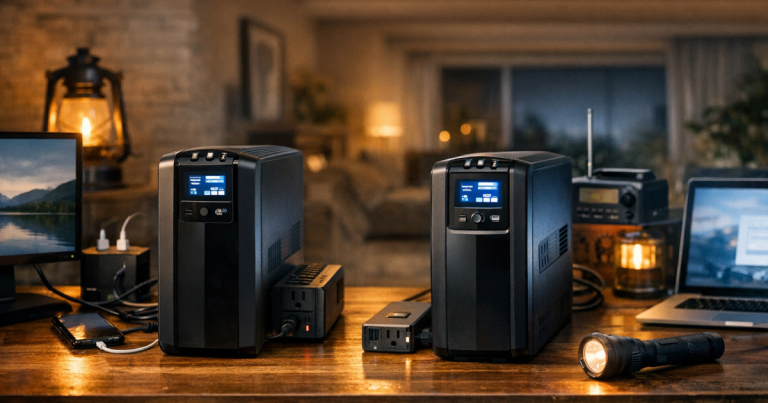
Keep flashlights or rechargeable lanterns in predictable places: bedrooms, kitchen, entryway, and near the breaker panel. Avoid relying only on phone flashlights because phones are also communication tools. A small UPS for a modem, router, desktop computer, or network equipment can bridge a brief grid failure and prevent a work call from dropping instantly.
For renters and apartment dwellers, short-outage planning is often the most valuable first step. You may not be able to install a generator inlet or transfer switch, but you can still keep lights, phones, internet equipment, and a small fan ready with battery-based gear. Keep extension cords tidy, avoid daisy-chaining power strips, and know which outlets are supported by any battery backup you use.
Overnight outages: decide what must stay on until morning
Once an outage stretches into the evening, comfort and routine matter more. You need safe lighting, a way to charge phones, enough power for essential medical equipment, and a food-safety plan for the refrigerator and freezer. You also need a quiet plan if neighbors, apartment rules, or local ordinances make nighttime generator use impractical.
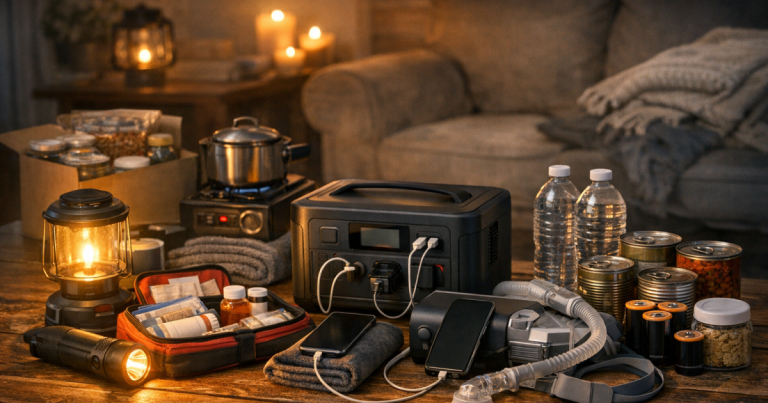
Make a short list of overnight essentials. For many homes, that list includes a fridge or freezer at intervals, phones, a router, a few LED lights, a CPAP machine or other required device, and possibly a fan. Resist the urge to power every room. The fewer loads you run, the longer batteries and fuel last.
This is also where load priority becomes important. A microwave, space heater, hair dryer, sump pump, fridge, and well pump can all place very different demands on a backup system. Before an outage, decide what comes first by using a simple blackout power priority list instead of making choices in the dark.
Storm outages: plan for damage, delay, and limited access
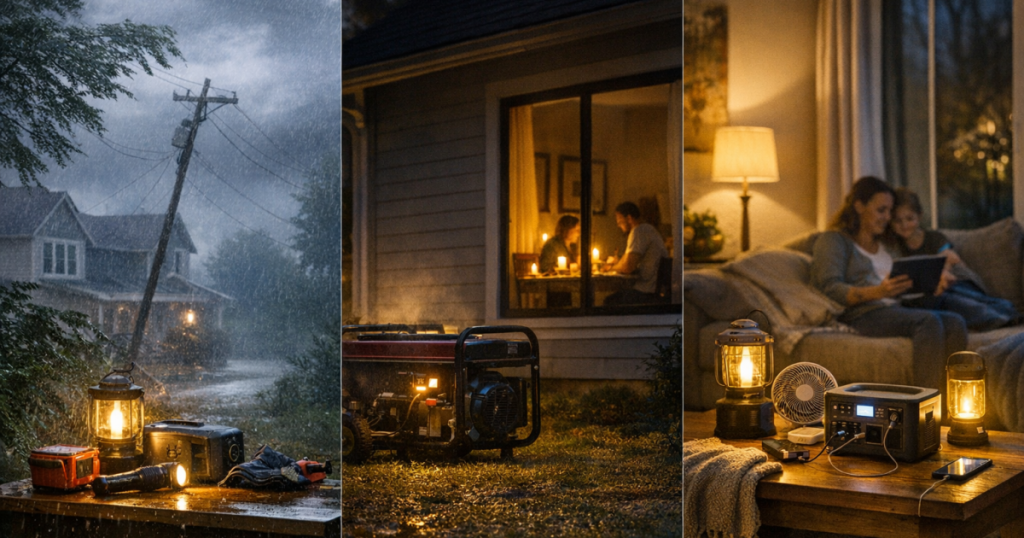
Storm outages are different because the power failure may not be the only problem. Roads can be blocked, cell service can be weak, stores may be closed, and repair crews may need time to reach your area. Your plan should assume some inconvenience beyond the electrical outage itself.
Stage supplies before severe weather arrives. Charge battery packs, portable power stations, phones, tablets, radios, and rechargeable lanterns. Move outdoor items that could become hazards. Put extension cords, generator cords, and weather-safe covers where you can reach them without digging through a dark garage.
If you use a portable generator, place it outdoors, away from doors, windows, vents, garages, crawl spaces, and attached structures. Never run a generator indoors or in a garage. Keep carbon monoxide alarms working on every level of the home and near sleeping areas. Let the generator cool before refueling, and store fuel in approved containers away from living areas and ignition sources.
Storm plans should also include a no-power routine. Know how to open the garage door manually, where the water shutoff is, how to communicate if cell service is congested, and which neighbor or family member might need a check-in. Backup power helps, but it is not the whole plan.
Multi-day outages: fuel, food, and routines matter more than watts
A multi-day outage exposes weak spots that a short blackout never reveals. A battery that easily handles one evening may need recharging. A generator that runs the fridge for a few hours may become a fuel logistics problem. A freezer that stays cold on day one may need attention by day two.
For food safety, keep refrigerator and freezer doors closed as much as possible. Use appliance thermometers so you are not guessing. If you expect a long outage, group freezer contents together, freeze water bottles ahead of storm season, and use coolers strategically. When in doubt, follow current USDA food-safety guidance rather than relying on smell or appearance.
For backup power, think in cycles. You may not need to run a generator constantly. Some households run essential loads for scheduled blocks, allowing the fridge to recover, charging batteries, and powering key devices before shutting down again. Actual runtime depends on the generator, load, fuel, weather, maintenance condition, and how carefully the system is managed.
Fuel planning deserves its own worksheet. If your plan depends on gasoline, propane, natural gas, or another fuel source, map out safe storage, rotation, availability, and realistic daily consumption. A good next step is to work through generator fuel planning for a multi-day outage before storm season rather than after the pumps are busy.
Planned shutoffs: use the warning time well
Wildfire-related shutoffs and some grid-stability interruptions may come with advance notice. That does not make them convenient, but it gives you a valuable window to prepare calmly.
Before the shutoff window, charge everything that stores power. Lower the fridge and freezer temperature within safe manufacturer settings so they start colder. Wash necessary laundry, run the dishwasher, fill reusable water containers if your water system depends on power, and confirm prescriptions, pet supplies, and medical-device backup arrangements.
Planned shutoffs are also a good time to stage your “power zone.” Choose one area of the home where phones, radios, lights, batteries, and chargers live during the outage. This reduces cord clutter and helps everyone know where to find working power. For families, label which outlets or battery ports are for essentials and which are optional.
Extreme heat and extreme cold change the plan
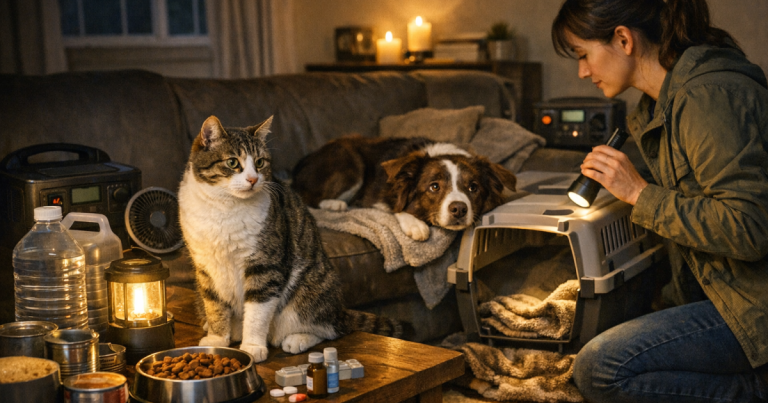
Temperature can turn an otherwise manageable outage into a safety issue. In hot weather, cooling people often matters more than cooling rooms. Battery-powered fans, shaded rooms, wet towels, cool showers if water is available, and planned visits to cooling centers or powered relatives can reduce risk. Keep an eye on older adults, infants, pets, and anyone with health conditions.
In cold weather, avoid improvising with unsafe heat sources. Do not use ovens, grills, camp stoves, or generators indoors for heat. If your furnace requires electricity to run the blower or controls, know whether your backup setup can support it safely and legally. Some heating systems require proper transfer equipment and professional electrical work before they can be powered from a generator.
Pick a smaller “warm room” rather than trying to heat the whole house. Close curtains, use blankets and sleeping bags, and reduce drafts where practical. If indoor temperatures become unsafe, relocation may be the best preparedness choice, not a failure of planning.
When backup power is not the right answer
Not every power problem should be solved by plugging in backup gear. If only part of your home loses power, lights flicker badly, outlets smell hot, breakers repeatedly trip, or you see signs of damaged service equipment, treat it as an electrical problem. Turn off sensitive equipment and contact the appropriate utility or a qualified electrician.
Likewise, do not backfeed a home through a dryer outlet or improvised cord. That can endanger utility workers, damage equipment, and create a fire or shock hazard. If you want to power hardwired circuits, use properly installed transfer equipment or an approved interlock setup that matches your panel and local requirements.
Build one flexible household plan
The simplest plan is a one-page checklist divided by duration. Use columns for “under 4 hours,” “overnight,” “24 hours,” and “3 days.” Under each column, list people, food, communications, medical needs, heating or cooling, and backup power steps.
Then assign jobs. One person checks flashlights and phones. One handles fridge and freezer rules. One confirms pets, medications, and neighbor check-ins. One manages generator or battery equipment if your household uses it. In a small household, the same person may do everything, but the checklist still prevents missed steps.
Finally, practice when nothing is wrong. Turn off nonessential loads for an hour, run your battery setup, test your UPS, review generator placement, and confirm that cords reach without crossing wet areas, door pinch points, or walkways. A calm test on a normal weekend is much easier than troubleshooting during wind, rain, heat, or darkness.
FAQ
What is the simplest way to prepare for home power outages?
Start with lights, phone charging, a battery radio or reliable alert source, food thermometers, and a written priority list. Add larger backup power only after you know what truly needs to run.
How long should I plan to be without power?
Use your local history as the baseline, then add a margin. If your area commonly has 6-hour outages, prepare for overnight. If storms have caused 1-day outages, build toward 3 days.
Can a portable power station replace a generator?
Sometimes, for lighter loads such as phones, laptops, routers, lights, fans, and some medical devices. It usually cannot match a fuel-powered generator for long runtime or high-demand household loads.
Should I run my refrigerator all the time during a blackout?
Not always. Many households run refrigeration in intervals to conserve fuel or battery capacity. Use appliance thermometers and food-safety guidance instead of guessing.
What should renters focus on first?
Renters should prioritize safe lighting, charged phones, a small battery backup plan, food safety, building access, and communication with property management about elevators, doors, and shared systems.
Final thoughts
A strong outage plan is not built around one perfect device. It is built around likely scenarios, clear priorities, safe setup habits, and a household routine that works when the lights go out.
Start small, test honestly, and improve the weak spots you actually find. The more specific your plan is before the outage, the calmer your home will feel when utility power fails.