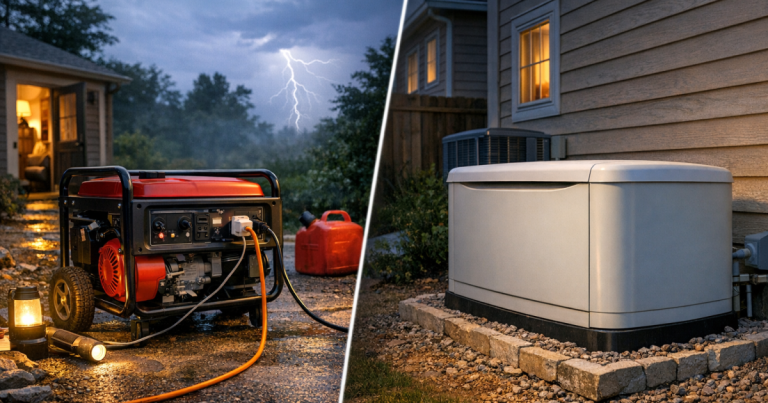
Portable generator storage is less about tucking the machine away and more about making sure it will start safely when the lights go out again. A few simple habits after each use can prevent stale fuel, dead batteries, corrosion, rodent damage, and last-minute scrambling during a storm outage.
The goal is not to make storage complicated. It is to leave the generator clean, protected, legally and safely fueled, and paired with the cords, oil, instructions, and transfer equipment you will need when utility power fails.
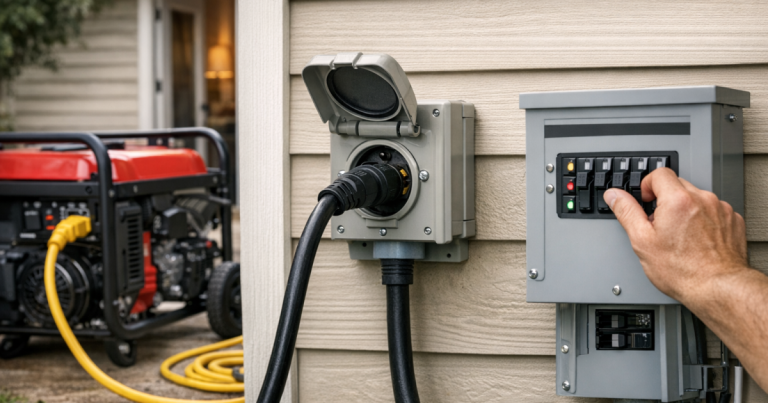
Professional guidance: Transfer switch, interlock, inlet box, and any connection to household wiring should be installed or changed by a qualified electrician to meet local electrical codes, manufacturer instructions, and safety requirements.
The short version
- Let the generator cool completely before cleaning, refueling, draining, covering, or moving it.
- Follow the owner’s manual for whether to store the unit with treated fuel or with the fuel system drained.
- Store gasoline only in approved containers, away from ignition sources, and within local fire-code limits.
- Keep the generator dry, covered, and off bare soil, but do not seal it in plastic where moisture can get trapped.
- Check oil, battery charge, cords, labels, and startup supplies before the next outage season.
- Never run a generator indoors, in a garage, on a porch, or near open windows, even for a quick test.
Step 1: Let it cool, then clean it like you expect to use it again
After an outage, it is tempting to roll the generator into the corner and deal with it later. That is how dirt, moisture, and old fuel turn into a harder start next time.
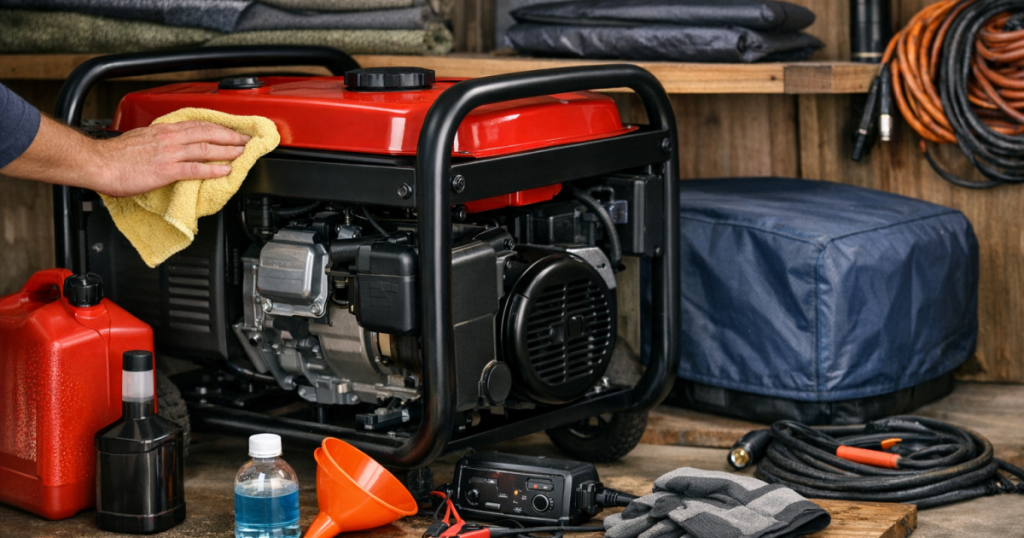
Once the engine is fully cool, wipe down the outside housing, frame, handles, wheels, and control panel with a dry or slightly damp cloth. Clear leaves, grass clippings, sawdust, and storm debris from around air vents and cooling fins. If the generator was used in rain, mud, or heavy wind, take extra time to dry exposed surfaces before covering it.
Do not spray the generator with a hose or pressure washer. Water can get into switches, outlets, air intakes, and engine areas where it does not belong. If the receptacle covers are dirty, wipe around them carefully and let everything dry before storage.
Step 2: Choose the right fuel plan before you put it away
Fuel is the biggest storage problem for many portable generators. Untreated gasoline can degrade, leave deposits, and make small engines hard to start. The right approach depends on your generator model, fuel type, and how long it may sit.
For gasoline generators
Start with the owner’s manual. Some manufacturers describe a storage method using fresh gasoline treated with fuel stabilizer, then running the engine long enough for treated fuel to reach the carburetor or fuel injection system. Others provide instructions for draining the tank, fuel line, carburetor bowl, or other parts before long-term storage.
If you use a fuel stabilizer, add it to fresh gasoline at the label’s recommended ratio. Then run the generator outdoors so treated fuel circulates through the system. Do not assume pouring stabilizer into old gas will rescue fuel that has already gone bad.
If your manual calls for draining fuel, do it only after the unit is cool and in a safe outdoor area away from sparks, flames, pilot lights, and smoking materials. Capture fuel in an approved container and handle disposal according to local rules.
For dual-fuel and propane-capable generators
Propane does not go stale the way gasoline does, but the generator still needs storage care. Close the cylinder valve, let the engine use up fuel in the line if the manual recommends it, and disconnect the hose after the system is shut down. Store propane cylinders upright, protected from heat, and according to the cylinder label and local rules.
If you ran the generator on gasoline during the outage, the gasoline side still needs the same attention as a gasoline-only unit. Dual-fuel capability does not make old gas harmless.
Step 3: Check oil, filters, spark plug, and small wear items
A generator that ran for hours during an outage may be due for service before it goes back into storage. Check the hour meter if your unit has one, and compare it with the maintenance schedule in the manual.
At minimum, check the engine oil level and condition. If the oil looks dirty, smells strongly of fuel, or the manual says the service interval has arrived, change it before storage rather than leaving contaminated oil sitting in the engine. Use the oil type and quantity specified by the manufacturer.
Also inspect:
- Air filter: Replace or clean it according to the manual if it is dusty, oily, wet, or damaged.
- Spark plug: Check for corrosion, heavy deposits, or a loose boot. Replace only with the type specified for your generator.
- Starter rope: Look for fraying or stiffness before it fails during a blackout.
- Wheels and handles: Tighten loose hardware so the generator can be moved safely in the dark or bad weather.
- Outlet covers: Make sure covers close properly to help keep dust and moisture out while stored.
Step 4: Take care of the starter battery if your generator has one
Electric-start generators are convenient during an outage, but small batteries can lose charge while sitting. If your generator has a removable battery, store and charge it according to the manual. Some owners use a compatible battery maintainer, but voltage, connector type, and charging instructions must match the battery and generator manufacturer’s guidance.
If the battery stays installed, check it periodically and keep the terminals clean and tight. A generator may still have a recoil start backup, but you do not want to discover a weak battery at 2 a.m. during a storm.
Step 5: Pick a storage location that protects the generator without creating new risks
A good storage spot is dry, secure, accessible, and separated from ignition hazards. A garage, shed, or outbuilding can work if it stays reasonably dry and does not expose the generator to standing water, fertilizer dust, corrosive chemicals, or rodents.
Avoid storing a generator directly on damp concrete or bare ground for long periods. A sturdy shelf, platform, or wheeled base can help reduce moisture exposure and make it easier to roll the unit out when needed. Keep enough room around it so you can access the fuel cap, oil fill, battery, and handles without unpacking half the garage.
Do not store gasoline next to water heaters, furnaces, dryers, welders, or other equipment with flames, hot surfaces, or spark risks. Use approved fuel cans, keep them closed, and label them clearly. Apartment, condo, HOA, and local fire rules may limit whether fuel or generators can be stored on-site, so check the rules that apply to your building.
Step 6: Cover it, but let it breathe
A cover keeps dust, pollen, and light debris off the generator, but the wrong cover can trap moisture and accelerate corrosion. Use a breathable generator cover or a loose-fitting cover designed for equipment storage. Wait until the generator is cool and dry before covering it.
Avoid wrapping the unit tightly in plastic sheeting. That can hold condensation against metal surfaces and electrical components. If your storage area has rodents, do not use soft nesting material near the generator. Keep pet food, birdseed, cardboard, and clutter away from the storage area.
Before each outage season, lift the cover and look for chewed wires, nests, corrosion, spider webs near vents, or signs that insects have moved into openings. Small problems are much easier to fix before the forecast turns serious.
Step 7: Store the power accessories with the generator
The generator is only one part of the backup setup. Store the pieces you need to use it safely in the same zone, ideally in a labeled bin or on a dedicated shelf.
Include:
- Outdoor-rated generator cords in the correct gauge and length for your loads.
- The owner’s manual in a plastic sleeve or waterproof bag.
- Fresh engine oil, a funnel, gloves, rags, and any model-specific tools.
- Printed startup and shutdown steps for your household.
- Labels showing which loads or circuits the generator is meant to support.
- Battery charging accessories, if your model uses them.
- Working carbon monoxide alarms for the home, with batteries checked on schedule.
If your generator connects through a transfer switch, keep the operating instructions near the switch as well as near the generator. It is worth reviewing how to use a manual transfer switch during an outage before you are doing it by flashlight.
Step 8: Exercise it safely, but do not overdo it
Many generator manuals recommend periodic exercise runs. The exact timing and procedure vary, so follow your manual rather than copying a neighbor’s schedule. A typical check involves rolling the generator outdoors, placing it well away from doors, windows, vents, and attached garages, starting it, letting it warm up, and testing a modest load.
Never run it inside a garage, even with the door open. Carbon monoxide can build up quickly and move into living spaces. For normal outage use, keep the generator outside and at least 20 feet from doors, windows, and vents, with exhaust pointed away from the home when practical.
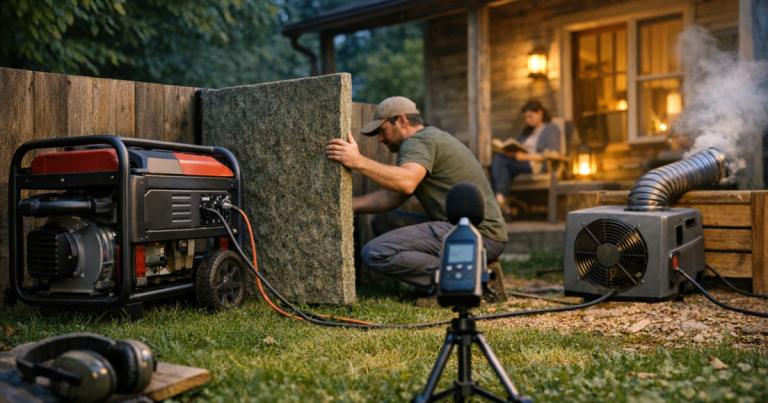
If noise is a concern in a close neighborhood, plan for placement and barriers without blocking airflow or trapping exhaust. The goal is to reduce disturbance without making the setup dangerous; this guide to quieting a portable generator without creating safety risks explains the safer approach.
Step 9: Keep a simple pre-season checklist
A stored generator is easiest to trust when you inspect it before storm season, wildfire shutoff season, or winter outage weather. Put a reminder on your calendar and keep the checklist short enough that you will actually do it.
- Confirm the generator starts and runs outdoors.
- Check oil level and maintenance hours.
- Inspect cords, plugs, and receptacle covers for damage.
- Confirm fuel is fresh, treated, rotated, or safely drained according to your plan.
- Check propane cylinder condition and fill level if applicable.
- Test carbon monoxide alarms inside the home.
- Review which appliances or circuits the generator can realistically support.
- Make sure the generator path is clear so it can be moved outside quickly.
This is also a good moment to be honest about capacity. A portable generator may handle a fridge, lights, chargers, and a few essentials, but that does not mean it can run everything in the house at once. If you are still refining your outage setup, inverter generators for home blackouts can help you think through quieter, smaller-load scenarios.
Common storage mistakes that cause trouble later
- Leaving old gasoline untreated: This is one of the fastest ways to create starting problems.
- Covering a hot generator: Heat can damage covers and trap moisture as the engine cools.
- Forgetting the battery: Electric start is only useful if the battery is maintained.
- Storing cords somewhere else: During an outage, missing cords can make a ready generator unusable.
- Testing in the garage: A quick indoor run is still dangerous because of carbon monoxide.
- Assuming the last setup was safe: Extension cords, loads, weather protection, and exhaust placement should be checked each time.
Things readers ask
Should I store my generator with gas in it or empty?
Follow the owner’s manual. Some generators are stored with fresh, stabilized fuel run through the system, while others call for draining the fuel system before longer storage.
How long can gasoline sit for generator use?
Gasoline quality can decline over time, especially in small engines. Use fresh fuel, rotate stored fuel, and follow the stabilizer label and generator manual rather than relying on old gas.
Can I store a portable generator in my garage?
Storage in a dry garage may be workable if fuel is stored safely and local rules allow it. Operation is different: never run the generator in the garage, even with the door open.
Do I need to start the generator every month?
Check your manual for the recommended exercise schedule. If you do run it, do so outdoors with proper exhaust clearance and a safe test load.
What should I do right after an outage ends?
Let the unit cool, clean and dry it, address fuel according to the manual, check oil and visible damage, then restock the cords and supplies you used.
Main lessons
A portable generator earns its place in a home outage plan only if it is ready when needed. Clean it after use, make a deliberate fuel decision, protect it from moisture and pests, maintain the battery and oil, and store the accessories where you can find them fast.
Most storage work takes only a little time, but it prevents the stressful kind of failure: a generator that worked last season and will not start when the fridge is warming, phones are low, and the neighborhood is dark.