When the lights go out, the right blackout backup power setup is not always the biggest one. A renter trying to keep a router and laptop alive has a different problem than a homeowner trying to protect a refrigerator, well pump, or medical device. Portable power stations, generators, and UPS units all help during outages, but they solve different jobs.
Generator inlets, transfer switches, interlock kits, and any wiring that connects backup equipment to household circuits should be installed by a qualified electrician to comply with local electrical codes and safety requirements.
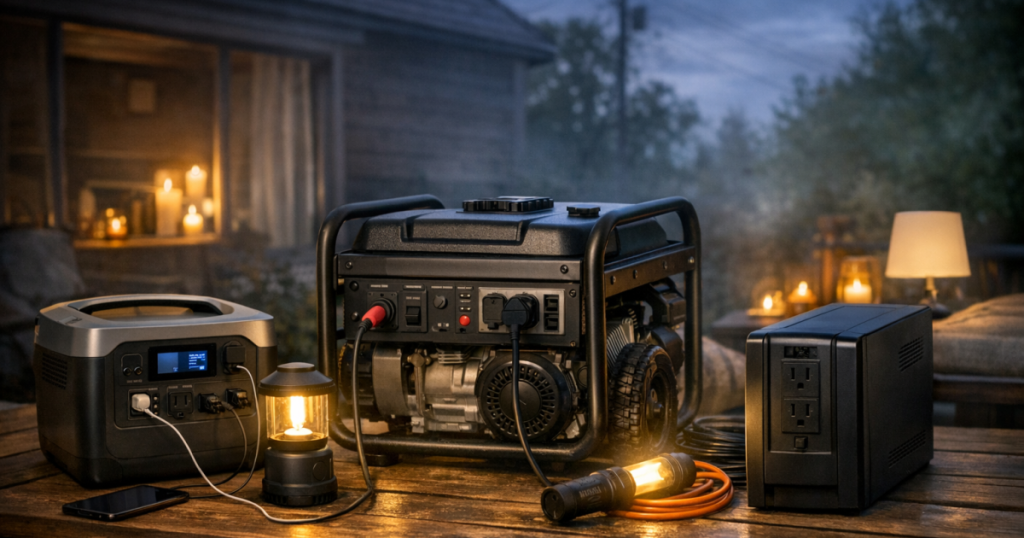
For most homes, the practical answer is not one device for everything. A UPS can bridge short interruptions for electronics. A portable power station can quietly run essential small loads indoors. a generator can handle longer outages and heavier loads, but only with fuel, outdoor placement, and safe connections.
In brief
- A UPS is best for short-term protection of routers, modems, desktop computers, and network gear during brief outages or generator switchover.
- A portable power station is best for indoor, quiet, low-fume backup for phones, lights, laptops, CPAP machines, small medical devices, and sometimes a refrigerator for limited periods.
- A generator is best for longer outages, higher loads, and repeated fridge or freezer cycling, as long as it is operated outdoors and connected safely.
- Battery capacity, appliance startup surge, fuel storage, noise, ventilation, and charging plans matter more than headline watt ratings alone.
- The safest setup usually layers devices instead of expecting one box to cover every blackout scenario.
What each device actually does
UPS: the short-bridge device
A UPS, or uninterruptible power supply, is designed to take over instantly when utility power drops. That matters for electronics that do not like sudden shutdowns, such as desktop computers, network storage, modems, routers, and some home office equipment.
A unit like the APC Back-UPS Pro 1500VA is the kind of product people often consider for home networking or workstation backup, but the useful lesson is broader: a UPS is usually about minutes, not days. It gives you time to save work, keep the internet up through a flicker, or let a modem and router ride through a short outage.
A UPS is not the right tool for space heaters, refrigerators, microwaves, sump pumps, or whole-room comfort loads. Those devices can overload it quickly or drain it far faster than expected.
Portable power station: the quiet indoor workhorse
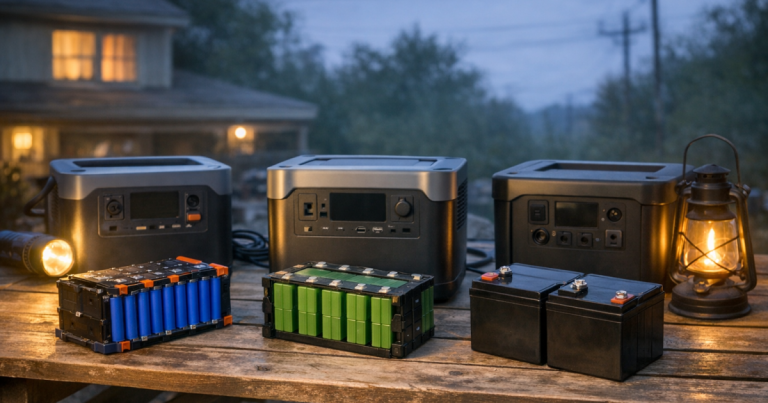
A portable power station is a rechargeable battery system with built-in outlets. It can usually power USB devices, AC plug-in loads, and DC accessories, depending on the model. Unlike a gas generator, it can be used indoors because it does not produce exhaust.
Products such as the EcoFlow DELTA 3 Plus Portable Power Station show why this category has become popular for home outages: they are cleaner and quieter than fuel-burning equipment, easier for many renters to store, and useful for nighttime essentials. Always verify the unit’s continuous watt rating, surge rating, battery capacity in watt-hours, output type, recharge options, and any manufacturer guidance for the devices you plan to run.
The main limitation is stored energy. If a device pulls 100 watts continuously, a battery drains much faster than if it is running a 10-watt router or a few LED lights. Real runtime also depends on inverter losses, temperature, device cycling, and battery age.
Generator: the long-outage power source
A portable generator turns fuel into electricity. For extended outages, it can be the most practical way to keep larger essentials going, especially refrigerators, freezers, sump pumps, well pumps, furnace blowers, or multiple household loads. Inverter generators such as the Honda EU2200i are common examples for quieter essential-load setups, while larger dual-fuel models such as the Champion Power Equipment 201531 4500W Dual Fuel Inverter illustrate the move toward more flexible fuel planning.
The trade-off is safety and logistics. A generator must run outdoors, far from doors, windows, vents, garages, crawl spaces, and occupied areas. It needs fuel, dry storage, maintenance, and safe power routing. For the grounding, carbon monoxide, cord, and load-management basics that apply before any outage, review the site’s home backup power safety basics.
The main differences in plain English
- Runtime: A UPS may cover minutes to a short stretch for small electronics. A power station may cover hours to overnight for modest loads. A generator can keep going as long as it is safely fueled, cooled, and maintained.
- Indoor use: A UPS and portable power station can be used indoors. A fuel-burning generator cannot be used indoors or in a garage.
- Noise: A UPS is silent except for alarms or fans. A power station is usually quiet. A generator makes engine noise, even if it is an inverter model.
- Power level: A UPS is for electronics. A power station handles small to moderate loads, depending on the unit. A generator can support heavier loads if sized and connected correctly.
- Setup complexity: A UPS is plug-and-play for electronics. A power station is simple for direct-plug loads. A generator becomes more complex when feeding household circuits.
- Storage needs: A UPS needs a suitable indoor spot. A power station needs charging access and temperature-aware storage. A generator needs fuel, ventilation clearance, maintenance supplies, and weather-aware operation.
How to match the backup to the outage job
For internet, phones, and remote work
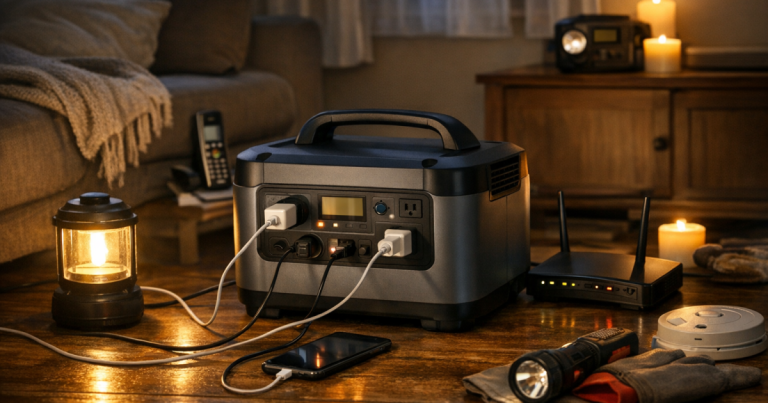
Start with the smallest load that matters. A modem, router, phone charger, and laptop often use far less energy than kitchen appliances or heating equipment. A UPS can keep the network alive through brief interruptions. A portable power station can take over if the outage stretches longer.
A good home office plan often uses both: the UPS prevents instant shutdown, while the power station provides longer, planned runtime. If cellular service is your fallback, keep power banks charged and avoid wasting battery on nonessential devices.
For CPAP and essential overnight devices
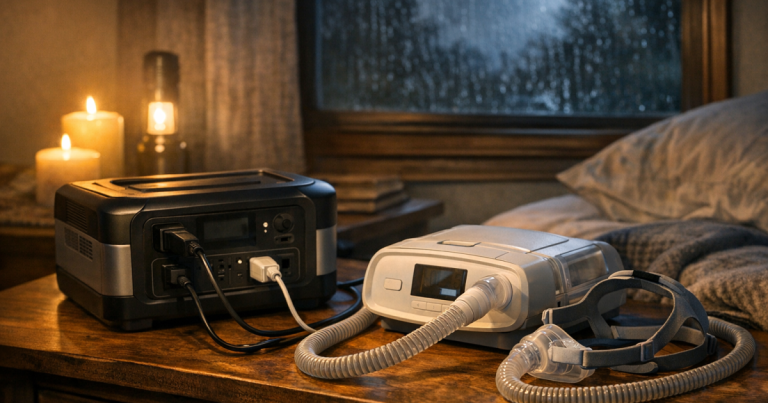
For sleep-related equipment, quiet indoor backup is usually the priority. A portable power station is often more practical than a generator at bedside because it does not create exhaust and does not require outdoor refueling at night. The exact runtime depends heavily on the CPAP model, pressure settings, humidifier use, heated tubing, and whether a DC adapter is available.
For a deeper setup walkthrough, including the runtime variables to check before a storm, read the guide to running a CPAP on a portable power station.
For refrigerators and freezers
Refrigerators are tricky because they cycle on and off and may need extra startup power. A portable power station can work for some fridge situations if its inverter rating and surge capability match the appliance, but you should verify the fridge’s wattage label, compressor behavior, and the power station manufacturer’s limits.
A generator is often more practical for longer fridge and freezer protection because it can recharge batteries and run other loads in shifts. That does not mean the generator needs to run nonstop. Many households manage food safety by cycling fridge or freezer power, limiting door openings, and using appliance thermometers.
For pumps, furnace blowers, and hardwired loads
This is where planning becomes more serious. Many pumps and furnace blowers are not simple plug-in loads, and some have strong startup surges. A portable power station may not be suitable unless the equipment is compatible and the connection is safe. A generator connected through the proper inlet and transfer equipment is usually the cleaner path for household circuits.
Never backfeed a home through a dryer outlet, range outlet, or improvised cord. If you are thinking about powering circuits instead of individual plug-in devices, read the guide to generator cords, inlets, and transfer switches before buying equipment.
Why one-device thinking causes problems
It is tempting to ask which option is best, but blackouts do not all behave the same way. A summer thunderstorm that knocks power out for two hours calls for a different response than a winter storm that leaves roads closed for a day. A wildfire shutoff in a dry climate may favor quiet battery power for communications and medical comfort, while a rural ice storm may require fuel-based backup for pumps and heating support.
The most reliable household plans are layered. For example, a renter in an apartment might keep a UPS on the router, a portable power station for overnight essentials, rechargeable lanterns, and no generator at all because there is no safe outdoor operating area. A suburban homeowner might use a UPS for electronics, a power station indoors at night, and a portable generator outdoors during the day to run refrigeration and recharge batteries. A rural household with a well pump may need a professionally installed generator connection and a more detailed load plan.
The runtime math that keeps expectations realistic
Watts measure how much power a device is using right now. Watt-hours estimate how much stored energy a battery has. A simple estimate is: battery watt-hours divided by device watts equals rough runtime in hours. In real use, subtract a margin for inverter losses, temperature, and battery reserve.
For example, a small communications setup drawing around 25 watts may run much longer on a power station than a kitchen appliance drawing several hundred watts while its compressor is active. A refrigerator might average less over time than its running wattage suggests, but the startup surge still matters. A sump pump may sit idle for long periods, then demand a lot of power when it starts.
Generators use a different kind of planning. Instead of stored watt-hours, you manage fuel, rated output, extension cords, circuit selection, oil changes, cooling time, and safe placement. A generator that is large enough on paper can still be a poor fit if it is too loud for your neighborhood, too heavy to move, or impossible to operate safely in bad weather.
Where the disagreements usually come from
“Batteries are better because they are safer indoors”
For indoor use, quiet operation, and overnight comfort, portable power stations have a strong advantage. They are excellent for apartments, medical-adjacent comfort loads, phones, lights, routers, and laptops. The limitation is that once the battery is drained, you need a way to recharge it. Solar can help, but weather, panel placement, shade, and daylight hours all affect results.
“Generators are better because they can run more”
For long outages and heavier loads, generators remain hard to beat. They can support refrigeration, pumps, and repeated battery recharging. But they add carbon monoxide risk, fuel storage concerns, maintenance, noise, and connection rules. A generator is powerful, but it is not casual equipment.
“A UPS is all I need”
A UPS is valuable, but it is easy to overestimate. It is not a substitute for a generator or a large battery system. Think of it as a bridge for sensitive electronics, not a main outage power source. Its best role is preventing abrupt shutdowns and buying time for a cleaner transition.
A practical setup for many homes
A balanced plan starts with priorities, not equipment. List the loads you truly need: communication, lighting, medical or sleep equipment, refrigeration, heating-related controls, pumps, pet needs, and work devices. Then separate them into short-bridge, indoor battery, and higher-output categories.
- Use a UPS for the modem, router, network equipment, or desktop computer that needs instant switchover.
- Use a portable power station for quiet indoor essentials such as phones, lights, CPAP equipment, laptops, and small plug-in devices that fit within the unit’s limits.
- Use a generator for longer outages, refrigeration cycles, battery recharging, and heavier plug-in or circuit-based loads when safe outdoor operation is possible.
- Keep non-electric backups where they make sense: battery lanterns, extra blankets, shelf-stable food, printed contact numbers, and a weather radio.
- Test the setup before storm season with the actual devices you plan to run, not just estimated numbers from a product page.
Helpful questions
Can a portable power station replace a generator?
Sometimes, but not always. It can replace a generator for quiet indoor essentials and short outages, but a generator is usually more practical for long outages, heavy loads, and repeated refrigeration support.
Do I need both a UPS and a portable power station?
Many homes benefit from both. The UPS handles instant switchover for electronics, while the power station provides longer runtime for selected devices after you decide what matters most.
Can I run a generator in a garage with the door open?
No. A fuel-burning generator should run outdoors, away from openings and occupied spaces. An open garage door does not make indoor or attached-garage operation safe.
What should I size first: the fridge, the router, or medical equipment?
Prioritize health and communication first, then food protection. For many households, that means CPAP or medical-adjacent devices, phones, router, lights, and then refrigerator or freezer planning.
Is solar enough to recharge a power station during a blackout?
Solar can help, but it is not guaranteed. Output depends on sun, weather, panel angle, shade, season, and the power station’s input limits, so plan with a margin.
Why it matters
The best outage plan is the one that fits your home before the power fails. A UPS protects the fragile moments. A portable power station keeps essential indoor life calmer and quieter. A generator covers the demanding jobs when an outage runs long. Used together, they can turn a stressful blackout into a manageable routine: keep people safe, keep information flowing, protect critical devices, and use heavier power only where it truly earns its place.