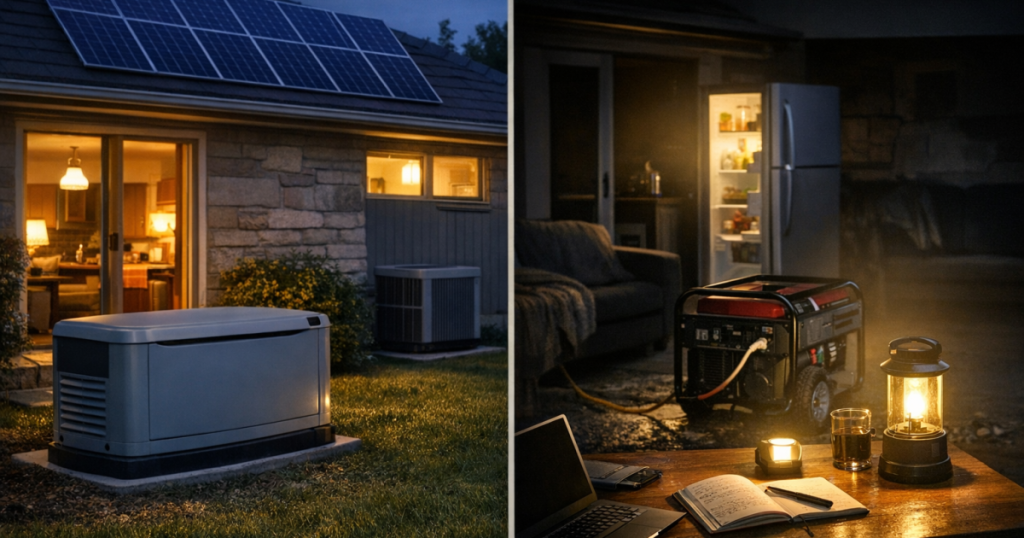
A backup plan works best when it starts with real household needs, not the biggest equipment you can fit in the yard or garage. The choice between whole-home standby and essential-circuit backup power affects cost, fuel, noise, installation, and how calmly your home runs when the grid is down.
Transfer switch installation, panel wiring, and any permanent generator connections should be handled by a licensed electrician to meet local electrical codes, permit requirements, and manufacturer safety standards.
In brief
- Whole-home backup aims to support most or all of a house, but it usually requires more equipment, more fuel, and more planning.
- An essential-circuit plan supports selected loads such as refrigeration, lighting, internet, heat controls, medical devices, sump pumps, or a few outlets.
- The right answer depends on what must keep running, how long outages usually last, and whether your home can safely connect backup power to selected circuits.
- Start with priorities and load estimates before choosing a generator, battery system, solar recharging setup, or transfer equipment.
What “whole-home” really means during an outage
Whole-home backup sounds simple: the power goes out, the system comes on, and life continues. In practice, it means different things depending on the equipment, the home, and the loads that start at the same time. Central air conditioning, electric ranges, clothes dryers, well pumps, heat pumps, and electric water heaters can draw much more power than lights, routers, refrigerators, or phone chargers.
A permanently installed standby generator may be designed to cover a large portion of a home, but even then, load management matters. Some systems shed large appliances automatically so the generator is not overloaded. Other setups may require the homeowner to avoid running multiple high-demand appliances at once. For a plain-English refresher on watts, runtime, fuel, and safe setup, start with home backup power basics before sizing anything.
Whole-home backup can make sense for homes with frequent long outages, critical heating or cooling needs, a well pump, a sump pump, medical requirements, or limited tolerance for manual setup. It can also be the more comfortable path for households that do not want to manage extension cords, manual load choices, or battery recharging during a storm.
What an essential-circuit setup is designed to do
An essential-circuit approach is more selective. Instead of trying to power every outlet and appliance, it feeds a chosen group of circuits or devices. That might include the refrigerator, freezer, furnace blower or boiler controls, a few lights, the internet setup, a bedroom outlet, a sump pump, garage freezer, or medical-device circuit.
This is where essential-circuit backup power often gives households the best balance between resilience and cost. You are not trying to recreate normal grid service. You are keeping food cold, phones charged, rooms lit, medical needs supported, and the house stable enough to wait out the outage.
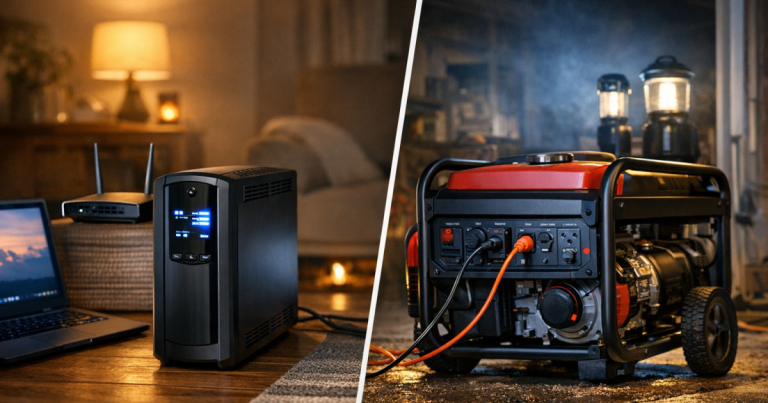
For many homes, this path pairs well with a portable generator connected through a proper transfer switch, or with a battery system feeding selected devices directly. Renters and apartment residents usually cannot modify an electrical panel, so their version may be a portable power station, UPS units for networking gear, rechargeable lanterns, and careful load planning rather than circuit-level wiring.
How to decide what belongs on the backup side
A good plan starts by sorting loads into three groups: must run, should run, and nice to have. Must-run items are the things that protect health, safety, food, water, temperature, or basic communication. Should-run items make the outage manageable. Nice-to-have items are comfort loads that can wait until the grid returns.
- Must run: medical devices, refrigerator or medication fridge, sump pump, heat controls in cold weather, well pump where water access is critical, basic lighting, phone charging, and weather alerts.
- Should run: freezer, router and modem, laptop charging, a fan, garage door opener, security equipment, or a few kitchen outlets.
- Nice to have: laundry, dishwasher, electric oven, large entertainment systems, multiple room air conditioners, and other high-demand comfort loads.
The exact list changes by household. A remote worker may rank internet and laptop power higher than a second freezer. A home with a basement sump pump may put that circuit near the top. A household with refrigerated medication or powered medical equipment should plan more conservatively and review which appliances get backup power first before locking in a circuit list.
Realistic outage scenarios
A 12-hour evening outage
For a short outage, whole-home backup is mostly about convenience. An essential setup can often carry the refrigerator, lights, Wi-Fi, phones, a laptop, and perhaps heat controls without trying to run every large appliance. Battery-based backup can be quiet and simple for this kind of event, especially when the main loads are electronics and lighting.
A 24-hour storm outage
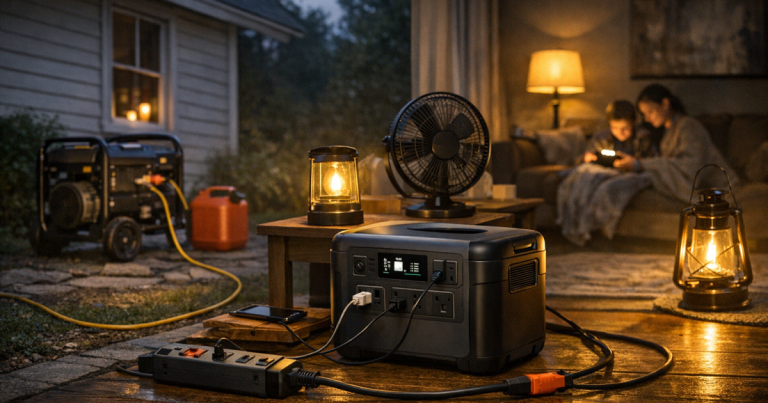
Once the outage stretches through a full day, refrigeration, communication, and temperature become more important. A portable generator may be useful for rotating between refrigerator, freezer, sump pump, and battery recharging, but it must be operated outdoors away from doors, windows, vents, and garages. Fuel planning starts to matter because runtime depends on load, generator size, fuel type, and operating pattern.
A 3-day grid failure
During a multi-day outage, whole-home backup can reduce daily decision-making, but fuel supply and maintenance become central. An essential-circuit setup can still work very well if the household has a realistic schedule: run the generator in safe outdoor windows, recharge batteries, cool the fridge and freezer, power the pump or heat controls, then shut down to save fuel and reduce noise. The less you try to run, the longer your fuel and battery capacity are likely to last.
The trade-offs that matter most
The biggest difference is not just power output. It is how much attention the system demands during a stressful event. Whole-home systems can be more automatic, but they are typically more involved to install and support. Essential setups require clearer decisions up front, but they can be simpler, quieter, and more fuel-efficient during common outages.
- Installation: whole-home standby systems and hardwired circuit backup require professional electrical work. Direct-to-device battery backup usually does not.
- Fuel and runtime: larger systems may burn more fuel, especially if high-demand appliances are used normally during an outage.
- Noise: permanently installed and portable generators create outdoor noise. Batteries and UPS units are quieter but limited by stored energy.
- Control: essential-circuit planning forces useful choices. Whole-home planning can hide those choices until the system is overloaded or fuel runs low.
- Budget: trying to power everything can raise equipment, installation, and fuel costs. Prioritizing loads can keep the plan more focused.
Transfer switches and safe connections
Any generator that feeds household wiring needs a safe, code-compliant connection. Backfeeding a home through a dryer outlet or improvised cord is dangerous and can put utility workers, neighbors, and your own equipment at risk. A transfer switch or approved interlock setup separates generator power from the grid and helps define which circuits can run.
For essential-circuit plans, a manual transfer switch can make outage operation much calmer: selected circuits are labeled, the generator connection point is clear, and the household knows what can be powered. If this is the direction you are considering, read the site’s step-by-step overview of connecting a portable generator with a transfer switch so you understand the workflow before talking with an electrician.
When whole-home backup is the better fit
Whole-home or near-whole-home backup is worth serious consideration when outages are frequent, long, or dangerous for your household. Examples include homes with medically necessary powered equipment, refrigerated medication, severe heat or cold exposure risk, a private well, repeated sump pump needs, or residents who cannot safely manage manual generator setup.
It may also be the right fit for households that travel often or need automatic operation when nobody is home. The planning still needs discipline, though. Even a capable standby system has load limits, service needs, and fuel realities. “Whole-home” should not be treated as permission to ignore electrical demand during an outage.
When essential circuits are the smarter plan
For many US households, an essentials-first approach is the practical middle ground. It is especially useful for short to moderate outages, neighborhood storm failures, wildfire shutoffs, and homes where the main goal is staying safe, connected, and reasonably comfortable rather than running every appliance.
This approach also helps prevent overspending. A household that can keep refrigeration, communications, a few lights, and heat controls running may not need a large whole-home system. Apartment residents, renters, and townhome owners may be limited to device-level backup, but the same thinking applies: keep the critical loads small, known, and supported.
A simple planning sequence
- List your outage risks: storm outages, wildfire shutoffs, winter ice, summer heat, rural line failures, or brief neighborhood interruptions.
- Choose your target duration: decide whether you are planning for 12 hours, 24 hours, or several days.
- Write down the loads: include refrigerators, medical equipment, pumps, internet gear, lights, heating controls, and work devices.
- Separate startup and running loads: motors and compressors can need more power when starting than while running.
- Decide what can be rotated: many loads do not need to run constantly, which reduces generator and battery demands.
- Match the connection method: direct plug-in, UPS, portable power station, transfer switch, interlock, or standby system.
- Practice the routine: label cords, test lights, review fuel storage, and make sure every adult knows the safe startup and shutdown order.
Questions people ask
Can an essential-circuit setup run central air conditioning?
Sometimes, but central air is a high-demand load and is not usually the first priority in a smaller backup plan. Have an electrician evaluate the circuit, startup load, and equipment limits before including it.
Is whole-home backup always automatic?
No. Some standby systems start automatically, while portable generator setups are usually manual. The word “whole-home” describes the coverage goal, not always the operating method.
Can I use extension cords instead of a transfer switch?
Extension cords can power individual plug-in devices from a properly operated outdoor generator, but they should not feed household wiring. Use outdoor-rated cords sized for the load and follow the generator manual.
How many circuits should I put on backup power?
Start with the circuits that protect health, food, water, heat, and communication. The number depends on load size, generator or battery capacity, panel layout, and what your electrician can safely configure.
Do batteries replace generators for essential loads?
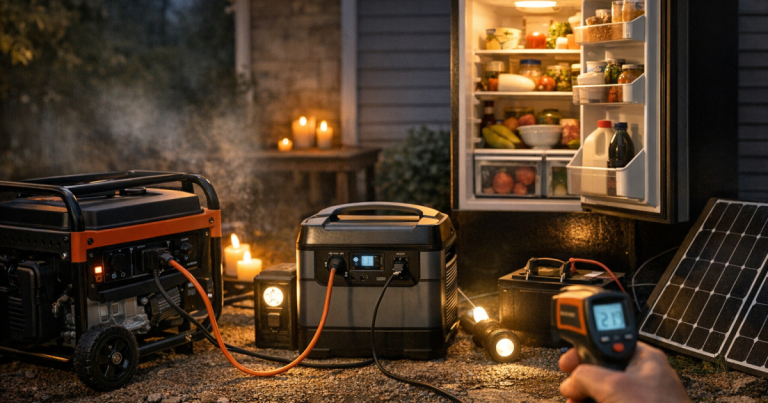
They can for shorter or lower-demand outages. For multi-day events, batteries usually need a recharging plan from solar, a generator, a vehicle, or grid power when service returns.
What stands out
The best backup plan is not automatically the biggest one. Whole-home backup can be excellent for households that need automatic, broad coverage and can support the installation, fuel, and maintenance. Essential-circuit planning is often the more efficient path for keeping the refrigerator cold, the internet alive, the lights on, and the most important household systems running.
Before choosing equipment, decide what failure you are really preparing for. A clear list of essential loads will make every later decision easier: generator size, battery capacity, transfer equipment, fuel storage, solar recharging, and the daily routine your household will follow when the lights go out.