A blackout feels less chaotic when every room has a simple job: light, safety, comfort, communication, or food protection. The goal is to prepare each room for a blackout before the lights go out, so no one is searching dark drawers, tripping over cords, or guessing which appliance matters most.
Electrical panel work, transfer switch installation, and generator connections to a home’s wiring should be carried out by a qualified electrician to meet local codes, manufacturer instructions, and safety requirements.
The big picture
Think of your home in zones. Some rooms help you stay informed, some protect food and medicine, and some simply need safe light and clear paths. A good room-by-room plan does not require turning every space into a bunker. It means putting the right items where people will actually need them.
- Lighting: Every regularly used room should have a flashlight, lantern, or plug-in emergency light that people can find in the dark.
- Power: Decide which outlets, devices, and appliances are essential before an outage begins.
- Safety: Keep stairs, bathrooms, exits, and generator areas free of trip hazards and carbon monoxide risks.
- Comfort: Plan one or two rooms as the main gathering and sleeping areas during longer outages.
- Communication: Keep phones, radios, chargers, and contact lists in a predictable place.
If you are still deciding how long your household should be able to function without grid power, start with your likely outage pattern. A short storm outage needs a different setup than a multi-day wildfire shutoff or ice storm. For a broader planning frame, see how long your home should be ready for a blackout.
Entryway and hallways: make movement safe first
The first few minutes of a blackout are often when people bump into furniture, rush to check the breaker panel, or try to find pets and children. Your entryway and hallways should help everyone move safely.
- Keep a flashlight near the main door, not buried in a kitchen drawer.
- Use battery-powered or rechargeable motion lights in dark hallways and near stairs.
- Keep shoes or hard-soled slippers accessible, especially if storms can break glass or bring debris inside.
- Make sure exterior door locks can be operated manually if smart locks or garage doors lose power.
- Keep a printed emergency contact sheet in one consistent place near the exit or command area.
If you have older adults, kids, or anyone with limited mobility at home, walk the route from bedrooms to bathrooms and exits with the lights off during a calm evening. You will quickly notice clutter, rugs, cords, or furniture edges that are easy to ignore in normal lighting.
Living room or family room: create the main blackout hub
Most households do better when they choose one main room for the first night of an outage. The family room often works because it has seating, central access, and room for lanterns, chargers, blankets, and a small activity kit.
Set up this room with layered light instead of one bright source. A lantern on a table, a small reading light, and a flashlight for moving around are more useful than a single powerful beam aimed across the room. Rechargeable lanterns are convenient, but keep backup batteries or a second light source in case one was not charged.
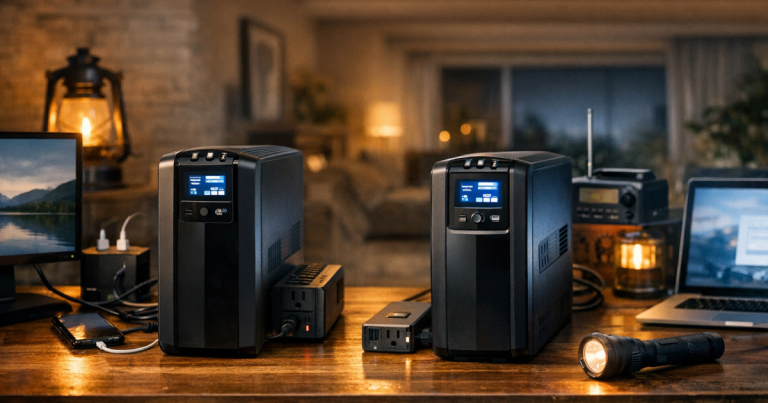
Keep entertainment low-power and offline: cards, books, printed games, puzzles, or downloaded shows on a charged tablet. If you use a battery station here, leave space around it for ventilation and avoid running cords through walkways. A small UPS such as the APC Back-UPS Pro 1500VA can be useful for short-term electronics support, but you should verify the connected load and expected runtime rather than assuming it will run everything in the room.
Kitchen: protect food, water, and cooking decisions
The kitchen becomes a decision point during any longer outage: when to open the fridge, what to eat first, whether the freezer is still safe, and how to cook without creating indoor air or fire hazards.
- Keep refrigerator and freezer thermometers in place so you are not guessing by touch.
- Group cold items together before storm season if outages are likely in your area.
- Keep a cooler available for items you may need often, such as milk, medications approved for cooler storage, or baby supplies.
- Store shelf-stable food that can be eaten without cooking, including options your household already likes.
- Keep manual can openers, disposable plates, trash bags, and hand sanitizer where you can find them.
Do not use outdoor grills, camp stoves, or fuel-burning cooking devices indoors or in attached garages. If you cook outside during an outage, keep the cooking area away from doors and windows and supervise open flames carefully.
The kitchen is also where people often overestimate backup power. A fridge, freezer, microwave, coffee maker, and electric range are very different loads. Before an outage, decide what gets power first instead of plugging in appliances at random. This guide to choosing which appliances get backup power first can help you sort essentials from conveniences.
Bedrooms: make sleep and nighttime movement easier
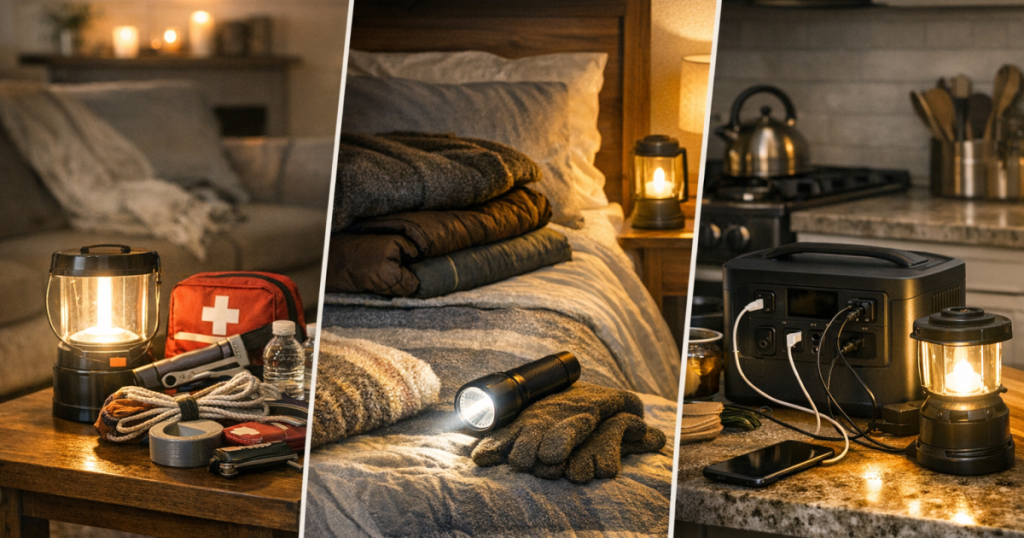
Bedrooms need simple, reachable supplies. Each nightstand should have a flashlight or lantern that can be found by touch. If children are afraid of total darkness, use dim battery lanterns rather than candles.
Prepare one “sleep-ready” bedroom for longer outages. In hot weather, that may be the coolest lower-level room. In cold weather, it may be an interior room where people can safely layer blankets and sleeping bags. Keep extra socks, hats, and blankets together so you are not opening closets in the dark.
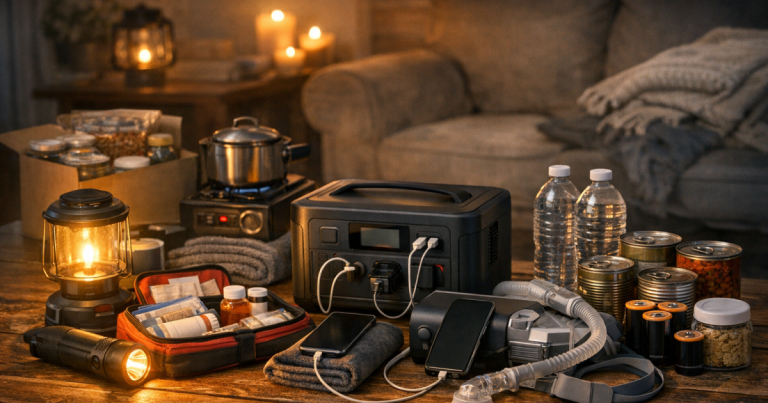
For CPAP machines, oxygen concentrators, powered beds, refrigerated medication, or other health-related equipment, planning must be more precise than a general household checklist. Identify the device’s power requirements, backup runtime needs, charging method, and whether a caregiver or utility medical baseline program should be part of the plan. For a deeper walkthrough, use this guide to planning backup power for home medical devices.
Bathrooms: reduce slips, water stress, and hygiene problems
Bathrooms are high-risk rooms in the dark because of wet floors, hard surfaces, and tight spaces. Place a small flashlight or motion light near each bathroom entrance. If you have a windowless bathroom, do not rely on a phone flashlight as the only light source.
- Keep a basic hygiene kit ready: wipes, hand sanitizer, trash bags, menstrual supplies, diapers if needed, and any daily care items.
- Store a few gallons of water for handwashing and toilet flushing if your water supply depends on electric pumps.
- Keep medications in a consistent location and maintain a written list of prescriptions, dosages, and pharmacy contacts.
- Avoid candles on sink counters, toilet tanks, or shelves where towels and hair products are nearby.
If your home uses a well pump, sewage ejector pump, or electric water heater, learn what works during an outage before you need it. Labeling those systems now can prevent confusion later.
Home office: protect work, internet, and data
Remote work during a blackout is mostly about priorities. You may not need a full desktop setup, printer, and multiple monitors. You may only need a charged laptop, phone hotspot, router backup, and a way to send a message that power is out.
Keep a small work-outage kit near your desk: charging cables, a wall charger, a power bank, a printed list of important phone numbers, and one simple light source. A surge protector such as the Belkin 12-Outlet PivotPlug can help organize electronics during normal use, but it is not a substitute for backup power, safe generator wiring, or a UPS.
Before storm season, save essential files locally if you normally rely on cloud access. Know how long your laptop typically lasts under light use, and test whether your router and modem remain useful on backup power if the local internet service is still operating.
Garage, basement, and utility areas: keep hazards controlled
Utility spaces matter because they often contain the electrical panel, water shutoff, sump pump, generator cords, fuel, tools, and storage. These areas should be organized enough that an adult can find key items with a flashlight.
- Label the electrical panel clearly, including any circuits tied to backup power equipment.
- Keep generator cords dry, untangled, and rated for the equipment you use.
- Store fuel only in approved containers and away from living areas, ignition sources, and children.
- Test sump pump backup plans before heavy rain, not during it.
- Place carbon monoxide alarms on each level of the home and near sleeping areas according to manufacturer guidance.
Portable generators must run outdoors, far from doors, windows, vents, crawl spaces, and attached garages. Never refuel a hot running generator. Let it cool according to the manufacturer’s instructions, and keep cords routed where they will not sit in puddles or become trip hazards.
Kids’ rooms, guest rooms, and pet areas
Children handle outages better when they know what to expect. Put a small flashlight where each child can reach it, but also teach them to stay put and call for an adult if the room is dark. Glow sticks can be useful for comfort and visibility, but they should not replace real task lighting.
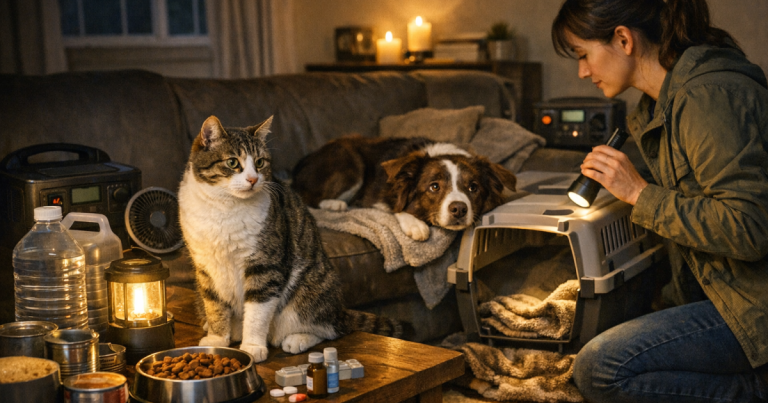
Guest rooms should have a visible flashlight and a simple note explaining where the main household lights and supplies are kept. For pets, keep leashes, carriers, food, medication, and waste bags together. If your pet is sensitive to alarms or storm noise, plan a quiet interior room ahead of time.
Make the room plan easy to maintain
The best blackout setup is one you can keep current without making it a weekend project every month. Use a seasonal check: test lights, charge batteries, replace expired food, confirm medications and contacts, and review generator or battery station instructions.
Assign each room one small container or drawer rather than scattering supplies everywhere. Label it plainly: “blackout light,” “pet outage kit,” “office power,” or “bathroom hygiene.” After a real outage, write down what worked and what was missing while it is still fresh. That short note is often more useful than a perfect checklist made months earlier.
Helpful questions
How many flashlights should a home have for a blackout?
Plan for at least one reliable light source in each bedroom, bathroom access area, main living space, and utility area. Add extra lights for stairs, older adults, and children.
Should every room have a power bank?
No. It is usually better to keep small power banks in the rooms where phones, medical devices, or communication gear are used most, then maintain a central charging spot.
Is it safe to use candles during a power outage?
Battery-powered lights are safer for most households. Candles increase fire risk, especially around kids, pets, curtains, bedding, and cluttered counters.
What room should we use as the main blackout room?
Choose a room that is easy to access, safe to light, comfortable for sitting or sleeping, and close to supplies. In extreme heat or cold, choose the room that stays most comfortable naturally.
How often should I check room-by-room blackout supplies?
A seasonal check is a good rhythm for most US households. Test lights, charge batteries, rotate food and water, and update medical or contact information.
Why it matters
A blackout plan works best when it matches real life inside your home. Room-by-room preparation keeps the first hour calmer, protects the essentials, and reduces unsafe improvising. You do not need every appliance running or every closet packed with gear. You need clear light, safe movement, protected food and medicine, reliable communication, and a practical plan your household can follow in the dark.