During a blackout, home backup power is less about keeping life normal and more about keeping the right things running. A useful setup protects the essentials first: phones, lights, internet, medical devices, refrigeration, and the few comfort items that make a long outage manageable.
The basic idea is simple: when the grid stops supplying electricity, another source supplies limited power to selected devices or circuits. The details matter because each source has different limits for runtime, noise, fuel, safety, and what it can realistically start.
Transfer switches, interlock kits, inlet boxes, and any connection to your home’s electrical panel should be installed by a qualified electrician in accordance with local electrical codes, utility requirements, and manufacturer instructions.
The big picture
Backup power works by replacing the grid for a narrow set of loads. Instead of thinking “power the whole house,” think “keep critical loads alive for the outage I’m likely to face.” That shift prevents overspending and helps avoid unsafe improvising when the lights are already out.
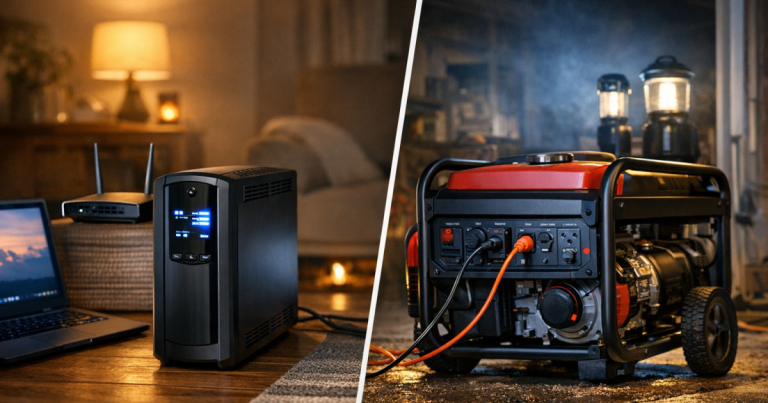
- UPS units bridge short interruptions for electronics, routers, modems, desktop computers, and network gear.
- Portable power stations store battery energy for phones, laptops, lights, small appliances, CPAP machines, and sometimes refrigerators for limited periods.
- Portable generators create electricity from fuel and can support larger or longer loads when used outdoors with proper cords and transfer equipment.
- Standby generators are permanently installed systems that can start automatically and feed selected circuits or larger home loads through approved equipment.
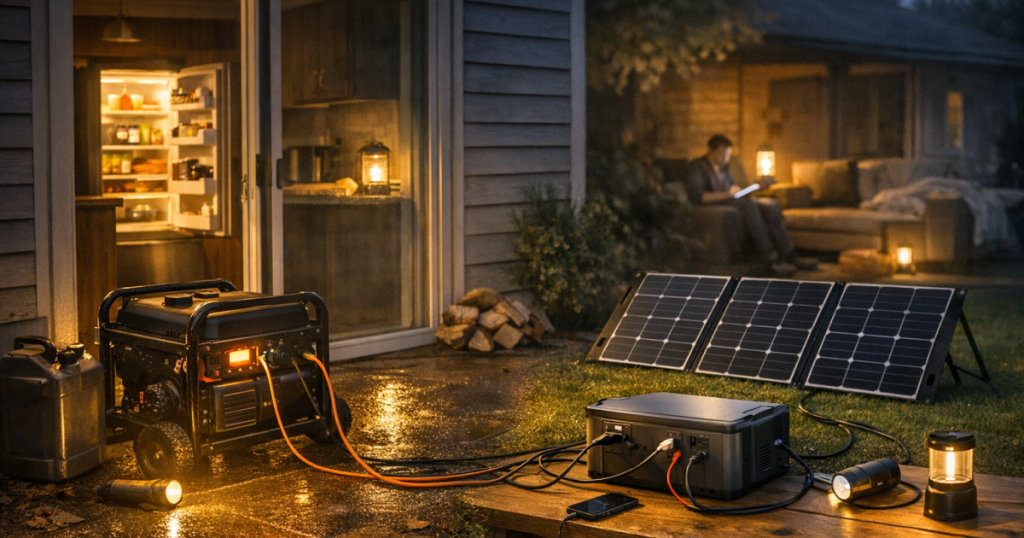
- Solar panels do not replace the grid by themselves at night or in poor weather, but they can recharge a compatible battery system during daylight.
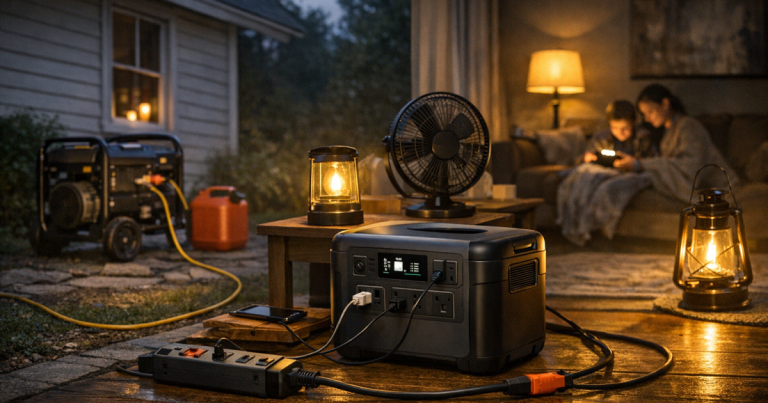
Most dependable outage plans use more than one layer. A UPS can keep your router from dropping during a quick flicker, a battery station can carry quiet overnight loads, and a generator can recharge batteries or run higher-demand equipment during longer outages. For a deeper look at that structure, see this guide to a layered backup power plan.
What actually happens when the grid goes down
When utility power fails, anything plugged into normal wall outlets loses its supply unless it is connected to a backup source. A UPS switches over almost instantly because it sits between the wall and the device all the time. That is why UPS units are useful for routers, modems, desktop computers, and other electronics that do not tolerate a sudden shutdown well.
A portable power station is usually manual. You charge it ahead of time, move it where needed, and plug devices directly into it. Inside, a battery stores energy as DC power. An inverter changes that stored energy into AC power for standard household plugs. The inverter has a maximum output limit, and the battery has a finite amount of stored energy, so both watts and watt-hours matter.
A generator works differently. It produces electricity while its engine is running. That makes fuel, outdoor placement, exhaust direction, extension cords, and refueling routine part of the plan. A generator can run loads directly through heavy-duty cords or feed selected circuits through approved transfer equipment. It should never be used indoors, in a garage, on a porch, or near openings where carbon monoxide can enter the home.
Watts, starting surge, and runtime in plain English
Every backup source has two limits: how much power it can deliver at one time, and how long it can keep doing it. Power is measured in watts. Stored energy is commonly described in watt-hours. Fuel-powered runtime depends on the generator, load, fuel type, tank size, maintenance condition, and operating environment.
A phone charger is a small load. A refrigerator is a medium load that cycles on and off. A microwave, space heater, hair dryer, sump pump, or well pump can be a much heavier load. Some appliances also need extra power for a moment when their motor starts. That short startup demand is called surge, and it can trip an inverter or generator even if the appliance seems reasonable on paper.
Runtime estimates are useful, but they are not guarantees. A battery station may run a small lamp and phone chargers for a long time, then drain much faster when asked to power a heating appliance. A generator may run longer under a light load than under a heavy one. The safest planning habit is to list your essentials, check their labels or manuals, and leave margin instead of running every source at its limit.
The main ways power reaches your devices
Direct plug-in
This is the simplest path. You plug a device directly into a UPS, power station, or generator-rated extension cord. It works well for phones, laptops, lamps, small fans, routers, and chargers. The trade-off is that you are powering individual items, not built-in circuits such as ceiling lights, hardwired furnace controls, or well pumps.
UPS bridge for electronics
A UPS is a short-term bridge, not a whole-outage solution. It can protect a router from a quick outage, give you time to shut down a computer, or keep network gear alive while you start a larger plan. A unit such as the CyberPower CP1500PFCLCD is the kind of device homeowners commonly evaluate for computers and networking gear, but the right fit depends on the load, battery condition, outlet needs, and runtime expectations.
Battery station for quiet essential loads
Portable power stations are useful when noise, fumes, and fuel storage are a concern. They are popular for apartments, nighttime loads, medical devices that have been checked for compatibility, and basic comfort items. They still need planning: recharge time, inverter capacity, battery chemistry, ventilation clearance, and how many devices are connected all affect real use.
Generator through cords or transfer equipment
Portable generators can support longer outages because you can keep producing power as long as you have fuel and the unit is safe to operate. For direct loads, use outdoor-rated cords matched to the generator and the load. For household circuits, use a transfer switch or interlock system installed correctly. A kit such as the Reliance Controls 306CRK Pro/Tran 2 30A 6-Circuit Transfer Switch Kit is an example of the type of equipment people discuss for selected-circuit generator setups, but panel compatibility and installation requirements must be verified by a qualified electrician.
What you can realistically keep running
Most households get the best results by grouping loads into priorities. First are safety and communication: phones, weather alerts, a few lights, and internet if your local service is still operating. Next are health and household protection: CPAP equipment, medication refrigeration, sump pump needs, or mobility-related devices. Then come food preservation, comfort, and work needs.
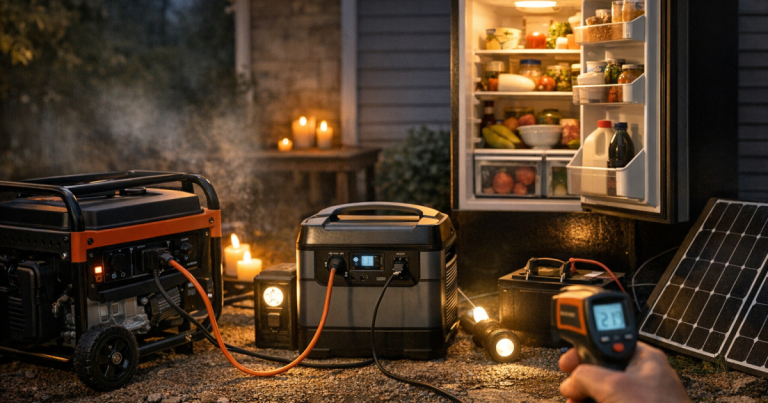
A refrigerator does not usually need constant power every minute, but it does need enough cycling time to hold safe temperatures. A chest freezer may coast longer than an upright freezer if it stays closed, but room temperature, how full it is, and how often it is opened matter. A gas furnace may still need electricity for its blower and controls. A well pump or sump pump can require more starting power than expected. These are exactly the loads to confirm before the outage, not during it.
Heating and cooling are where expectations often get unrealistic. Electric space heaters, central air conditioning, large window AC units, and electric water heaters are heavy loads. Some larger generator or professionally installed standby systems may handle certain comfort loads, but many portable battery setups are better reserved for low-watt essentials.
Why safety shapes the whole plan
Backup power is useful only when it does not create a bigger problem than the outage itself. Generators create carbon monoxide and must run outdoors, far from doors, windows, vents, and attached spaces. They also need safe refueling habits, dry operating conditions, and cords that are appropriate for the load and environment.
Never backfeed a home by plugging a generator into a wall outlet. That can energize wiring in dangerous ways, damage equipment, and endanger utility workers. If you want generator power at normal household circuits, use approved transfer equipment installed for that purpose. Our portable generator safety basics cover placement, cords, grounding questions, and carbon monoxide precautions in more detail.
Batteries have safety limits too. Keep power stations and UPS units dry, give them room for ventilation, use the manufacturer’s charging equipment, and avoid daisy-chaining power strips or extension cords in ways that exceed ratings. If a device supports a medical need, test the setup ahead of time and confirm the device’s power requirements with its manufacturer or care team.
A simple outage workflow
A calm routine makes backup power easier to use when the house is dark and everyone is asking what works. Before storm season or wildfire shutoff season, write down your critical loads and where each one plugs in. Label cords. Charge battery units. Store fuel safely if you use a generator. Test the sequence when there is no emergency.
- First 15 minutes: confirm the outage, check on household members, switch on safe lighting, and avoid opening the fridge or freezer repeatedly.
- First hour: connect phones, router equipment, medical devices, or work-critical electronics to the smallest suitable backup source.
- Several hours in: decide whether food preservation, sump pump needs, or comfort loads justify starting a generator or rotating battery use.
- Overnight: prioritize quiet, low-load essentials and avoid running a generator while people are sleeping unless your setup and monitoring plan are specifically built for safe operation.
- Next day: recharge batteries, manage fuel, recheck refrigerator and freezer temperatures, and reduce loads that are not essential.
If you are still building your load list, this walkthrough on how to size backup power without overspending will help you match devices, watts, and runtime expectations more realistically.
Questions people ask
Can solar panels run a house during a blackout?
Solar panels alone usually are not enough because they only produce power when conditions allow. During an outage, they are most useful when paired with a compatible battery or solar generator system that can store and deliver power safely.
Can I plug a generator into a regular wall outlet?
No. That is unsafe backfeeding. Use direct cords for individual loads or properly installed transfer equipment for selected household circuits.
Will a battery station run my refrigerator?
Possibly, but it depends on the refrigerator’s running watts, startup surge, battery capacity, inverter rating, room temperature, and how often the door opens. Test the setup before relying on it.
Do I need a whole-house system?
Many homes do not. A smaller plan that covers lights, communication, refrigeration, medical needs, and a few comfort items is often more practical than trying to power everything.
What is the first backup device to set up?
Start with communication and lighting. A charged power bank, LED lanterns, and a UPS for router equipment can make the first hour much calmer while you decide whether larger backup power is needed.
What to remember
Backup power works best when it is planned around real loads instead of wishful thinking. A UPS buys time for electronics, a power station gives quiet stored energy, a generator can support longer or heavier use, and transfer equipment lets selected circuits run safely when installed correctly.
The strongest outage plans are boring in the best way: tested cords, charged batteries, known wattage, safe generator placement, and a short list of priorities. When the grid fails, that preparation turns a stressful blackout into a manageable household routine.