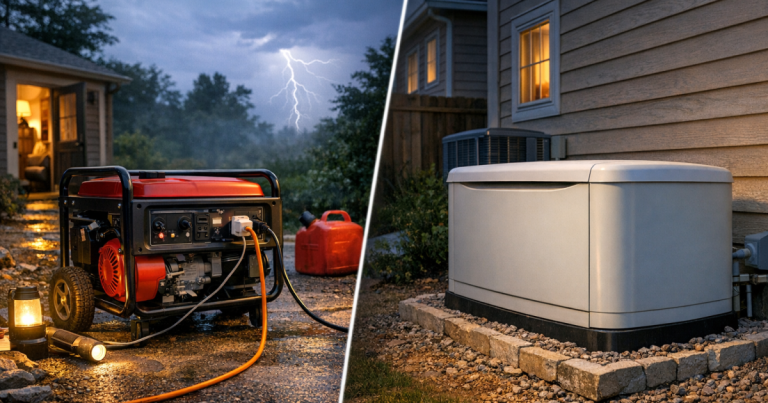
When the lights go out for more than a few hours, dual-fuel generators give households a useful choice: run on gasoline when it is easy to get, or switch to propane when stored fuel matters more. The right setup is less about chasing the biggest number on the box and more about matching watts, fuel, cords, and safety habits to the loads you actually need.
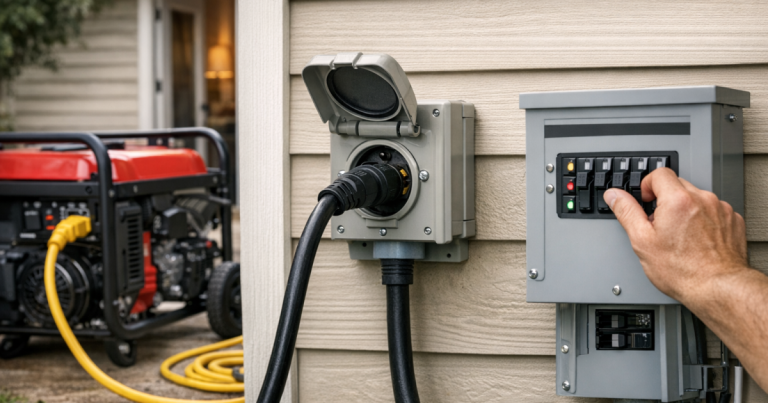
Transfer switch installation, interlock work, and any connection between a generator and home wiring should be carried out by a qualified electrician to meet local electrical codes, utility requirements, and applicable safety standards.
The short version
A dual-fuel model can be a smart blackout tool when you want more fuel flexibility than a gas-only portable generator. Gasoline is widely available and often gives the strongest output for a given machine. Propane stores longer, avoids stale-gas problems, and can be easier to keep ready between outages.
- Size the generator around running watts and starting surge, not just the largest printed wattage.
- Expect many units to have different output ratings on gasoline and propane; check both ratings before planning loads.
- Use heavy-duty outdoor-rated cords, a proper inlet, or a professionally installed transfer switch. Never backfeed a home through a dryer outlet or wall receptacle.
- Plan fuel in hours of realistic use, not just tank size. Load, weather, altitude, and maintenance all affect runtime.
- Keep the generator outdoors, away from doors, windows, vents, garages, and crawlspaces because carbon monoxide can build up quickly.
Where dual-fuel generators fit in a blackout plan
Dual-fuel generators make the most sense for homes that need more power than a small battery station can comfortably provide, but do not necessarily need a permanent whole-home standby system. They are common in suburban and rural outage plans where the goal is to run a refrigerator, freezer, some lights, device charging, a sump pump, a furnace blower, or selected kitchen loads.
They are less suitable for apartments, dense townhomes, or any situation where you cannot place the generator safely outdoors with enough clearance. Noise rules, fuel storage limits, and shared outdoor space matter. For renters or households with smaller loads, a UPS and portable power station may be a better first layer, with a generator reserved for longer outages or a different property setup.
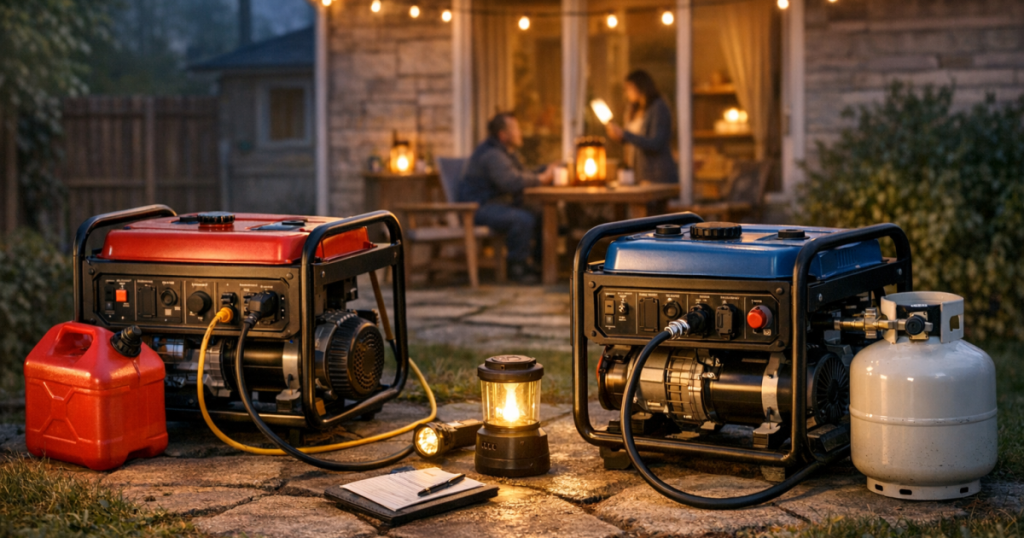
The big advantage is fuel choice. If gasoline is available, it can be convenient for short storm outages. If gas stations are closed or lines are long, stored propane cylinders can keep you from depending entirely on last-minute fuel runs. That does not mean propane is magic; cylinders still run out, regulators and hoses need to be in good condition, and cold weather can affect propane performance.
Gasoline vs. propane during an outage
Gasoline
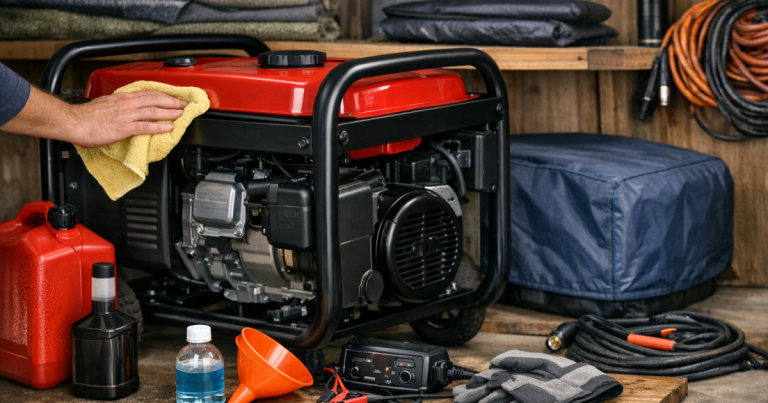
Gasoline is familiar, energy-dense, and easy to refill when stations are open. Many portable generators produce their highest rated output on gasoline, but gasoline storage takes attention. It can degrade over time, containers need to be approved and sealed, and local fire rules may limit how much you can store at home. If you keep gasoline for emergency use, rotate it and follow the fuel stabilizer and storage guidance from the generator and fuel-container manufacturers.
Propane
Propane is often easier to store for long periods because it does not go stale like gasoline. Standard 20-lb grill cylinders are familiar to many households, while larger cylinders can extend runtime if they are allowed and practical for your property. The trade-off is that many generators have lower wattage ratings on propane than on gasoline. Always plan from the propane running-watt rating if propane is your main emergency fuel.
The practical fuel rule
Think in terms of fuel hours. A generator running a light load may stretch fuel much longer than one powering a pump, refrigerator, freezer, and microwave at the same time. Manufacturer runtime numbers are useful starting points, but they are estimates based on specific loads and conditions. Your real results can vary.
Sizing starts with the loads you actually need
Start with a short outage list instead of a whole-house wish list. Most households do not need every outlet alive during a blackout. They need cold food protected, phones charged, a few lights, internet if service is still available, and one or two comfort or safety loads.
Write down each item you want to run and look for its running watts. Then note whether it has a motor or compressor that may need extra starting watts. Refrigerators, freezers, sump pumps, furnace blowers, well pumps, and some air conditioners can draw a surge when they start. That surge is the reason a generator that looks large enough on paper can still struggle if several devices start at once.
- Small essentials setup: refrigerator or freezer, router, phones, LED lights, and maybe a laptop. This can be manageable with a modest generator or a layered battery setup, depending on the appliance surge.
- Comfort-focused setup: essentials plus a furnace blower, sump pump, or small cooking appliance used one at a time. This usually needs more careful load management.
- Heavy-load setup: well pump, larger HVAC equipment, electric water heating, electric range, or multiple motor loads. This requires serious sizing and usually a transfer-switch or interlock plan designed by a qualified electrician.
For example, a model such as the Champion 201531 4500W Dual Fuel Inverter sits in a different planning category than a high-output portable unit such as the DuroMax XP13000HXT 13,000 Watt Tri Fuel Portable HXT Generator with CO Alert. The point is not that either one is automatically right for your home. The point is that nameplate size, outlet configuration, fuel rating, and your actual loads must line up.
Extension cords, inlets, and transfer switches
There are two common ways households use a portable generator during an outage: direct connection with extension cords, or a connection to selected home circuits through proper equipment.
Extension cords are simpler, but they are limited. They work for plug-in loads such as a refrigerator, lamp, charger, or small appliance, as long as the cords are outdoor-rated, correctly sized, fully uncoiled, and routed safely. They do not power hardwired equipment such as most furnace blowers, well pumps, or built-in lighting circuits.
A transfer switch or listed interlock setup can make selected circuits available from the generator while isolating the home from utility power. That isolation is critical for utility worker safety and equipment protection. For a deeper plain-English explanation of how circuits, transfer equipment, and backup sources relate, read how home backup power works during an outage.
If you are planning a circuit-based setup, confirm the generator outlet type, voltage, amperage, neutral configuration, cord rating, inlet box, and transfer equipment compatibility before buying or installing anything. A manual transfer switch kit such as the Reliance Controls 306CRK Pro/Tran 2 30A 6-Circuit Transfer Switch Kit is an example of the kind of equipment people use for selected circuits, but the correct configuration depends on your panel, generator, local code, and load plan.
Safety rules that are not optional
Portable generators solve one outage problem while creating a few serious risks if they are used casually. Carbon monoxide is the biggest one. A generator belongs outdoors, well away from openings into the home. Not in a garage. Not under a porch. Not in a shed with the door open. Not near a window air conditioner or crawlspace vent.
Refueling also deserves patience. Shut the generator down and let it cool before adding gasoline. Keep fuel containers away from ignition sources. Use propane cylinders upright and inspect hoses, fittings, and regulators for damage before use. If you smell gas, shut the system down and address the source before restarting.
Electrical safety matters too. Use cords rated for the load and conditions. Protect cords from standing water, sharp edges, and trip hazards. Do not overload power strips. Do not improvise adapters to make incompatible plugs fit. For a more complete safety checklist, keep the site’s portable generator safety guide handy before storm season.
Pairing a generator with batteries and UPS gear
A generator does not have to run nonstop. Many households are more comfortable using it in scheduled blocks: cool the fridge and freezer, recharge batteries, run a pump cycle, then shut it down for quiet hours. A UPS can bridge short flickers for internet gear or a desktop computer, while a portable power station can run lights, phones, a router, or small electronics indoors without exhaust or noise.
This layered approach can reduce fuel use and make nighttime outages calmer. It also gives you backup if one part of the plan fails. A generator handles larger loads and recharging; batteries handle quiet indoor power. For a broader setup strategy, see how to layer UPS, power station, and generator backup.
Things readers ask
Is propane better than gasoline for blackouts?
Propane is better for long-term storage and readiness, while gasoline is often easier to find and may provide higher output on many models. The best choice depends on what fuel you can store safely and how much power you need.
Can a dual-fuel generator run my whole house?
Some large portable units can run selected high-priority circuits, but “whole house” depends on your panel, appliances, starting loads, fuel supply, and transfer equipment. Central air, electric heat, well pumps, and electric water heaters can change the calculation quickly.
How much propane should I keep for an outage?
Plan from the generator’s propane runtime estimate at a realistic load, then decide how many hours per day you expect to run it. A few 20-lb cylinders may help with short outages, but longer events require a more deliberate fuel plan.
Can I switch fuels while the generator is running?
Follow the generator manual. Some models have specific fuel-change procedures, and doing it incorrectly can stall the engine or create a fuel-safety problem.
Do inverter generators matter for home electronics?
Inverter generators are commonly chosen for quieter operation and cleaner power output, but you still need to check the model’s ratings, outlets, grounding guidance, and load limits. Sensitive electronics can also benefit from UPS protection.
What to remember
A dual-fuel generator is most useful when it is sized for a realistic outage routine: protect food, keep communication working, support key comfort or safety loads, and avoid unsafe shortcuts. Gasoline gives you familiar refueling and strong output. Propane gives you easier long-term storage and another path when gas stations are unavailable.
The right plan is built before the storm: list your loads, check starting watts, choose fuel storage you can maintain safely, confirm cords and outlets, and have any home-wiring connection handled properly. A generator should make a blackout more manageable, not more complicated when the power is already out.