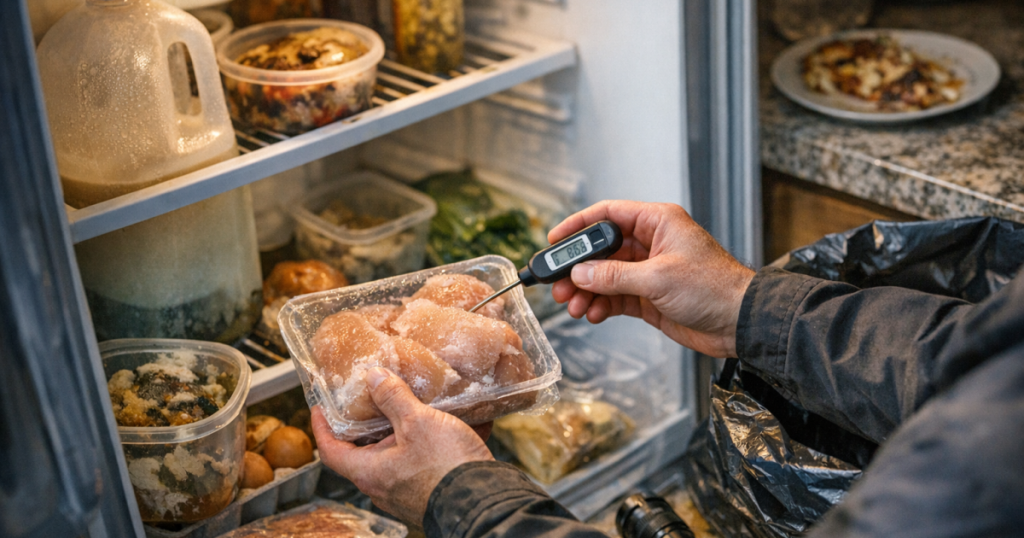
The power may be back, but the real cleanup often starts at the refrigerator door. Power outage food safety comes down to three things: how long the power was out, how warm the food got, and whether the food is considered perishable. When in doubt, do not taste food to check it; use time, temperature, and visible condition instead.
Food-service cleanup after flooding, sewage contact, or a commercial kitchen outage should be handled by qualified food-safety professionals in line with local health department requirements. For home kitchens, the steps below help you make safer, calmer decisions after a typical residential outage.
At a glance
- Keep the refrigerator and freezer doors closed until you are ready to check them.
- Refrigerated perishable food is generally unsafe if it has been above 40°F for more than 2 hours.
- A full freezer may hold a safe temperature for about 48 hours if unopened; a half-full freezer may hold for about 24 hours.
- Frozen food that still has ice crystals or has stayed at 40°F or below can usually be refrozen, though quality may suffer.
- Throw out any food touched by floodwater, broken packaging, leaking meat juices, or questionable odors from spoilage.
- Never use taste, smell alone, or “it looks fine” as your only test for meat, dairy, seafood, eggs, cooked leftovers, or cut produce.
Step 1: Rebuild the outage timeline
Before sorting food, write down the best timeline you have. Note when the outage began, when power returned, and whether anyone opened the refrigerator or freezer during the outage. A fridge that stayed closed is very different from one that was opened repeatedly for drinks, snacks, and meal prep.
If you were away and do not know the timeline, be more conservative. Check appliance thermometers if you have them, look for ice crystals in frozen foods, and inspect for leaks or thawed packages. If a high-risk food’s history is unknown, discarding it is usually the safer call.
For future storms, add refrigerator and freezer checks to your pre-storm blackout readiness walkthrough. A simple appliance thermometer in both compartments can turn a guessing game into a much clearer decision.
Step 2: Check temperatures before moving food around
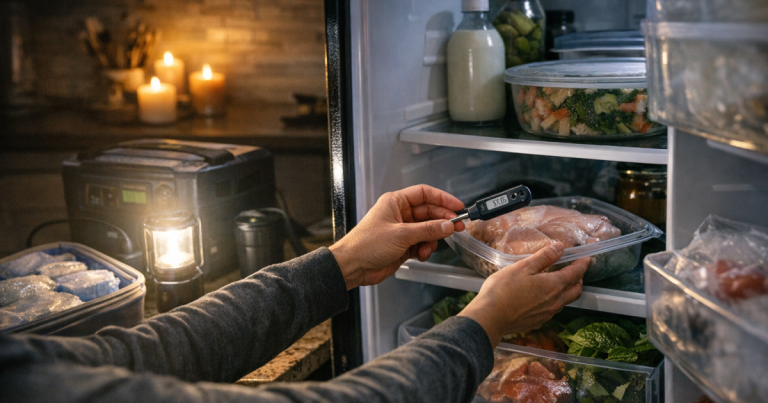
Use an appliance thermometer if one is already inside the refrigerator or freezer. For individual foods, a clean food thermometer can help check the temperature of thick items such as casseroles, soups, roasts, or large containers of leftovers. The key dividing line is 40°F.
If refrigerated perishable food has stayed at 40°F or below, it can generally remain refrigerated. If it has been above 40°F for more than 2 hours, discard it. That rule is intentionally simple because bacteria can multiply in the temperature range above normal refrigerator temperature, even when food still looks normal.
A freezer decision is slightly different. Food that still contains ice crystals, or has not warmed above 40°F, can usually be refrozen. The texture may not be as good later, especially with fruits, breads, ice cream, and prepared meals, but safety is judged by temperature and thawing status rather than perfect quality.
Step 3: Sort refrigerated food into keep, check, and toss piles
Start with the highest-risk foods, not the condiments. That makes the cleanup faster and reduces the chance that leaking meat or dairy contaminates shelves and drawers.
Throw out these refrigerated foods if they were above 40°F for more than 2 hours
- Raw or cooked meat, poultry, fish, and seafood
- Cold cuts, hot dogs, bacon, sausage, and opened deli meats
- Milk, cream, sour cream, yogurt, soft cheese, and opened cheese spreads
- Eggs, egg dishes, custards, and cooked breakfast casseroles
- Cooked rice, pasta, potatoes, beans, vegetables, soups, stews, and leftovers
- Cut melon, cut tomatoes, cut leafy greens, and prepared salads
- Refrigerated doughs, cream-filled pastries, and foods with mayonnaise-based dressings
These items are often safer to keep if packaging is intact
- Hard cheeses, though mold or moisture changes should still be taken seriously
- Butter and margarine
- Uncut fresh fruits and vegetables
- Bread, rolls, and many baked goods without cream fillings
- Peanut butter, jelly, ketchup, mustard, barbecue sauce, and many vinegar-based condiments
- Pickles, olives, and relish, provided they are not contaminated by other leaking food
Do not treat this second list as automatic permission to keep everything. If jars are dirty from meat juices, lids are loose, packages are swollen, or the refrigerator smells strongly spoiled after cleanup, discard the affected items.
Step 4: Decide what to do with frozen food
Open the freezer once, work quickly, and group foods by condition. Frozen food that is still hard, still partly frozen, or still has ice crystals is usually a keep-or-refreeze candidate. Fully thawed food needs closer judgment.
- Meat, poultry, and seafood: Refreeze only if the food still has ice crystals or is 40°F or below. If fully thawed and warmer than 40°F for more than 2 hours, throw it out.
- Frozen vegetables: Refreeze if ice crystals remain or the food stayed at 40°F or below. Discard if warm, slimy, or leaking.
- Frozen fruit: Often refreezes safely if cold, though texture may suffer. Discard if moldy, fermented-smelling, or contaminated by other foods.
- Ice cream and frozen desserts: Throw out if melted. Refrozen ice cream can have poor texture and may not be safe if it warmed too much.
- Prepared frozen meals: Treat these like leftovers. If fully thawed and above 40°F for more than 2 hours, discard.
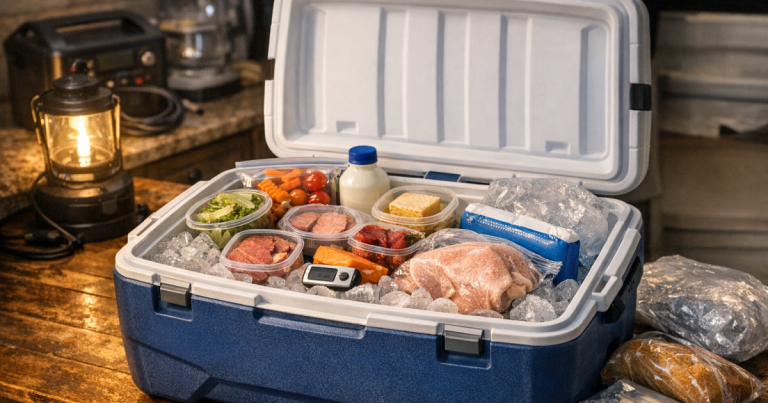
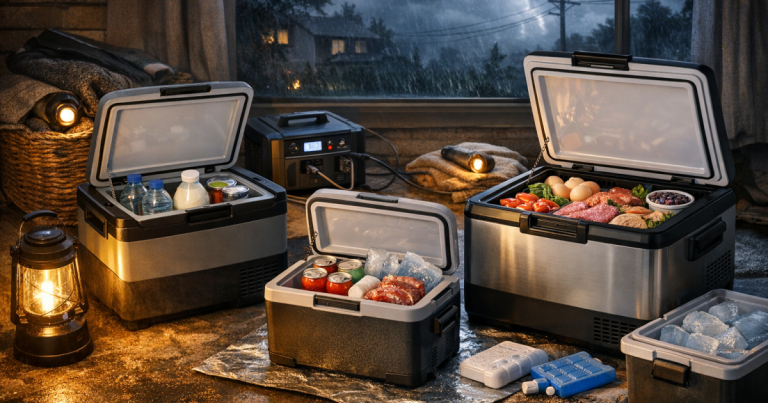
If you expect a long outage next time, moving selected foods into a cooler can buy time, but it only works when packed correctly with enough ice and minimal opening. Use this cooler-packing method for a powerless fridge before food warms up, not after it has already spent hours at an unsafe temperature.
Step 5: Clean safely after discarding food
Once unsafe food is bagged and removed, wipe up spills before they spread. Use hot, soapy water for shelves, drawers, door bins, and any containers you are keeping. Rinse surfaces as needed, then sanitize according to the cleaner label you are using. Let shelves and drawers dry before restocking.
Pay special attention to raw meat or seafood leaks. If juices dripped onto produce drawers, open packages, or door shelves, discard contaminated food and clean the area thoroughly. A blackout is annoying; a cross-contaminated refrigerator is worse.
If the refrigerator still smells bad after cleaning, remove all food, clean again, and leave the door open briefly while the appliance is powered and supervised. Persistent odors can come from hidden spills in gaskets, drawers, or drip areas.
When the answer is automatically “throw it out”
- Any food touched by floodwater, storm surge, or sewage backup
- Cans that are leaking, bulging, badly dented along seams, or spurting liquid when opened
- Food in cardboard, screw-top jars, snap-lid containers, or crimped caps that came into contact with floodwater
- Perishable food with an unknown outage timeline and no reliable temperature reading
- Food with mold, unusual bubbling, sour odor, slime, or damaged packaging
- Baby formula or baby food containers that were opened and not kept safely cold
Floodwater changes the decision completely because the issue is contamination, not just temperature. Sealed commercial cans may sometimes be salvageable after proper cleaning and sanitizing if they are undamaged, but when there is any doubt, throwing them out is the safer household choice.
Special cases: medications, infant food, and dietary needs
Some households cannot treat the refrigerator as only a food appliance. Insulin, certain refrigerated medications, infant formula, and medically necessary foods need their own plan. Do not rely on general leftover rules for medications or prescribed nutrition products.
For refrigerated medications, follow the medication label and contact a pharmacist, prescriber, or the manufacturer’s patient support line for temperature-exposure guidance. If your household depends on cold storage for health reasons, build a backup plan before storm season using the site’s guide to backup power for refrigerated medications during outages.
Fast answers
Can I keep food if the power was out for only a few hours?
Usually, yes, if the refrigerator door stayed closed and the food remained at 40°F or below. If the outage was close to 4 hours and the fridge was opened often, check temperatures and be cautious with meat, dairy, eggs, seafood, and leftovers.
Is smell a reliable test?
No. Spoiled food may smell bad, but unsafe bacteria can be present before food smells unusual. Smell can confirm a discard decision, but it should not overrule time and temperature.
Can I cook questionable food to make it safe?
Do not use cooking as a rescue plan for food that has been held too warm for too long. Some bacteria can produce toxins that normal cooking may not fix. If the food crossed the unsafe time and temperature line, discard it.
Should I throw out everything in the fridge after an outage?
Not always. Whole fruits, hard cheeses, butter, many condiments, and unopened shelf-stable foods may be fine if they were not contaminated. Focus your strictest decisions on perishable foods that need continuous refrigeration.
What to remember
The safest post-outage routine is simple: keep doors closed, check temperatures, sort high-risk foods first, and discard anything that spent too long above 40°F. A thermometer, a written outage timeline, and a cooler plan remove a lot of stress from the moment when everyone is tired and hungry.
Food loss is frustrating, especially after a storm or wildfire shutoff, but guessing wrong can make a difficult week much harder. When the evidence is missing, choose the safer answer and restock with a better plan for the next outage.