Backup Power Basics
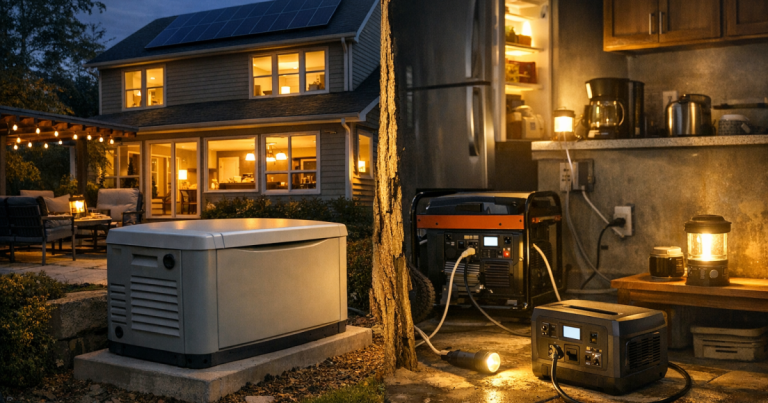
Whole-Home vs Essential-Load Backup Power: What to Choose
Most homes need fewer circuits than they think. The right plan depends on comfort, fuel, budget, and what must stay on.
Read article →
From the team
Oliver Bennett covers home blackout backup planning, turning practical questions into clear explanations and useful decisions readers can act on.
Browse articles
Most homes need fewer circuits than they think. The right plan depends on comfort, fuel, budget, and what must stay on.
Read article →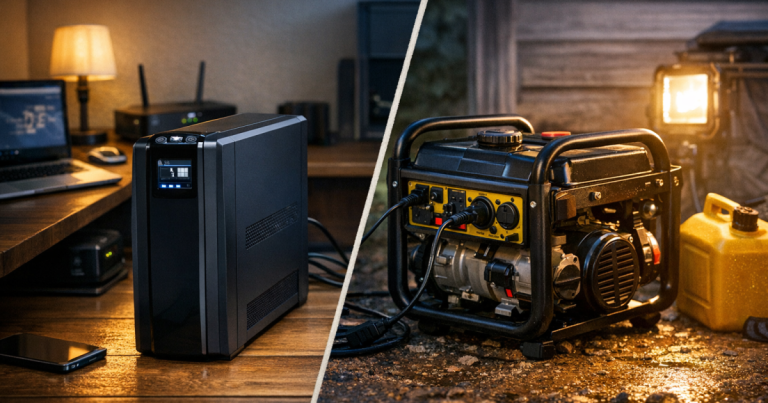
A strong fit for routers, PCs and electronics, with a clear runtime trade-off once the load gets heavy.
Read article →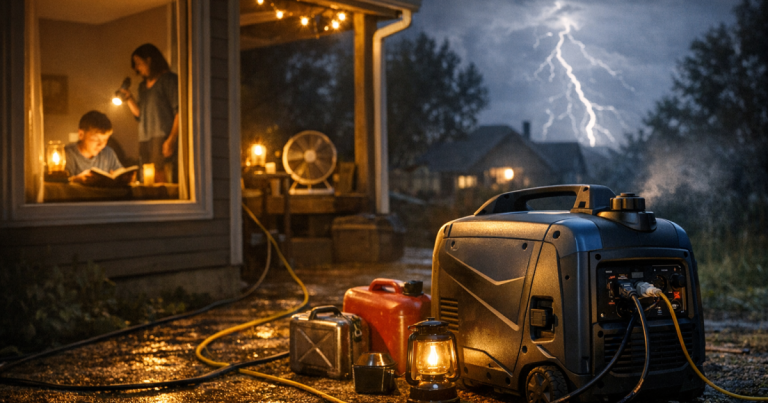
A quieter generator can be a smart blackout tool, but only when your essential loads, fuel plan, and setup limits all line…
Read article →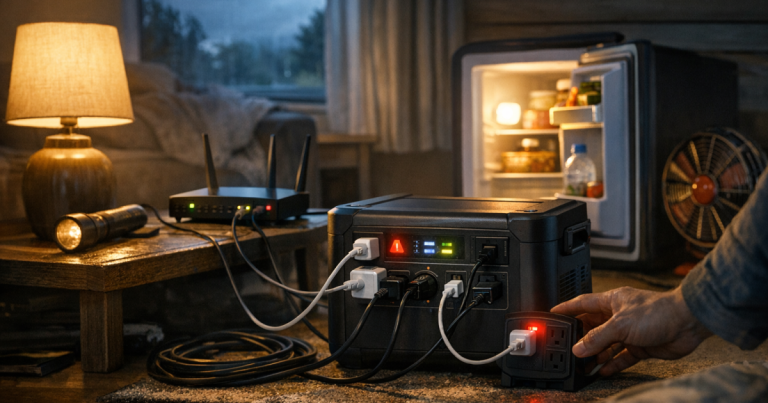
Keep the lights, router, and fridge plan realistic by matching each load to the station’s output, surge limit, and runtime.
Read article →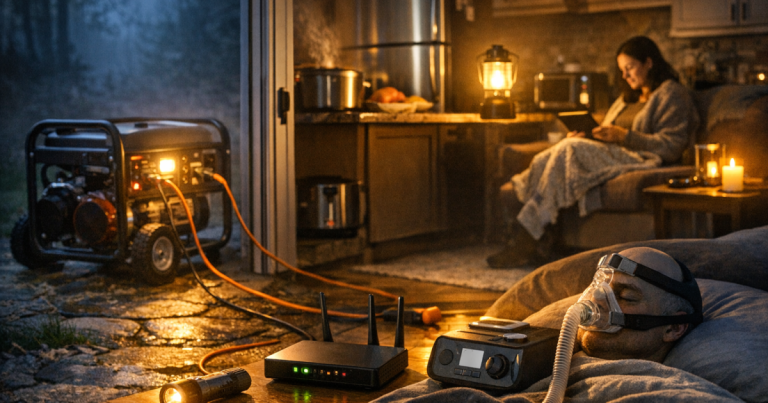
Know what your setup can actually run before the lights go out, from fridge surges to overnight router and medical-device needs.
Read article →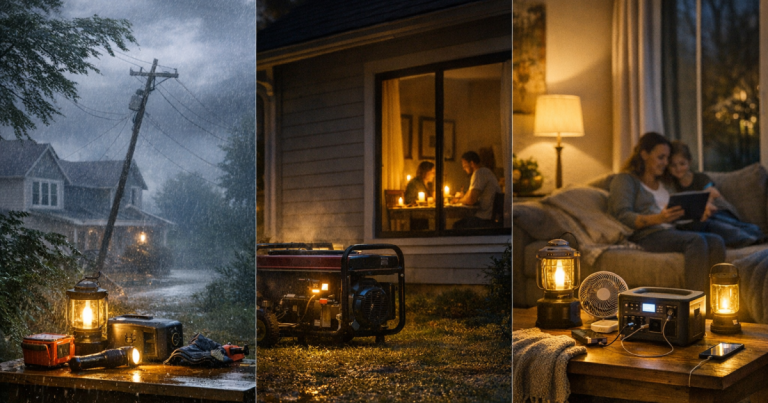
Short outages, storm failures, and multi-day blackouts all need different plans. Match your setup to the outage you’re most likely to face.
Read article →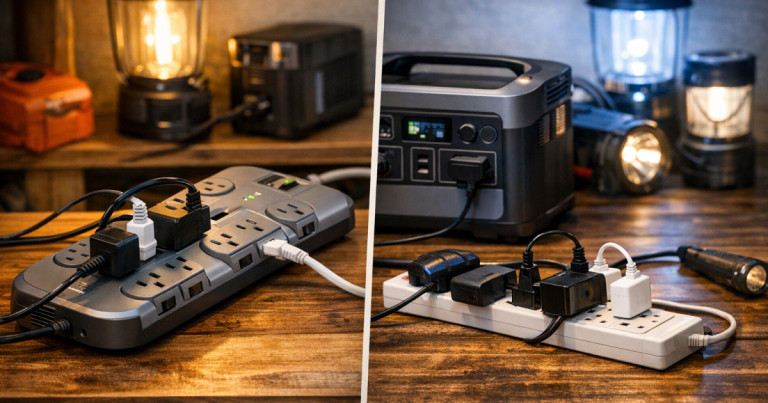
A crowded power corner gets easier to manage, but this is surge protection and outlet organization—not blackout runtime.
Read article →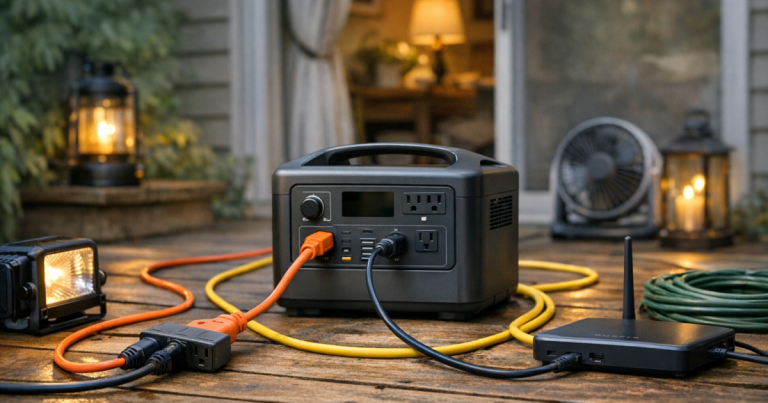
Keep lights, routers, and small essentials running without warm cords, tripped outlets, or unsafe daisy chains.
Read article →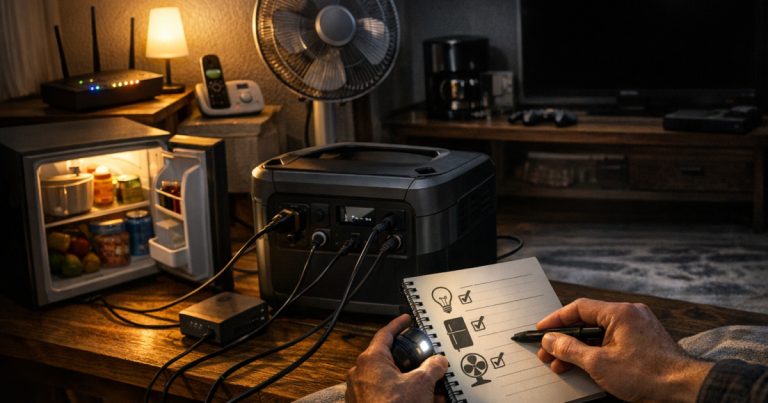
A clear pecking order keeps essential loads running longer and helps you avoid wasting backup power on the wrong things.
Read article →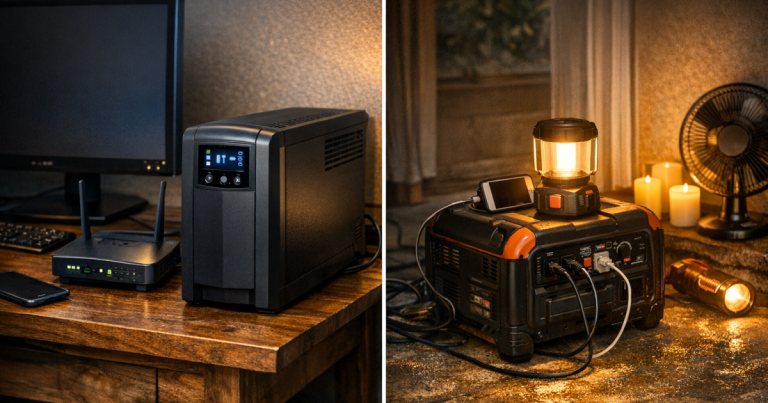
Keeps small electronics orderly during brief outages, but its documented runtime makes it ride-through backup, not an all-night power plan.
Read article →