A portable generator transfer switch is the clean, code-aware way to power selected home circuits during an outage without running extension cords through the house or risking backfeed into utility lines. The basic idea is simple: the generator supplies a dedicated inlet, the switch routes that power to chosen circuits, and your home stays separated from the grid while you operate on backup power.
The work is partly planning and partly electrical installation. Your job is to decide what actually needs power, understand the operating sequence, and keep the generator outdoors; the wiring belongs in professional hands.
Transfer switch installation, generator inlet wiring, and panel connections should be carried out by a qualified electrician to comply with the National Electrical Code, local electrical requirements, and manufacturer instructions.
What to know first
A transfer switch does not make a small generator act like a utility feed. It simply gives you a safer, more organized way to power specific circuits from a properly connected generator. That usually means choosing essentials such as a refrigerator, freezer, furnace blower, sump pump, some lights, internet equipment, or a few outlets instead of trying to run the whole house.
- The generator stays outside. It should run well away from doors, windows, vents, crawl spaces, and garages because of carbon monoxide risk.
- The switch isolates generator power from utility power. This is the core safety function that prevents dangerous backfeed.
- Only selected circuits get power. Manual transfer switches commonly feed a limited number of circuits, while interlock setups can offer a different style of load control.
- Load management still matters. You may need to turn circuits on one at a time and avoid starting multiple heavy loads together.
- Fuel and runtime shape the plan. A safe connection is only useful if you can store and rotate fuel responsibly.
Step 1: Decide which circuits actually matter
Start with the outage you are preparing for, not the largest generator you can imagine. A 6-hour summer outage has different needs than a 3-day winter outage. List the loads that protect health, food, heat, communication, and basic comfort before adding convenience items.
Good first-round candidates often include the refrigerator, a freezer, furnace controls and blower if compatible, a sump pump, a few lighting circuits, the garage door opener, modem/router equipment, and one or two general-use outlet circuits. Electric ranges, central air conditioning, electric dryers, large water heaters, and other high-demand appliances can quickly exceed what many portable generators and small transfer switches can support.
If you are not sure how to rank loads, use a priority list before you choose circuits. The site’s guide to choosing which appliances get backup power first is a useful next step for sorting must-run items from nice-to-have items.
Step 2: Match the generator, inlet, cord, and switch
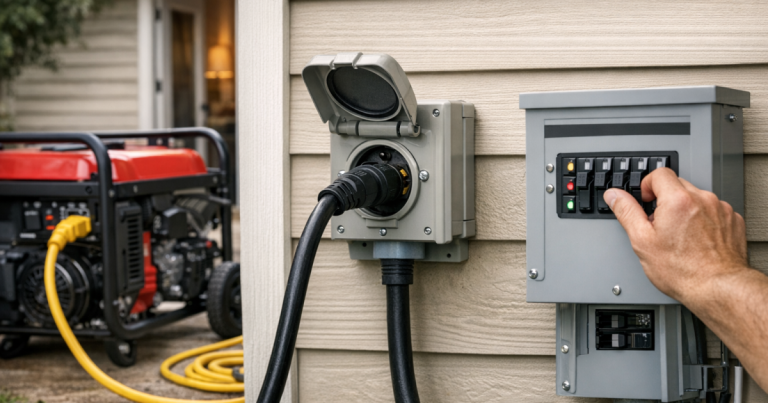
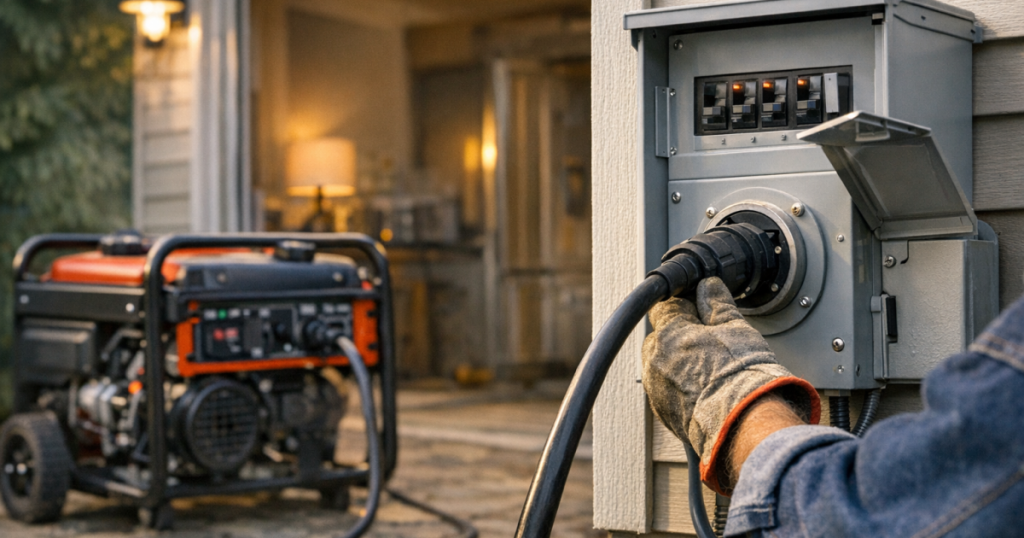
The connection chain matters. In a typical setup, the portable generator connects to an outdoor power inlet with a generator-rated cord. That inlet is wired to the transfer switch or interlock arrangement at the electrical panel. From there, selected household circuits can be moved from utility power to generator power when the grid is down.
The components must be compatible with the generator output, plug style, amperage rating, voltage, and the circuits being served. Do not assume a cord, inlet, or switch is correct because it physically fits. The label on the generator receptacle, the rating on the inlet, the conductor size, the breaker size, and the transfer equipment instructions all need to line up.
For example, a kit such as the Reliance Controls 306CRK Pro/Tran 2 30A 6-Circuit Transfer Switch Kit gives you a recognizable example of a manual transfer switch package, but the important question is whether that type of setup fits your panel, generator, local code, and selected loads. Likewise, a cord such as the Southwire 65172840 20-Foot 30A Generator Cord should only be considered if its connector type and rating match the installed inlet and generator receptacle.
Step 3: Have the transfer equipment installed correctly
This is where the plan moves from household preparation to electrical work. The electrician will evaluate the panel, confirm space and compatibility, install the transfer switch or approved interlock equipment, wire the inlet, label circuits, and make sure the installation meets applicable requirements. In many areas, permits and inspection may be part of the process.
A manual transfer switch usually has individual circuit controls. During an outage, you move selected circuits from line power to generator power. An interlock kit works differently: it mechanically prevents the main breaker and generator breaker from being on at the same time. Both approaches can be safe when properly selected and installed, but they are not interchangeable for every panel or household.
Do not use a double-male cord, also called a suicide cord, to feed a dryer outlet or other receptacle. Do not remove covers, modify plugs, bypass breakers, or improvise a connection to the panel. Those shortcuts can energize utility lines, damage equipment, start fires, or create lethal shock hazards.
Step 4: Practice the outage sequence before you need it
The best time to learn the operating sequence is on a calm weekend, not during a storm at 10 p.m. Keep the written instructions near the panel and walk through the process with every adult in the household who may need to use it.
Typical startup sequence
- Confirm the outage is real and turn off or unplug sensitive loads that do not need to start immediately.
- Move the generator outdoors to the planned operating location, away from openings and protected from direct rain without enclosing it.
- Check oil and fuel according to the generator manual.
- Make sure the transfer switch circuits are off or set to the utility position before starting.
- Connect the generator cord from the generator receptacle to the outdoor inlet.
- Start the generator and let it stabilize as directed by the manual.
- Move the transfer switch to generator mode according to the installed equipment instructions.
- Turn on selected circuits one at a time, leaving a pause between larger loads.
Listen for the generator straining, lights dimming, or motors struggling to start. Those are signs that you may be asking too much at once. A refrigerator compressor, sump pump, or furnace blower can draw more power at startup than while running, so stagger those loads when possible.
Step 5: Manage watts, fuel, and runtime realistically
A transfer switch makes power delivery safer and neater; it does not remove the limits of the generator. You still need to know the generator’s running watts, starting watts, fuel type, expected fuel use, and how your actual appliances behave.
For a plain-English refresher, review home backup power basics before you finalize your circuit list. The key point is that watts are shared. If a generator is already carrying a fridge, furnace blower, lights, router, and sump pump, adding a microwave or coffee maker can overload the setup even if each item seems reasonable on its own.
During a longer outage, run the generator in planned blocks if that fits your household. For example, you might power the refrigerator and freezer for intervals, recharge phones and small battery packs, run the furnace blower as needed, and then shut down to conserve fuel. This approach is not right for every load, especially medical equipment or sump pumps in active flooding conditions, but it can help stretch fuel when demand is flexible.
Step 6: Shut down and refuel safely
Shutdown deserves the same attention as startup. Turn off transferred circuits or move them back according to the equipment instructions, allow loads to disconnect, and then shut down the generator. Let the generator cool before refueling. Store gasoline, propane cylinders, or other fuels according to local rules and the fuel container instructions.
When utility power returns, do not rush. Confirm power is stable, move the transfer equipment back to utility mode as directed, disconnect the cord, and let the generator cool before storage. After the outage, note what worked, what overloaded the system, how much fuel you used, and whether your circuit choices still make sense.
Common mistakes to avoid
- Trying to power too much. A portable setup is usually for essentials, not normal full-house living.
- Skipping labels. Clear circuit labels prevent confusion when someone else has to operate the system.
- Running the generator in a garage. An open garage door does not make generator exhaust safe.
- Using household extension cords as a panel connection. The panel connection should use approved inlet and transfer equipment.
- Ignoring 240-volt loads. Well pumps, some furnace setups, and other equipment may have requirements that must be verified before they are assigned to backup power.
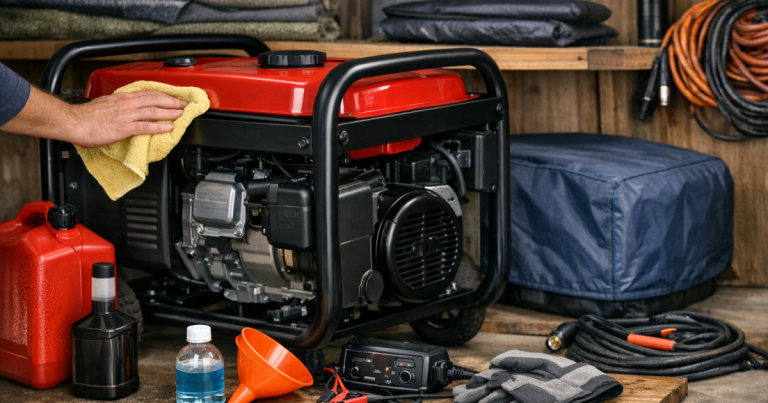
- Forgetting maintenance. Old fuel, low oil, a weak starting battery, or a neglected generator can ruin an otherwise good plan.
When a transfer switch may not be enough
If your goal is to run central air conditioning, multiple large appliances, an electric water heater, and most household circuits at the same time, a small manual switch and portable generator may not be the right fit. At that point, the decision becomes less about connection method and more about whole-home capacity, fuel supply, automatic operation, noise, and installation cost.
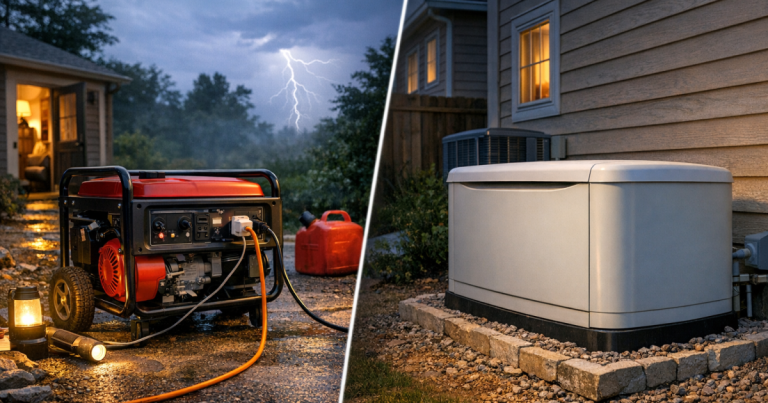
For that broader decision, compare the trade-offs in whole-house vs portable generators. Many households are happiest with a modest portable setup for essentials, but some homes with medical, heating, well pump, or long-duration outage needs justify a larger installed system.
FAQ
Can I install a transfer switch myself?
The planning and operating practice can be a homeowner task, but the transfer switch installation, inlet wiring, and panel connections should be done by a qualified electrician. This protects your home, utility workers, and anyone using the system during an outage.
Do I need a transfer switch for a portable generator?
You need a transfer switch or other approved transfer equipment if you want to power home circuits through the electrical panel. If you only plug appliances directly into the generator with appropriate outdoor-rated cords, the panel is not involved.
How far should the generator be from the house?
Follow the generator manual and local guidance, but use a conservative outdoor location well away from doors, windows, vents, and attached garages. Install working carbon monoxide alarms inside the home before relying on any fuel-burning generator.
Can a transfer switch run my furnace?
Sometimes, but it depends on the furnace controls, blower load, circuit wiring, and generator output. The circuit must be evaluated and connected correctly, and the furnace should be tested under generator power before a real winter outage.
What happens if utility power comes back while the generator is running?
Properly installed transfer equipment keeps utility power and generator power separated. You still need to follow the return-to-utility sequence on your specific switch before shutting down and disconnecting the generator.
Final thoughts
A portable generator transfer switch is not about making an outage feel normal. It is about powering the right circuits in a controlled, repeatable way while keeping your home and utility workers safer. Choose your loads carefully, have the electrical work done correctly, practice the sequence, and treat fuel, exhaust, and overloads as part of the same plan.
Once the system is installed, write down a one-page checklist and store it near the panel. In a real blackout, that simple checklist can be the difference between a calm setup and a rushed, noisy, frustrating night.