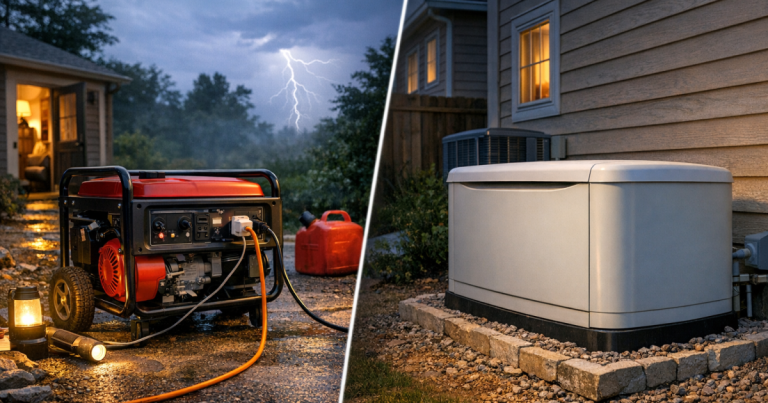
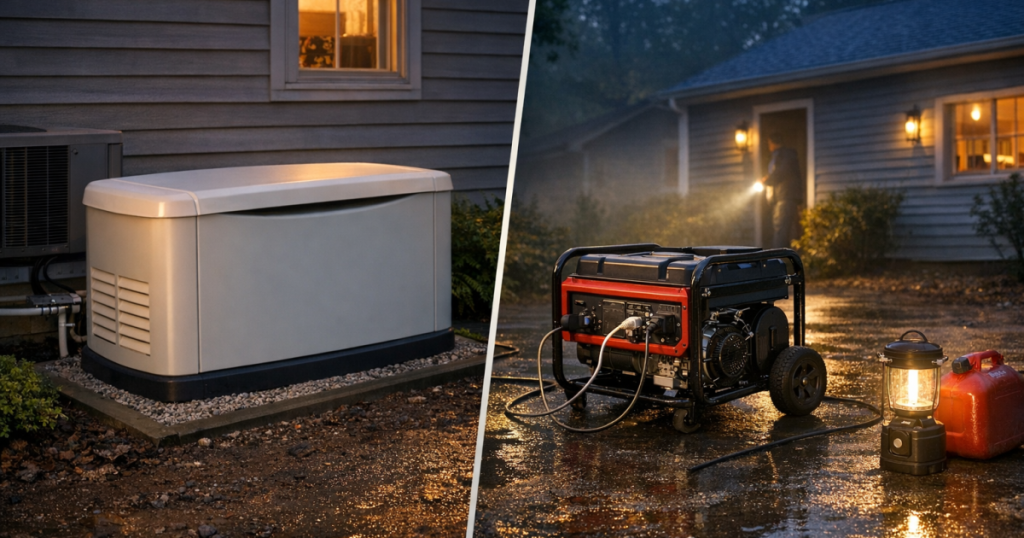
A generator plan should start with the outage you expect, not the biggest machine you can find. The choice between whole-house vs portable generators is really a choice between convenience, cost, fuel planning, noise, installation, and which parts of your home truly need power. For many households, the right answer is not “run everything.” It is “keep the safe and necessary things running without creating a new hazard.”
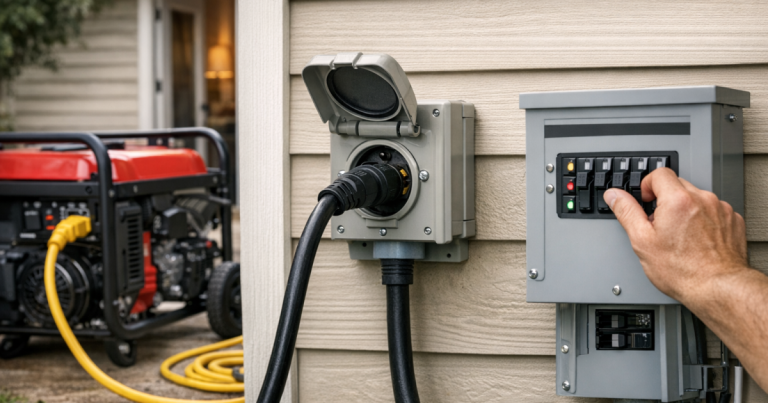
Generator transfer switch, interlock, standby wiring, and fuel line connections should be handled by a qualified electrician or licensed installer to meet local electrical codes, manufacturer requirements, and safety standards.
The short version
- A whole-house standby generator is the smoother option for longer outages, frequent outages, medical needs, sump pumps, well pumps, and households that need automatic power without hauling equipment outside.
- A portable generator is usually the more flexible, lower-commitment option if you only need to run selected essentials and can safely manage setup, fueling, cords, and weather protection.
- The real decision is not just wattage. It is fuel access, safe connection method, noise, maintenance, storage, neighborhood rules, and whether someone will be home to start and manage the generator.
- Any generator that powers home circuits needs a safe transfer method. Backfeeding a panel through a dryer outlet or other improvised connection is dangerous and can injure utility workers or damage your home.
If watts, running loads, and starting surge still feel fuzzy, start with the plain-English home backup power basics before deciding on generator size.
How the two setups actually work
A whole-house standby generator is installed outside the home on a fixed pad and connected to selected home circuits, or sometimes a larger portion of the electrical system, through an automatic transfer switch. When utility power fails, the system detects the outage, starts the generator, and transfers power without you pulling cords or moving equipment. Many standby systems use natural gas or propane, which reduces the need to store gasoline.
A portable generator is a movable outdoor generator that you set up when needed. Depending on your home and generator, it may power appliances directly with heavy-duty extension cords, or it may connect to selected circuits through a properly installed manual transfer switch or interlock inlet. It can be stored when not in use, taken to another property, or sized around a smaller essentials-only plan.
That difference changes the whole outage experience. A standby generator is about automatic continuity. A portable generator is about controlled, hands-on backup for the loads you choose.
When a whole-house standby generator makes sense
A standby system can be a strong fit when outages are frequent, long, or hard to manage manually. Think of a rural home with a well pump, a basement that depends on a sump pump, a household with refrigerated medication, or an older adult who should not be dragging equipment into position during a storm.
It also helps when you need power to restore quickly while you are away. A portable generator cannot start itself in the garage, roll outside, connect safely, and refuel itself. A standby generator is built around that automatic response.
The trade-off is commitment. Standby systems involve installation, permitting, electrical integration, a fuel source, routine service, and a fixed location. They can also be louder than expected depending on placement, load, enclosure design, and local spacing. Before assuming it will power every comfort in the house, confirm exactly which circuits will be supported and what happens when large loads, such as central air conditioning, electric heat, well pumps, or electric water heating, start at the same time.
For a deeper overview of generator types, sizing choices, and safety limits, the home backup generator guide is a useful next step.
When a portable generator is the better fit
A portable generator works well when your outage plan is selective: refrigerator, freezer, a few lights, phone charging, internet gear, a furnace blower through an approved connection, or a small window air conditioner during summer. It is also useful when you rent a house, expect occasional outages, or want backup power without installing a permanent standby system.
Portable models vary widely. A small inverter generator such as the Honda EU2200i is commonly used as a quiet, fuel-conscious option for light essential loads, while larger inverter or dual-fuel models such as the Champion Power Equipment 201531 4500W Dual Fuel Inverter may support a broader essentials plan when matched to the right loads and connection method. High-output portable models such as the DuroMax XP13000HXT 13,000 Watt Tri Fuel Portable HXT Generator with CO Alert show how far portable generators can scale, but output alone does not make a system safe or convenient.
The hands-on requirements are the main limitation. A portable generator must run outdoors, far from windows, doors, vents, and attached garages. It needs suitable cords or an approved inlet, protection from rain without trapping exhaust, fuel stored safely, and someone capable of shutting loads down before refueling. It also needs a storage plan so it is not buried behind holiday boxes when the lights go out.
Real outage examples
One-day storm outage in a suburban home
If the goal is to keep a refrigerator cold, charge phones, run a few LED lamps, and maybe keep the router alive for short periods, a portable generator may be enough. The household can rotate loads instead of running everything at once. A separate UPS for the modem and router can smooth short interruptions, while the generator handles heavier recharge windows.
Three-day winter outage with a gas furnace
If your heat depends on a furnace blower, controls, or an ignition system, power planning becomes more serious. A portable generator can be part of the answer, but the furnace should be connected through an approved transfer setup rather than improvised cords unless the system is specifically configured for that use. A standby generator may be more reassuring if winter outages are common and the household cannot tolerate long heating gaps.
Rural home with a well pump and sump pump
This is where standby power often becomes more compelling. Pumps can have high starting loads, and losing water or basement protection can quickly become more than an inconvenience. A large portable generator can sometimes handle these needs, but only if the generator, transfer equipment, and circuits are sized and installed correctly. Automatic standby power reduces the risk that nobody is home when the sump pump needs to run.
Remote worker during planned utility shutoffs
A portable generator may be enough if the work plan is built around modem, router, laptop charging, task lighting, and limited appliance use. The key is not to assume the generator should carry the whole house during business hours. Decide which devices matter, test the setup, and keep backup communications ready in case internet service itself is down.
The checks that matter before you choose
- Essential circuits: List what must run, what would be nice to run, and what can stay off. Start with safety, refrigeration, medical needs, heat, communications, and water control.
- Starting watts: Motors and compressors often need more power to start than to keep running. Refrigerators, freezers, pumps, and air conditioners deserve careful checking.
- Fuel reality: Gasoline may be hard to find during regional outages. Propane stores longer but still needs tank planning. Natural gas can be convenient where available, but confirm local conditions and installer guidance.
- Connection method: Extension cords can work for plug-in appliances. Hardwired appliances and home circuits need a transfer switch, interlock, or other approved setup.
- Noise and placement: Generators must be outdoors and positioned to control exhaust risk. Also consider property lines, sleeping areas, and local rules.
- Runtime expectations: Manufacturer runtime numbers depend on load and conditions. Treat them as estimates, not promises, and plan fuel with a margin.
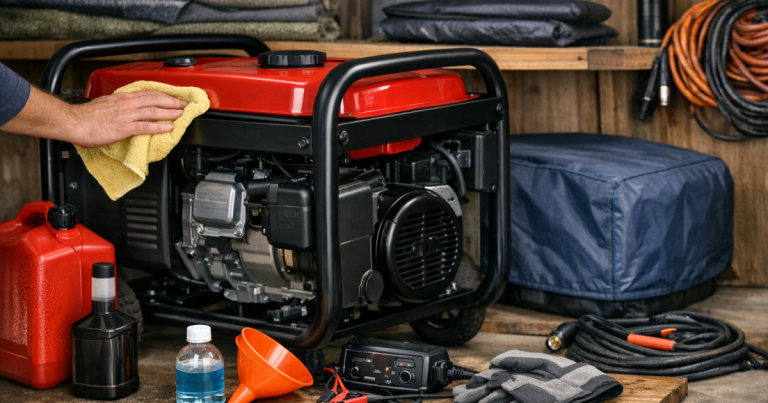
- Maintenance: Generators are engines. They need periodic exercise, oil service, clean fuel practices, battery checks on some systems, and weather-aware storage.
The most reliable plan starts with the loads, not the generator. If you have not made that list yet, use this guide to decide which devices matter in a blackout before spending money on capacity you may not need.
The big picture
Whole-house vs portable generators is not a contest where one answer is automatically more responsible. A whole-house standby generator is about automatic, installed resilience for households that need continuity and can support the installation, fuel source, service, and code-compliant setup. A portable generator is about flexibility and essentials-first planning, but it asks more from the people using it during a stressful outage.
If your power needs are modest and someone will be home to manage the setup safely, a portable generator can be a sensible outage tool. If your home depends on pumps, medical equipment, automatic heating support, or unattended protection, a properly installed standby system may be worth the extra planning. In both cases, the safest generator is the one matched to real loads, connected correctly, placed outdoors, fueled responsibly, and practiced before the storm arrives.
Common questions
Can a portable generator power my whole house?
Sometimes a large portable generator can power selected household circuits, but that is not the same as powering everything. Large loads like central air, electric heat, pumps, dryers, and water heaters need careful sizing and an approved transfer setup.
Is a whole-house generator safer than a portable generator?
It can reduce hands-on setup risk because it is fixed and professionally integrated, but it still requires correct installation, outdoor placement, maintenance, and safe fuel connections. Portable generators can be safe too when used outdoors with proper cords, transfer equipment, and refueling practices.
Do I need a transfer switch?
You need an approved transfer method any time a generator powers home wiring or hardwired circuits. Plug-in appliances can be run from properly rated extension cords, but a generator must never be connected to a home panel through an improvised backfeed method.
Which is better for apartments or townhomes?
Most apartments and many townhomes are not suitable for fuel-burning generators because there may be no safe outdoor placement. Renters often need to focus on battery backups, portable power stations, LED lighting, and communication plans instead.
How much generator capacity should I plan for?
Add up the running watts of essential devices, account for starting surge, and leave a safety margin. Avoid sizing from wish lists; start with refrigeration, heat controls, medical needs, pumps, lighting, communications, and the few comfort loads that matter most.