A good outage plan does not start with buying the biggest machine you can find. It starts with knowing what must keep running, how much power those items need, and how safely you can supply that power. These backup power basics help you turn a stressful blackout into a manageable household routine.
The goal is not to make your home feel exactly like the grid never failed. For most households, the realistic goal is smaller: keep phones charged, lights on, food cold, medical or comfort needs protected, and work or communication possible for as long as the outage lasts.
Professional guidance: Transfer-switch installation, interlock work, hardwired furnace connections, and any generator connection to household wiring should be carried out by a qualified electrician in compliance with local electrical codes, manufacturer instructions, and safety standards.
In brief
- Watts tell you how much power a device needs at a given moment.
- Watt-hours tell you how much stored energy a battery can deliver over time.
- Generators can run larger loads for longer, but they require outdoor operation, fuel, maintenance, and carbon monoxide precautions.
- Portable power stations are quiet and usable indoors, but their runtime is limited by battery capacity and load size.
- The safest plan usually combines load control, realistic runtime expectations, safe wiring, and a clear fuel or charging routine.
Start with the loads that actually matter
The most common backup power mistake is treating every device as essential. During a blackout, a refrigerator, a few LED lamps, a phone, a router, and a medical device may matter far more than a microwave, electric dryer, or central air conditioner. The smaller your essential list, the easier it is to power safely.
A simple first pass is to divide your home into three groups:
- Critical: Medical devices, communications, refrigeration, sump pump, heat-related equipment in cold weather, and anything required for safety.
- Important: Internet gear, laptops, rechargeable lights, fans, garage door access, and basic cooking support.
- Optional: Televisions, gaming systems, large kitchen appliances, laundry equipment, and comfort loads that can wait.
If you have not already narrowed that list, use this step-by-step guide to decide which devices matter in a blackout. It is much easier to size backup power around ten thoughtful loads than around an entire house.
Watts: the number that keeps you honest
Watts measure how much power a device uses while it is running. A phone charger may draw very little. A refrigerator uses more, and it may briefly need extra power when the compressor starts. A well pump, furnace blower, sump pump, or window air conditioner can have a higher startup surge than its normal running load.
That is why two numbers matter:
- Running watts: The approximate power a device uses after it is already operating.
- Starting watts: The short burst some motors and compressors need when they turn on.
Do not guess if the load matters. Check the device label, manual, manufacturer data, or a plug-in power meter for smaller plug-in appliances. For hardwired equipment, use the nameplate and have a qualified electrician verify what can be safely connected to a backup system.
A backup source must handle the combined running load and any likely starting surge. If a battery inverter or generator is overloaded, it may shut down, trip a breaker, or fail to start the appliance you were counting on. This is not a sign that backup power is useless; it is a sign that the load plan needs trimming.
Runtime: why a full battery is not a promise
Runtime is where expectations often get too optimistic. A portable power station rated at a certain number of watt-hours will not necessarily deliver that entire amount to your devices. Inverter losses, temperature, battery age, device cycling, and standby draw all reduce real-world runtime.
The plain-English formula is simple:
- Battery capacity in watt-hours ÷ device watts = rough hours of runtime.
For example, a battery with 1,000 watt-hours powering a steady 100-watt load might look like a 10-hour setup on paper. In real use, you should expect less because the inverter and electronics use some energy too. If the load cycles on and off, like a refrigerator, runtime may be longer than a steady-load estimate, but it still depends on room temperature, door openings, appliance condition, and compressor behavior.
Those backup power basics become more useful when you write down your actual loads. For a deeper planning worksheet, use this guide to calculate backup power runtime for essential devices before storm season, not during the outage.
Fuel and charging: the part people forget until day two
Stored energy has to come from somewhere. Batteries start quiet and clean indoors, but once they are empty, they need grid power, solar input, vehicle charging, or a generator to recharge. Gasoline, propane, and natural gas generators can produce more ongoing power, but they bring fuel storage, exhaust, maintenance, noise, and placement requirements.
Each source has a different role:
- Portable power station: Good for indoor electronics, routers, phones, lights, some medical devices, and modest appliance support within its limits.
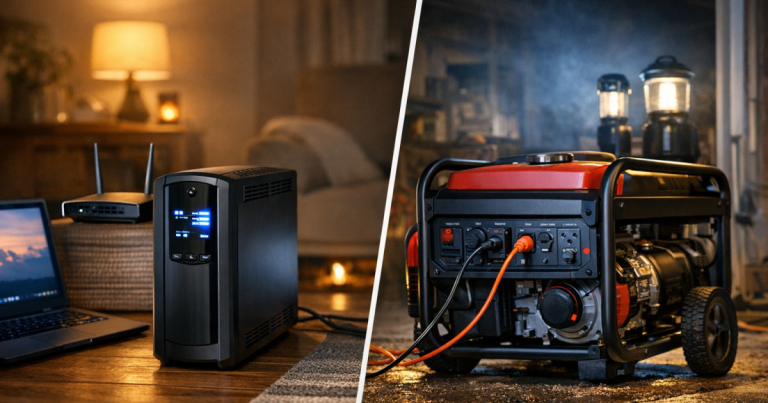
- UPS: Best for very short outages and graceful shutdowns for routers, computers, modems, and sensitive electronics.
- Portable generator: Useful for longer outages and larger loads when operated outdoors with safe cords, proper transfer equipment, and enough fuel.
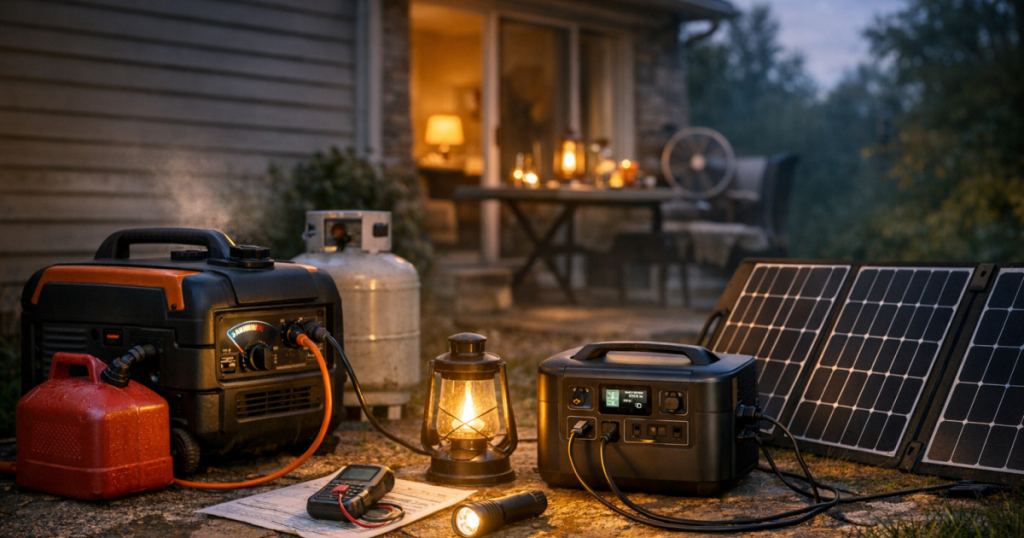
- Solar recharging: Helpful for extending battery runtime, but output varies with sun angle, shade, weather, panel size, and charge-controller limits.
- Whole-home standby system: More automatic and capable, but it requires professional installation, fuel planning, maintenance, and a realistic load strategy.
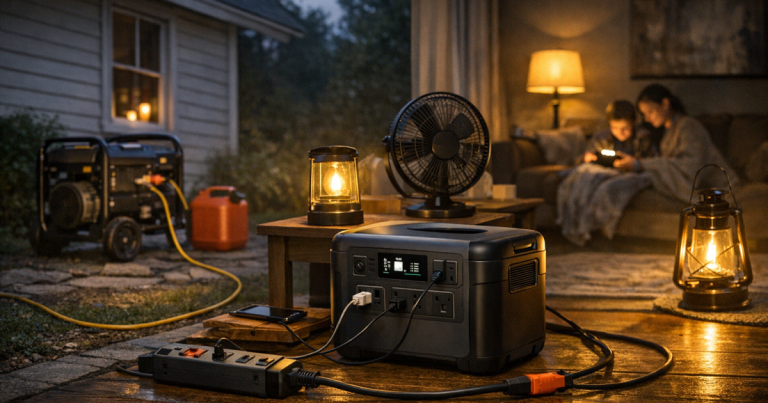
For many homes, the best answer is layered rather than all-or-nothing. A UPS can keep the router alive during a flicker. A portable power station can handle phones, lights, and laptops overnight. A generator can take over for refrigeration, pumps, or heating support when the outage stretches longer.
Generator safety is not optional
A generator is an engine, not an indoor appliance. It must run outdoors, away from doors, windows, vents, garages, crawl spaces, and enclosed porches. Follow the manufacturer’s instructions for distance and placement; many safety agencies recommend keeping portable generators at least 20 feet from openings when possible.
The biggest generator hazards are carbon monoxide, backfeeding, fire, and shock. Keep working carbon monoxide alarms on every level of the home and near sleeping areas. Let the generator cool before refueling. Use outdoor-rated extension cords sized for the load. Keep cords out of standing water and inspect them for damage before use.
Never plug a generator into a wall outlet to feed the house. That can energize utility lines and endanger lineworkers, neighbors, and your own household. If you want to power hardwired circuits, the safe path is a properly installed transfer switch or interlock system. For a broader overview of generator types, sizing, fuel, and connection methods, read the home backup generator guide.
The quiet trade-off: batteries versus engines
People often ask whether a battery backup or generator is better. The calmer answer is that they solve different problems.
A battery is quiet, simple to stage indoors, and well suited to electronics, lighting, communications, and short overnight needs. It does not create exhaust, does not need gasoline in the hallway, and can be useful in apartments where generators are not allowed. Its limitation is stored capacity. Once the battery is drained, the plan depends on recharging.
A generator is better for longer outages, higher loads, and equipment with motors, but only when you can operate it safely outdoors and store or access fuel. It also adds maintenance: oil checks, test runs, stale fuel prevention, safe storage, and weather-aware operation.
The practical middle ground is to avoid asking one device to do everything. Use batteries where quiet indoor power matters. Use a generator only where its strengths justify the added safety work. Reduce the load before increasing the equipment.
A simple household planning example
Imagine a suburban home expecting a 24-hour storm outage. The household wants a refrigerator cold, phones charged, a router running part of the day, a few lamps at night, and the ability to run a furnace blower if temperatures drop.
The plan might look like this:
- Use rechargeable lights instead of powering several rooms through extension cords.
- Keep phones, a modem, and router on a small battery or UPS for communication windows.
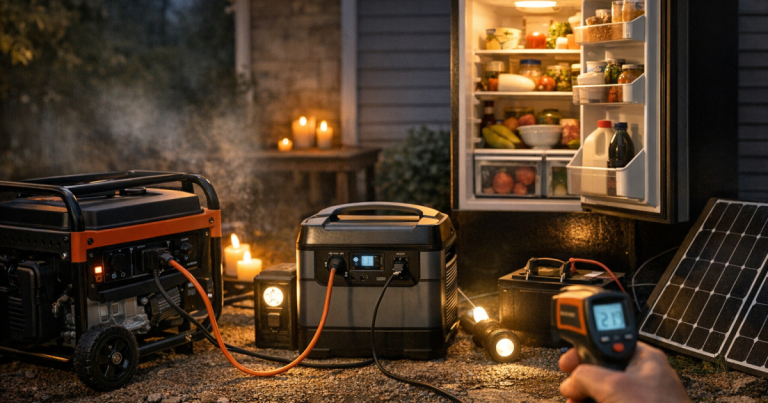
- Run the refrigerator in planned blocks if using a generator, rather than leaving every appliance connected all day.
- Confirm whether the furnace blower can be powered through a proper transfer setup before the outage, not with improvised cords.
- Store fuel safely outside living spaces and rotate it according to the fuel container and stabilizer instructions.
This kind of plan is modest, but it works because it is specific. It names the loads, respects equipment limits, and avoids the risky shortcuts that tend to appear when everyone is tired, cold, and trying to solve the problem in the dark.
Build your first backup plan in one evening
You do not need to finish every upgrade at once. A usable first plan can be built with a notepad, a flashlight, and a walk through the house.
- List the devices that protect safety, food, communication, heat, medical needs, and work.
- Write down the watts or amp ratings from labels and manuals where available.
- Mark which items are plug-in loads and which are hardwired.
- Estimate runtime for the plug-in loads you expect to use on battery power.
- Decide which loads can be rotated instead of powered continuously.
- Check carbon monoxide alarms, extension cords, fuel containers, and outdoor generator placement before the next storm.
- Run a short practice setup in good weather so you know what plugs in where.
The practice run is worth doing. It shows you the awkward details: the cord is too short, the router is on a different floor than expected, the freezer outlet is hard to reach, or the family does not know which lights are rechargeable. Small fixes now prevent bigger stress later.
Helpful questions
How many watts do I need for a blackout?
Start with essentials, not the whole house. Add the running watts for critical devices, then account for startup surges on refrigerators, pumps, fans, and compressors. The right number depends on your actual appliances.
Can a portable power station run a refrigerator?
Sometimes, but it depends on the refrigerator’s starting surge, running load, battery capacity, inverter rating, room temperature, and how often the door opens. Verify the appliance load and test the setup before relying on it.
Is it safe to run a generator in a garage with the door open?
No. A portable generator should not run in a garage, even with the door open. Carbon monoxide can build up quickly and move into the home. Run it outdoors away from openings and follow the manufacturer’s placement instructions.
What fuel is best for home backup power?
There is no single best fuel for every home. Gasoline is common but needs rotation and safe storage. Propane stores differently and may be convenient for some households. Natural gas depends on a fixed connection and compatible equipment.
Should I power everything or rotate loads?
Rotating loads is usually safer and more realistic for portable setups. Keeping a refrigerator cold, charging devices, and running lights in planned windows often works better than trying to power the whole home continuously.
Final thoughts
Reliable blackout planning is mostly about restraint. Know your essential loads, understand watts and runtime, choose a fuel or charging method you can manage safely, and keep risky electrical connections out of the improvisation zone.
A small, well-tested plan beats a large, vague one. When the lights go out, you want clear labels, charged batteries, safe generator placement, enough fuel, and a household that already knows the routine.