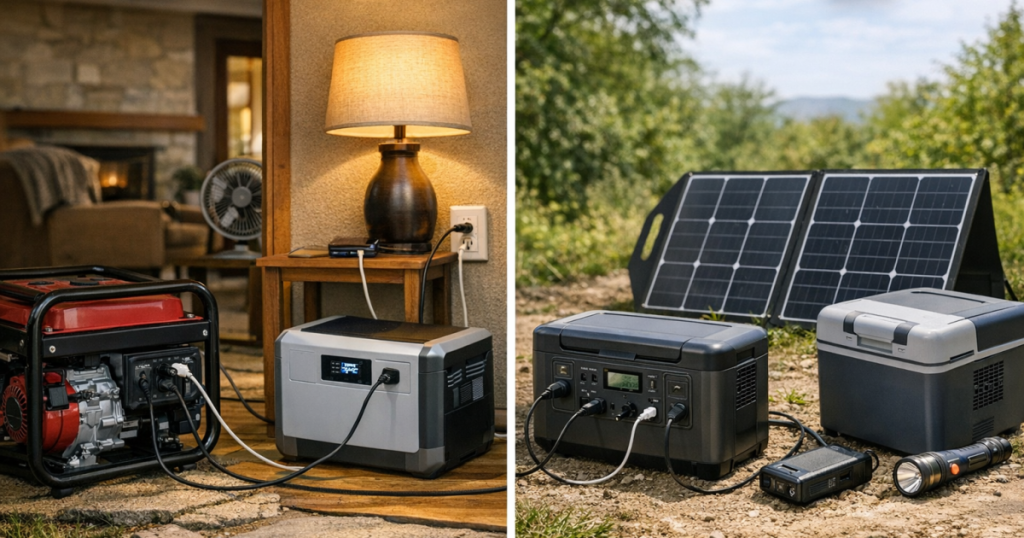
A home backup plan gets easier once you know what kind of electricity each device expects. AC vs DC power is not a schoolbook detail during a blackout; it affects whether you plug into a wall-style outlet, a USB port, a battery, an inverter, or a generator-fed circuit. The goal is simple: match the power source to the load without wasting runtime or creating a safety problem.
Generator inlet boxes, transfer switches, interlocks, and any connection to a home electrical panel should be installed by a qualified electrician to comply with the National Electrical Code, manufacturer instructions, and local permit requirements.
At a glance
- AC, or alternating current, is the power your home outlets normally provide. Most household appliances are designed around it.
- DC, or direct current, is the power stored in batteries and used by many electronics internally.
- Generators usually make AC power for outlets, transfer switches, and extension-cord setups.
- Portable power stations store DC power in a battery, then use an inverter to provide AC outlets when needed.
- Every conversion between AC and DC uses some energy, so the most efficient path is often the simplest one.
What AC power does during an outage
AC power is what most people think of as normal household electricity. In the US, standard outlets supply 120-volt AC power for common loads such as lamps, refrigerators, chargers, TVs, routers, and many small appliances. Larger hardwired equipment may use 240-volt AC, but that is not something to improvise during an outage.
Portable generators, standby generators, and properly connected transfer-switch systems are built around AC power because they are meant to replace part of what the grid normally provides. If you are using a generator to run selected home circuits, the safety boundary matters as much as the wattage. A generator should never be connected to a home through a dryer outlet, range outlet, or homemade cord. For a deeper safety walkthrough, read how to prevent generator backfeed during a home outage.
AC is useful when the device already has a normal plug, when a motor needs to start and run, or when you are powering several household loads from a safe distribution point. The catch is that AC loads can vary widely. A lamp and a refrigerator may both plug into the same style outlet, but their starting behavior and power draw are very different.
What DC power does in a backup setup
DC power flows in one direction and is what batteries store. Phones, tablets, laptops, LED lights, radios, USB fans, and many networking devices ultimately use DC inside, even if they normally plug into a wall outlet through a power brick. That little rectangular charger is converting AC from the wall into DC the device can use.
During a blackout, DC can be very efficient for small electronics. If a battery bank or portable power station has USB-C, USB-A, or 12-volt DC outputs that match your device needs, using those outputs may avoid an extra conversion step. That can help preserve runtime, especially overnight when your goal is to keep a phone charged, a router running, or a small light available without draining the battery on high-draw appliances.
DC also matters for solar. Solar panels produce DC power. Charge controllers manage that DC power before it reaches a battery. If you later plug an AC appliance into a battery station, the station has to invert stored DC into AC. That is normal, but it is not loss-free.
The inverter is the bridge between them
An inverter changes DC battery power into AC outlet power. It is one of the most important parts of a portable power station, home battery, vehicle inverter, or UPS. When someone plugs a coffee maker or laptop charger into a battery station’s AC outlet, the inverter is doing the translating.
The inverter has limits. It has a maximum running wattage and, depending on the design, may also have a short surge rating for startup loads. If a device draws more than the inverter can supply, the power station may shut down, trip protection, or simply refuse the load. That is why a battery that looks large on paper may still be the wrong tool for a microwave, sump pump, or space heater.
The inverter also consumes energy while it is on. For small loads, leaving AC outlets active all night can waste power compared with using DC ports directly. This does not mean AC outlets are bad; it means they should be used intentionally.
Common blackout examples
Keeping phones, lights, and a router running
This is where DC-friendly planning shines. Phones and tablets can often charge from USB. Many LED lanterns and small fans are battery-based. Some routers use a DC power adapter, though voltage and connector details must be matched correctly before using any alternative cable or power source.
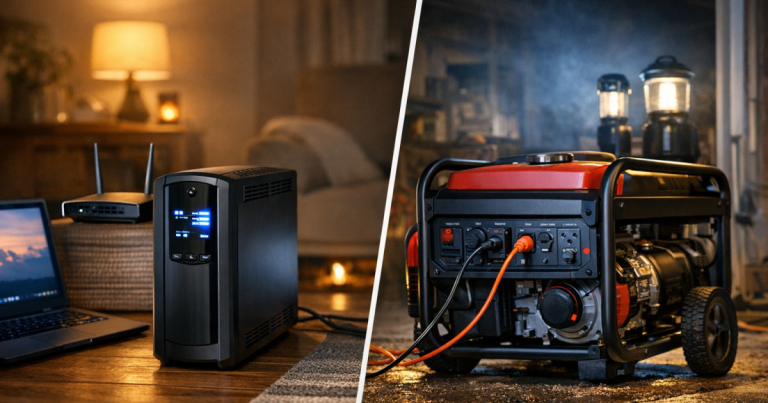
A UPS can also help with internet gear and desktops because it automatically takes over when grid power drops. The battery inside stores DC, then the unit supplies AC to the equipment plugged into it. For short outages and router protection, a UPS can be simpler than starting a generator. If you want to see how this category fits real outage use, the site’s router and desktop UPS review is a useful reference point.
Running a refrigerator
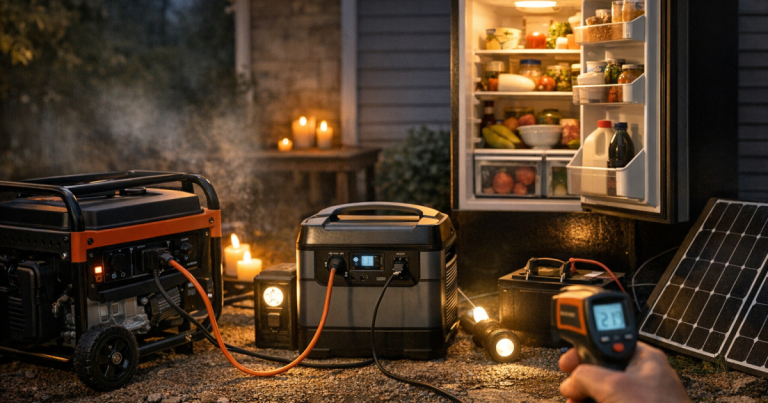
A refrigerator normally needs AC power. It also has a compressor motor, so startup draw can be higher than running draw. A generator, transfer-switch circuit, or appropriately sized power station may handle it, but you need to verify the actual refrigerator load and the backup source’s output limits. Runtime estimates are never guaranteed because door openings, room temperature, compressor cycling, and battery condition all matter.
Using a portable power station overnight
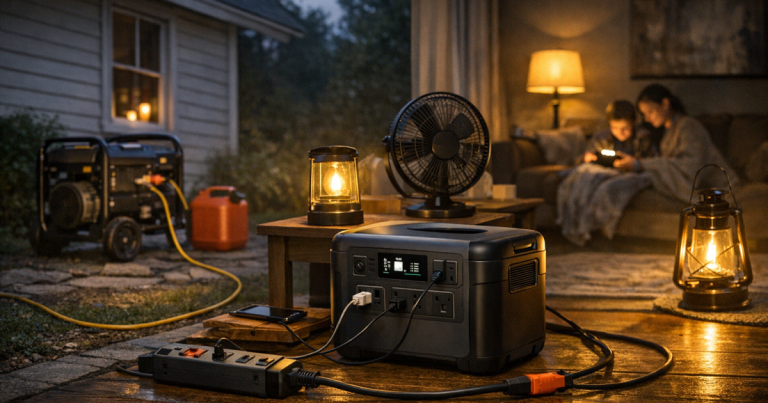
Portable power stations are batteries with outlets and ports. Internally they are DC systems, but most include an inverter for AC loads. For overnight use, the practical move is to reserve AC for devices that truly need it and use DC ports for phones, lights, and small electronics when possible. For a deeper planning angle, read what portable power stations can and cannot do for home backup.
Powering hardwired home circuits
Hardwired circuits are AC territory and should be treated as part of the home electrical system, not as a collection of loose cords. A generator connected through a listed transfer switch or interlock can feed selected circuits safely when installed and operated correctly. Battery systems can also support home circuits, but the equipment, capacity, inverter output, and installation requirements must match the loads and local electrical rules.
Where people waste backup power
The biggest waste usually comes from converting power more times than necessary or asking a small backup source to behave like the grid. A phone plugged into its wall charger, plugged into an AC outlet on a battery station, is using the station’s inverter to create AC, then the charger converts that AC back to DC. If the same phone can safely charge from a USB-C port on the station, that is usually a cleaner path.
Another common mistake is leaving large AC loads on by habit. Space heaters, electric kettles, hair dryers, toaster ovens, and large cooking appliances can drain batteries quickly and overload small generators. They may be fine on grid power, but they are usually poor blackout loads unless your backup system was specifically sized for them.
The better question is not simply whether a device can be powered. It is whether that device deserves power from a limited source. Fridge, freezer, medical devices, communications, lighting, and safe indoor temperatures usually come before convenience loads. A simple load list helps you avoid guessing under stress; start with how to prioritize what gets power during a blackout.
Key checks before you plug things in
- Check the device label. Look for voltage, watts, or amps on the appliance, charger, or power brick. If only amps are listed, watts are roughly volts multiplied by amps.
- Separate running watts from startup demand. Motors and compressors can need extra power for a moment when they start.
- Match the output type. Use AC outlets for AC devices and DC ports only when voltage, connector, and polarity are correct.
- Do not overload cords or strips. Extension cords used with generators need the correct rating, outdoor suitability, and condition.
- Watch inverter limits. A battery’s storage capacity and its AC output rating are different numbers. Both matter.
- Keep generators outdoors. Gas, propane, and dual-fuel generators must run outside, far from doors, windows, vents, garages, and enclosed spaces.
- Plan charging windows. If solar, vehicle charging, or generator charging is part of the plan, estimate when and how you will recharge safely.
What stands out
The useful takeaway is that AC runs most household plug-in loads, while DC is the native language of batteries, solar panels, and many small electronics. The inverter connects the two, but it has limits and losses. A strong home backup plan uses each type where it makes sense: AC for appliances and circuits that need it, DC for efficient low-power essentials, and safe transfer equipment for anything tied into the house.
Once you understand AC vs DC power, backup planning becomes less mysterious. You can look at each outage need, decide whether it is an AC or DC load, estimate how long it must run, and choose the safest way to support it.
Things readers ask
Is a generator AC or DC?
Most home portable and standby generators supply AC power because they are designed to run household outlets, appliances, or selected circuits through proper connection equipment.
Is a portable power station AC or DC?
It is both in practical use. The battery stores DC power, while the built-in inverter provides AC outlets for devices that need wall-style power.
Does using DC always save battery?
Not always, but it often helps for small electronics because it can avoid running the inverter. The actual savings depend on the device, port, cable, and power station design.
Can I run my whole house from a DC battery?
Normal home circuits use AC, so a battery system needs an inverter and proper electrical integration to support household loads. Whole-home claims should be checked against real load needs, output limits, and installation requirements.
What should I label before storm season?
Label the devices that matter most, their normal power source, and whether they need AC, USB, or another DC connection. That small step makes setup faster when the outage is already underway.